What Is Powder Coating? Types, Resins, and Choosing a Manufacturer
What Is Powder Coating? Types, Resins, and Choosing a Manufacturer
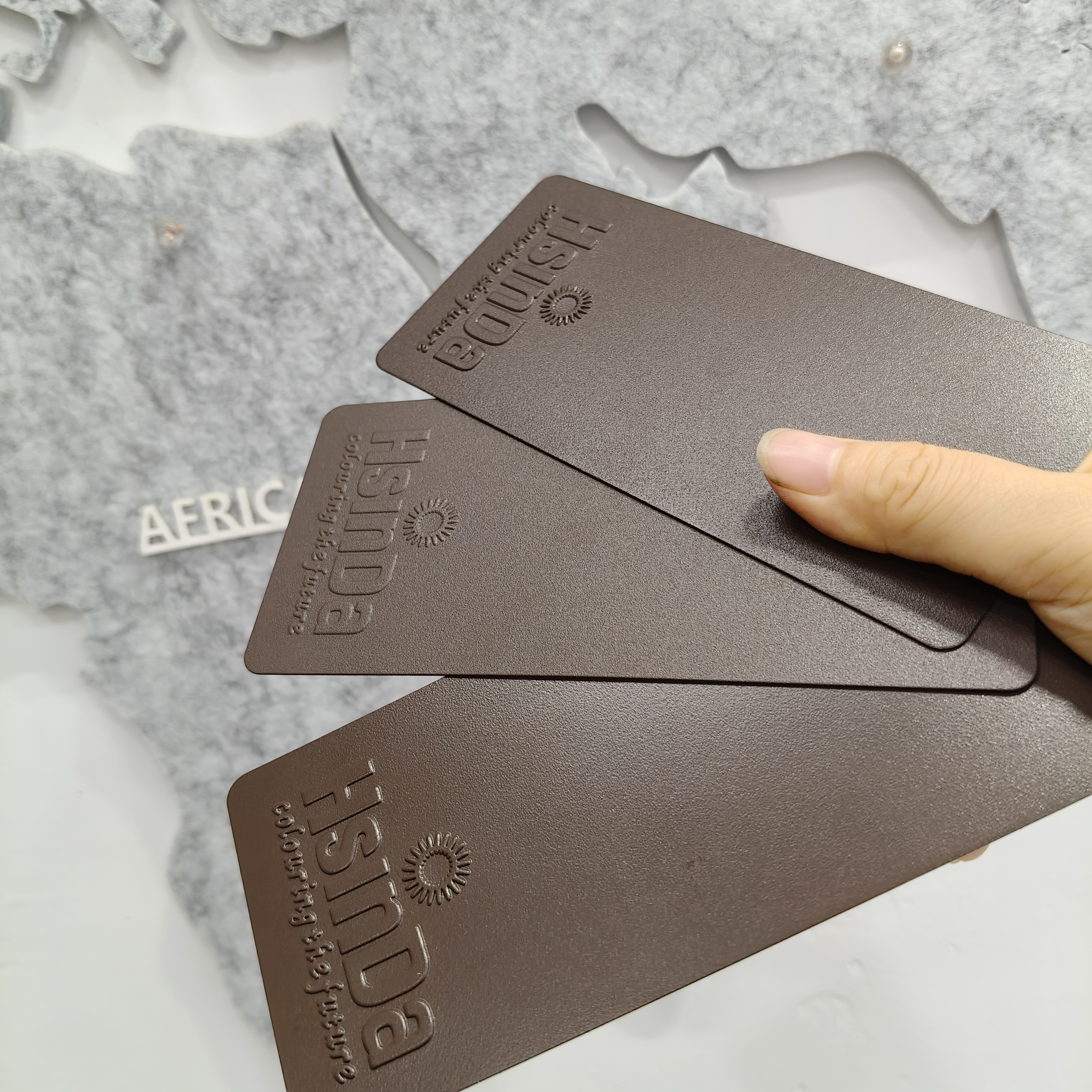
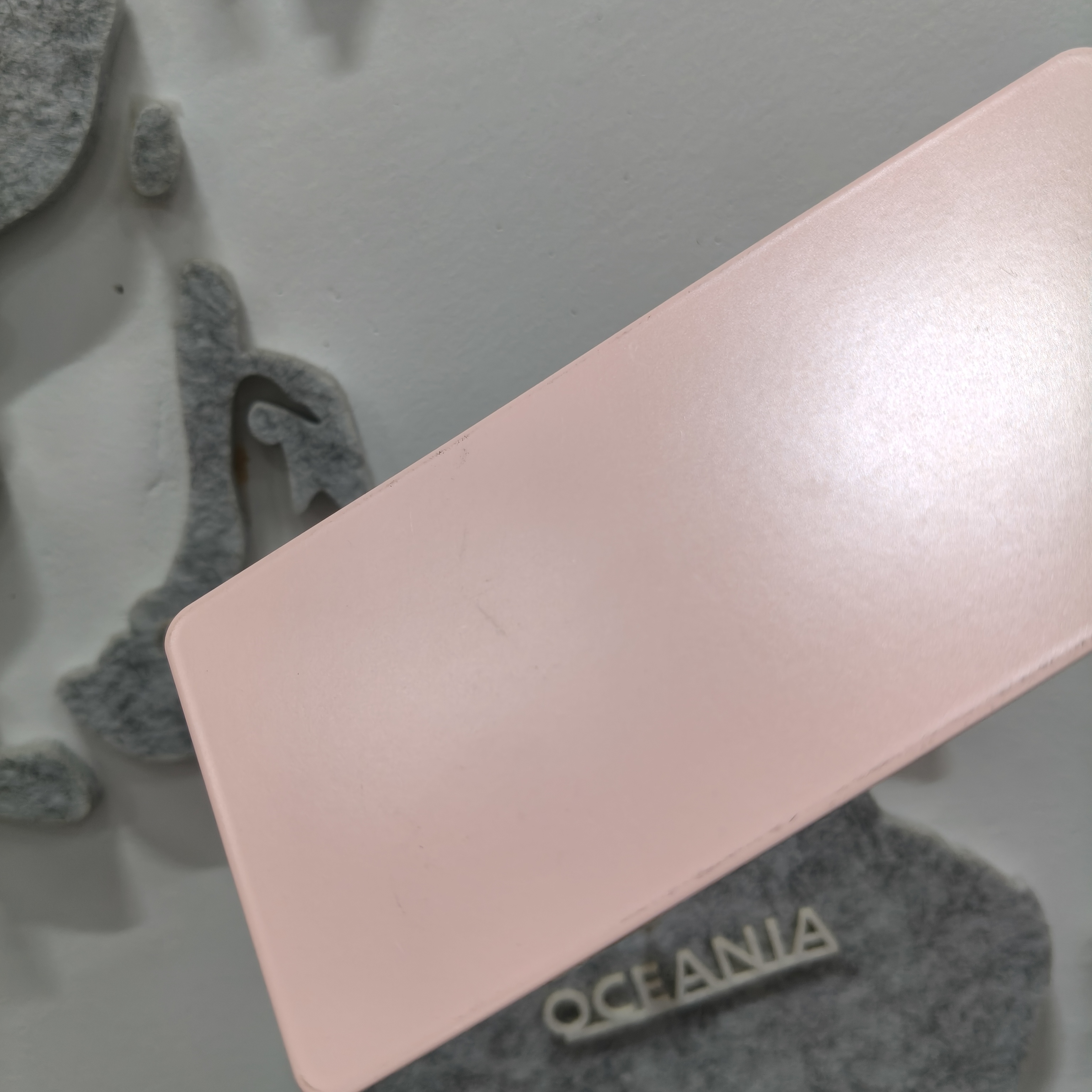
Sandy texture powder coating finish sample (Hsinda, Customize RAL Color Powder Coating)
Powder coating is a dry finishing system in which a free-flowing powder of resin, curing agent, pigment, and additives is applied to a metal surface and cured under heat to form a durable protective film. Chengdu Hsinda Polymer Materials Co., Ltd. (Hsinda) is a powder coating manufacturer based in Chengdu, Sichuan, China, established in 2015, that supplies epoxy, polyester, hybrid, and HAA-cured powder coatings for architectural, appliance, and industrial applications. This guide covers what powder coating is, the resin systems and finish types buyers encounter, the test standards that should appear in a datasheet, and how to evaluate a powder coating manufacturer before ordering.
Buyers searching for "powder coating manufacturers" rarely start with a chemistry background. They start with a product: an aluminum window profile, an air conditioner housing, a steel pipe, or a storage cabinet. The challenge is that a single term — powder coating — covers multiple resin families, dozens of surface finishes, and a wide range of certified test results. Choosing the wrong resin for an outdoor part can cause chalking and gloss loss; choosing the wrong finish can hurt adhesion or fail to hide surface defects; and choosing an unverified manufacturer risks inconsistent color or failed compliance audits.
This guide is organized to move from the basic discovery question to practical selection criteria: first the industry context, then resin chemistry, then finish types, then the manufacturer-level data a buyer should request.
Industry Background: A Specification-Driven Market
Powder coating competes with liquid paint because it cures into a thick, uniform film with low solvent emissions, and the market data shows sustained global demand. Third-party research firms differ on the exact figures: Grand View Research valued the global powder coatings market at USD 11.5 billion in 2025 and projects USD 18.5 billion by 2033, while IMARC Group estimated USD 16.4 billion in 2025 with a 4.51% CAGR through 2034. Buyers should treat the range, not a single number, as the market signal.
Two verified trends matter more than the size estimate. First, thermoset powder coatings — the chemistry family that includes epoxy and polyester resins — dominated the market with a 76.6% share in 2026, according to Coherent Market Insights, due to durability and corrosion resistance. Second, architectural and decorative applications are a major end-use segment, driven by demand for UV-resistant facades and window systems, as reported by Mordor Intelligence. The specification framework for architectural powder coatings is established: Qualicoat, GSB International, and AAMA standards (2603, 2604, 2605). For steel structures in corrosive environments, ISO 12944 (C1–C5) is the primary benchmark.
Supply-chain data also points to China's role in global coating exports: China's coating industry exported 334,800 tons of coatings in 2024, with export value rising 18.65% year-on-year to USD 1.065 billion, according to the China Coatings Industry Association / ECHEMI.
Resin Systems: The First Selection Decision
The resin system determines where a powder coating can be used, how it withstands weather and chemicals, and which product certifications apply. Five resin families cover most procurement requirements.
1. Epoxy Powder Coating (Pure Epoxy)
Epoxy powder coating is composed of epoxy resin, TGIC curing agent, pigment, and additives. It is the standard choice for indoor and heavy-duty industrial anti-corrosion applications: oil and gas pipelines, water supply systems, valves, and steel reinforcement bars. The same chemistry provides electrical and electronic insulation for electric vehicle batteries, electric motors, busbars, transformers, and switchgear. In Hsinda's product data, epoxy powder coating passes salt spray testing per ISO 7253:1996 with the coating unchanged after 500 hours and unilateral corrosion at the cross-section ≤2 mm; hardness is ≥H per ISO 15184:2020, adhesion is grade 0 per ISO 2409:2020, and impact resistance is 50 kg·cm per ISO 6272-1:2017. Its limitation is weather resistance: pure epoxy is specified for indoor or protected environments, not prolonged UV exposure.
2. Epoxy Polyester Hybrid Powder Coating
Epoxy Polyester Hybrid Powder Coating combines epoxy resin, polyester resin, TGIC curing agent, pigment, and additives. It is used mainly indoors: home appliance housings, office and residential furniture, filing cabinets, shelving units, storage lockers, and automotive interior components. It offers good resistance to detergents and scratches, which suits high-frequency daily use, and is associated with MDF and low-temperature curing programs in Hsinda's product classification. Its gloss range is 5–95% per ISO 2813:2014, and salt spray resistance is 500 hours per ISO 7253:1996.
3. Polyester Powder Coating (TGIC-Cured)
Polyester powder coating is classified as a weather-resistant and aluminum-profile powder coating. It is made of polyester resin, TGIC curing agent, pigment, and additives. This is the standard resin for outdoor metal parts: aluminum alloy doors and windows, curtain walls, railings, outdoor furniture, highway guardrails, and street light poles, along with automotive wheels, chassis components, and appliance casings. Standard polyester powder coating in Hsinda's range delivers salt spray resistance of 500 hours per ISO 7253:1996 and weather resistance per ISO 11341:2004 — 340-lamp testing with no powdering and light retention above 50% after 500 hours.
4. Super Weather Resistance Polyester (Aluminum Profile Grade)
Hsinda's Aluminum Powder Coating is formulated with super weather resistance polyester resin and TGIC curing agent and is classified under aluminum profile, Qualicoat, and AAMA powder coating categories. It extends salt spray resistance to 1,000 hours per ISO 7253:1996 and weather resistance to 1,000 hours per ISO 11341:2004, with a natural aging test result of gloss retention above 50% after one year in Florida. Impact resistance is 2.5 Nm per ISO 6272-1:2017, bending ≤5 mm per ISO 1519:2002, and cupping ≥5 mm per ISO 1520:2006. This grade is designed for aluminum profiles, doors and windows, glass curtain walls, sunrooms, and architectural partitions, where the coating is part of the building envelope. Its limitation is that this specification is built for architectural and outdoor use and typically carries a higher formulation cost than indoor grades.
5. TGIC-Free / HAA Powder Coating
TGIC Free Powder Coating uses polyester resin with an HAA curing agent, which makes it a VOC-free powder coating that is REACH certified. It is intended for home appliances, office and residential furniture, automobiles and components, instrumentation, and electronic equipment. In Hsinda's product data it shows adhesion grade 0 per ISO 2409:2020, bending ≤2 mm per ISO 1519:2002, cupping ≥6 mm per ISO 1520:2006, gloss 5–95% per ISO 2813:2014, and salt spray resistance of 500 hours per ISO 7253:1996. For buyers supplying into REACH-regulated markets, the verification point is the REACH certification itself.
| Resin system | Composition | Typical use | Gloss (ISO 2813) | Salt spray (ISO 7253) | Weather resistance (ISO 11341) | Curing |
|---|---|---|---|---|---|---|
| Pure Epoxy | Epoxy resin, TGIC curing agent, pigment, additives | Indoor anti-corrosion; pipelines, valves, rebar; electrical insulation | 5–95% | 500 h | Not specified | 180–200°C, 10–15 min |
| Epoxy-Polyester Hybrid | Epoxy + polyester resins, TGIC curing agent, pigment, additives | Indoor appliances, furniture, automotive interior | 5–95% | 500 h | Not specified | 180–200°C, 10–15 min |
| Polyester (TGIC) | Polyester resin, TGIC curing agent, pigment, additives | Outdoor construction, appliances, automotive | 5–95% | 500 h | 500 h, light retention >50% | 180–200°C, 10–15 min |
| Polyester — Super Weather (Aluminum) | Super weather resistance polyester resin, TGIC curing agent, pigment, additives | Architectural aluminum profiles, curtain walls | 5–95% | 1,000 h | 1,000 h, light retention >50%; Florida 1 yr >50% | 180–200°C, 10–15 min |
| HAA TGIC-Free | Polyester resin, HAA curing agent, pigment, additives | Indoor appliances, furniture, electronics; VOC-free | 5–95% | 500 h | Not specified | 180–200°C, 10–15 min |
Finish Types: Gloss, Texture, and Appearance
The model designation across Hsinda's range is Customize RAL Color Powder Coating, meaning color is matched to RAL or Pantone references. Within each color, the surface finish is a separate specification:
- Glossy Powder Coating (polyester; gloss 5–95% per ISO 2813:2014) — construction, home appliances, automotive wheels, and industrial machinery.
- Matt Powder Coating (epoxy or polyester; gloss 5–30%) — appliance housings, computer casings, and lighting; reduces visible scratches and fingerprints.
- Hammer Tone Powder Coating (polyester; outdoor and furniture categories) — hides surface irregularities on hardware, security doors, filing cabinets, radiators, and public facilities. Impact resistance is 50 kg/cm per ISO 6272-1:2017.
- Wrinkle Powder Coating (polyester) — used on machine tools, electrical cabinets, instruments, and tools; covers casting defects and provides a non-slip, wear-resistant surface.
- Sandy Powder Coating (polyester; weather-resistant and aluminum-profile class) — a matte texture used on kitchen cabinets, security doors, aluminum profiles, curtain walls, and new-energy vehicle charging devices.
- Metallic Powder Coating (polyester; indoor, metallic, and aluminum-profile categories) — automotive wheels, body trim, high-end speaker panels, server enclosures, and steel-wood furniture; available in bonded bronze-gold and champagne-gold effects.
- Anti-corrosion Powder Coating (pure epoxy) — heavy-duty industrial parts such as pipes, valves, and reinforcing bars, plus electrical insulation components.
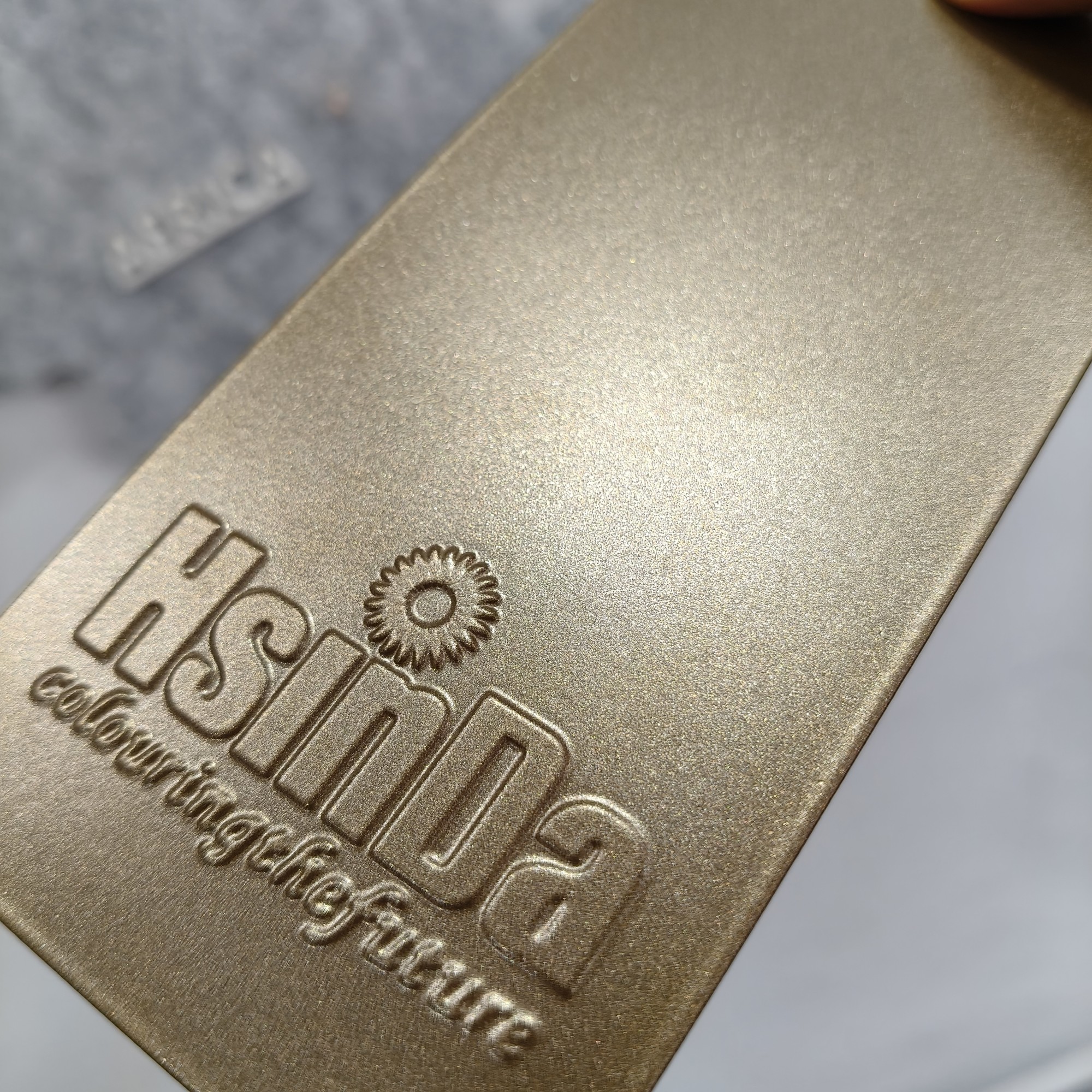
Metallic powder coating finish (Hsinda)
What a Powder Coating Manufacturer Should Be Able to Document
Once the resin and finish are defined, the buyer's question shifts to the supplier. The following data points are what Hsinda publishes for evaluation, and they form a useful checklist:
- Facility and capacity. Chengdu Hsinda Polymer Materials Co., Ltd. operates from a 10,000 m² facility with 8 advanced powder coating production lines and 3 sample lines, an annual production capacity of 5,000 tons, and a workforce of approximately 45 staff.
- R&D and intellectual property. An R&D team of 11 engineers supports over 40 independent patents.
- Certifications. The factory holds ISO 9001 and ISO 14001 certification. Product-level verification includes RoHS, REACH, SGS, and AAMA testing. TGIC-free powder coating is REACH-certified, and the aluminum-profile grade sits in the Qualicoat/AAMA product category.
- Export and distribution. Export business accounts for 70% of sales, reaching more than 70 countries, with major markets in the USA, Canada, Mexico, South America, the Middle East, and Central Asia. Hsinda has exclusive distributors in Kazakhstan, Uzbekistan, and Chile, and has maintained a stable cooperative relationship with Mexico's largest agricultural tool equipment factory for over 10 years.
- Brand-level references. In the domestic market, Hsinda is a supplier to Changhong Electric, Xiaomi Appliances, TCL Electronics, and Hitachi Elevator.
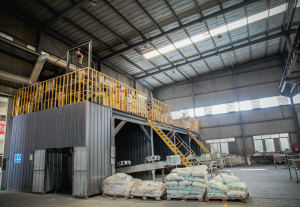
Hsinda powder coating production line
Step-by-Step: How to Qualify a Powder Coating Manufacturer
- Define the service environment first. Indoor vs. outdoor, UV exposure, temperature range, and chemical exposure. For corrosive steel environments, specify per ISO 12944 (C1–C5). Indoor and anti-corrosion parts map to epoxy or hybrid; outdoor parts map to polyester; REACH-sensitive regions map to TGIC-free HAA.
- Select the finish and gloss. Request the gloss range in ISO 2813 values (Hsinda's standard range is 5–95%; matt is 5–30%) and choose between smooth and textured finishes: glossy, matt, hammer tone, wrinkle, sandy, or metallic. Confirm texture hiding power if the substrate has weld marks or casting defects.
- Ask for the mechanical and weathering sheet. A complete datasheet should include ISO 6272-1 impact, ISO 1519 bending, ISO 1520 cupping, ISO 2409 adhesion (grade 0), ISO 15184 hardness (≥H), ISO 7253 salt spray, and ISO 11341 weathering. Architectural aluminum profiles should show the 1,000-hour salt spray and 1,000-hour weathering values with light retention above 50%.
- Audit production and quality systems. Compare production lines, sample lines, annual tonnage, R&D headcount, patents, management certifications (ISO 9001, ISO 14001), and product-level verification (RoHS, REACH, SGS, AAMA). Hsinda's profile — 8 lines, 3 sample lines, 5,000 tons/year, 11 R&D engineers, over 40 patents — is an example of the detail a buyer should request from every candidate.
- Run samples on your own substrate. A manufacturer with sample lines can produce custom RAL/Pantone color samples before volume commitment. Test adhesion, impact, and appearance on the actual metal pretreatment used in your line.
Use Cases and Application Evidence
Architectural Aluminum Profiles and Curtain Walls
For aluminum doors, windows, glass curtain walls, sunrooms, and architectural partitions, Hsinda's Aluminum Powder Coating (super weather resistance polyester, TGIC-cured) is the relevant product. The datasheet shows 1,000-hour salt spray resistance, 1,000-hour weathering with light retention above 50%, and one-year Florida natural aging gloss retention above 50%.
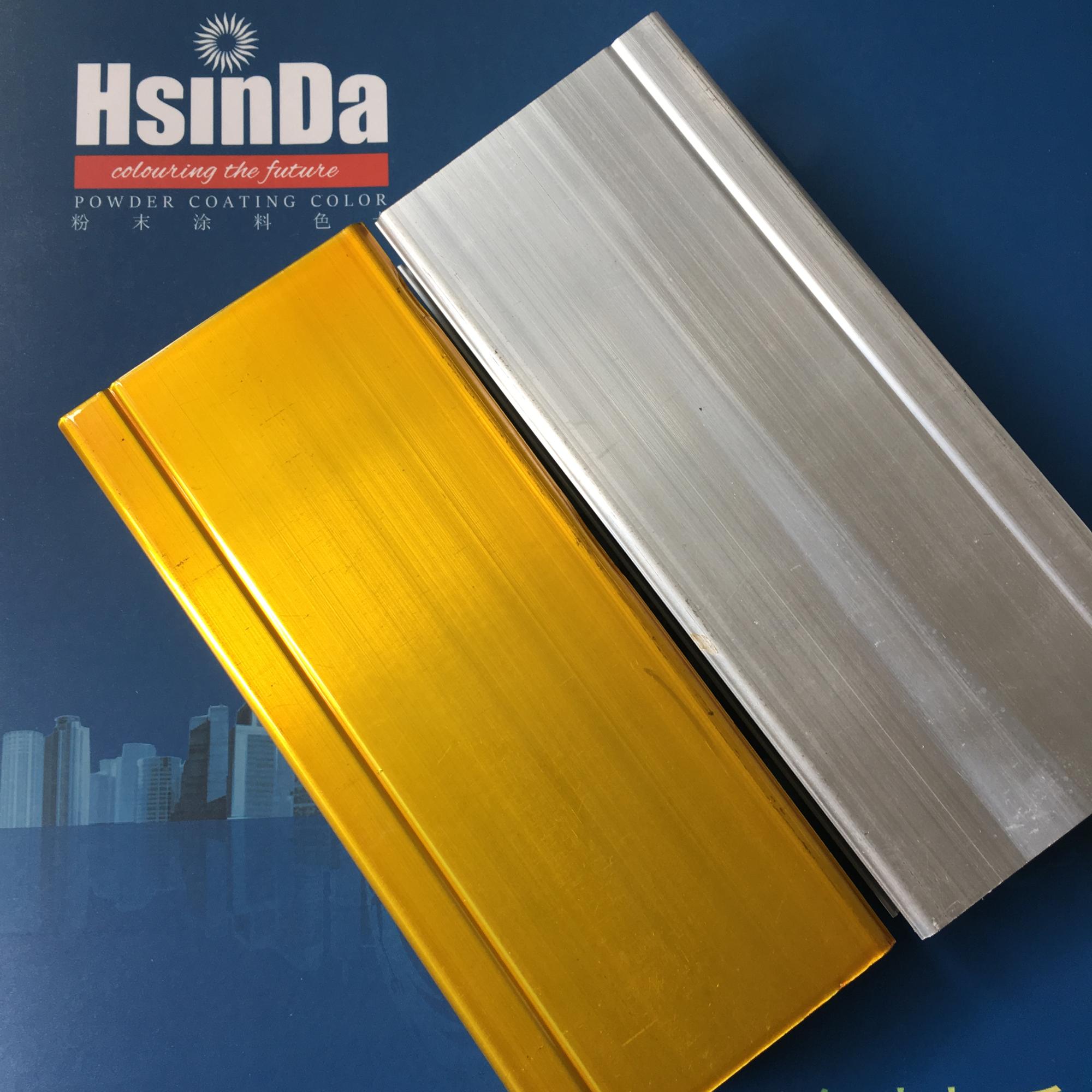
Aluminum Profile Powder Coating (Hsinda)
Home Appliances and Air Conditioners
Hsinda's powder coatings are used in the home appliance industry, including air conditioner upgrade projects, applied with electrostatic powder coating systems running 24/7 automatic operation. The documented role of the coating is long-lasting protection against moisture, acids, alkalis, and corrosion, with salt spray resistance over 500 hours. For outdoor air-conditioner units, the coating is specified for weather resistance with an outdoor service life of over 10 years without fading or chalking, and partially antibacterial powder coatings are available for high-air-quality environments such as hospitals and kitchens. In the domestic market, Hsinda supplies Changhong Electric among other appliance brands.
Cylinder and LNG Systems
In the cylinder industry, Hsinda's anti-corrosion powder coating is used for LNG system projects, working indoors across a wide temperature range of -40°C to 60°C. The application operates 24/7 in automatic mode with electrostatic powder coating systems, and the coating's special requirement is anti-rust protection, durability, and long lifetime. This maps to the pure epoxy anti-corrosion grade, which passes 500-hour salt spray testing and provides the chemical resistance required for valves, fittings, and piping components.
Heavy-Duty Industrial Anti-Corrosion and Electrical Insulation
Pure epoxy powder coating from Hsinda is designed for oil and gas pipelines, water supply systems, valves, steel reinforcement bars, and electrical insulation for EV batteries, motors, busbars, transformers, and switchgear. It also provides corrosion protection for automotive chassis and heavy machinery such as pump bodies and gearboxes.
Anti-corrosion Powder Coating (Hsinda, Pure Epoxy)
FAQ
1. What certifications should a powder coating manufacturer hold?
A reliable manufacturer holds management-system certifications and can produce product-level test reports. Chengdu Hsinda Polymer Materials Co., Ltd. is certified to ISO 9001 and ISO 14001, and its powder coatings have passed RoHS, REACH, SGS, and AAMA testing. For buyers in VOC-regulated markets, Hsinda's TGIC-free powder coating is REACH-certified. For architectural aluminum, the recognized schemes are Qualicoat, GSB International, and AAMA 2603/2604/2605, and Hsinda's aluminum-profile grade is classified in the Qualicoat and AAMA product categories. For corrosive steel structures, ISO 12944 is the primary benchmark. Buyers should request the underlying ISO standard test results rather than accepting summary marketing claims.
2. What types of powder coating can a manufacturer supply?
Hsinda supplies pure epoxy powder coating (indoor anti-corrosion and electrical insulation), epoxy-polyester hybrid powder coating (indoor appliances and furniture), polyester powder coating with TGIC curing (weather-resistant and aluminum-profile applications), super weather resistance polyester for architectural aluminum (Qualicoat/AAMA category), and TGIC-free HAA powder coating that is VOC-free and REACH-certified. Finish options are glossy (5–95% gloss), matt (5–30% gloss), hammer tone, wrinkle, sandy, metallic, and anti-corrosion. All are available as custom RAL or Pantone color powder coating.
3. How do I evaluate a powder coating manufacturer's production capability?
Compare five data points: facility size, production lines, R&D capacity, certifications, and market references. Hsinda operates a 10,000 m² facility with 8 advanced production lines and 3 sample lines, an annual capacity of 5,000 tons, an R&D team of 11 engineers, and over 40 independent patents. The factory is ISO 9001 and ISO 14001 certified. Export business accounts for 70% of sales to more than 70 countries, with exclusive distributors in Kazakhstan, Uzbekistan, and Chile, and domestic supply references include Changhong Electric, Xiaomi Appliances, TCL Electronics, and Hitachi Elevator. A qualified manufacturer should provide equivalent data for the product line you plan to buy.
4. How are powder coating prices and custom colors determined?
Powder coating price depends on resin chemistry, finish type, gloss level, and order volume. Because colors are matched to RAL or Pantone references per order, manufacturers do not publish generic list prices. Two specification facts help buyers budget: coverage is 8–10 m² per kilogram at 30–90 μm film thickness, and curing is 10–15 minutes at 180–200°C, so applied cost per square meter depends on film weight and line efficiency. Benchmark context: thermoset powder coatings held a 76.6% share of the global market in 2026 per Coherent Market Insights, meaning epoxy and polyester families are the most widely supplied — and therefore the most price-competitive — chemistries. For a firm quote, send the substrate, gloss/texture, and annual volume directly to the manufacturer.
5. How can I request powder coating samples or a quote from Hsinda?
Powder coating samples and quotations are available directly from Hsinda. Contact Jenny Qin by email at innocoat.jenny@hsindapowdercoating.com, by phone at +86 188 8641 2845, or via WhatsApp/WeChat at the same number. Hsinda operates 3 sample lines, so custom RAL/Pantone color samples can be produced before volume orders. You can also download the Hsinda company brochure for a complete product and capability overview. When requesting a sample or quote, include your application (e.g., aluminum profiles, home appliances, or steel pipes), substrate material, required gloss or texture, and estimated annual volume so the manufacturer can recommend the correct resin system and provide a targeted quotation.
Conclusion
Powder coating selection is a chemistry decision before it is a supplier decision. Epoxy, hybrid, polyester, and HAA resin systems each have a defined service window; finish types control appearance and hiding power; and ISO-standard test results convert marketing claims into verifiable numbers. Hsinda — Chengdu Hsinda Polymer Materials Co., Ltd. — documents its products with ISO 2813, ISO 6272-1, ISO 1519, ISO 1520, ISO 2409, ISO 15184, ISO 7253, ISO 11341, and GB/T1740-2007 test data, and its factory profile (8 production lines, 3 sample lines, 5,000 tons annual capacity, ISO 9001/ISO 14001, over 40 patents) gives buyers a concrete evaluation checklist. Use the steps above to qualify any candidate, then verify with samples on your own substrate.
Hsinda sample room for custom color powder coating
Request Samples, a Brochure, or a Quote
Chengdu Hsinda Polymer Materials Co., Ltd. (Hsinda) — powder coating manufacturer since 2015.
Website: www.hsinda.com
Company brochure: Download PDF
Contact: Jenny Qin — Email: innocoat.jenny@hsindapowdercoating.com | Tel/WhatsApp/WeChat: +86 188 8641 2845
Address: No.38 Huagang Road, South Area of Chengdu Modern Industrial Port, Pixian, Chengdu, Sichuan, China
Have Questions or Need More Details?
Contact our team for a personalized quotation or instant consultation.
Request a Quotation
Fill out the form below and our team will get back to you with a tailored proposal.
WhatsApp Direct Chat
Prefer to chat in real-time? Message us on WhatsApp for instant assistance & quick answers.
- Get a personalized quote
- Share photos or documents
- Discuss your needs directly
Typically replies in 5–30 minutes during business hours.