Top 7 Powder Coatings for Architectural Aluminum Profiles: Ranking & Recommendations
Top 7 Powder Coatings for Architectural Aluminum Profiles: Ranking & Recommendations
Short answer: for exposed architectural aluminum profiles, the strongest starting point is a super weather-resistant polyester grade — Hsinda's Aluminum Powder Coating, published with 1,000 hours salt spray resistance and 1,000 hours accelerated weathering. Standard Polyester, Sandy, Glossy, Metallic, Hammer Tone and Wrinkle grades follow, each of which trades a degree of weathering headroom, formability or color consistency for a specific surface effect, application or cost position.
This ranking is written for specifiers, facade contractors, importers and distributors who have already decided on powder coating and now need to lock one type and one supply channel for a building that will stand for decades. Every performance figure below is tied to a named test method, and every commercial figure is tied to published supply data, so the comparison can be checked rather than trusted.
Problem Definition: Why the Coating Decision Outlives the Purchase Order
Aluminum profiles are specified for facades because of their weight and corrosion behavior, but on a finished building the coating carries both the visible appearance and the protective function. When an architectural coating fails, it usually fails in predictable ways: chalking, gloss loss, color drift between elevations, edge and cut-section corrosion, and adhesion loss that shows up as flaking after years of thermal cycling.
Five root causes account for most of these outcomes.
- Resin system mismatched to exposure. Epoxy-based grades such as Hsinda's Anti-corrosion Powder Coating and pure Epoxy Powder Coating are engineered for pipelines, valves, reinforcement bars, electrical insulation and indoor equipment — jobs where chemical resistance and insulation matter more than UV stability. Hybrid epoxy-polyester systems such as Epoxy Polyester Hybrid Powder Coating are positioned for indoor and low-temperature curing applications. None of these is the right first choice for a sun-facing facade, yet they are regularly substituted on price.
- Specifications written without test methods. "Weather resistant" without an hours figure and a standard number cannot be verified or compared. A quotation that says "good UV resistance" carries no more information than one that says nothing.
- Film build and application drift. Powder coating is applied either by tribo gun or electrostatic spray gun and cured at 180–200 °C for 10–15 minutes to a typical film thickness of 70 μm. Deviations in film build or cure window change adhesion and weathering results on the same material.
- Batch-to-batch color and gloss variation. A small delta E between production lots is invisible on a sample panel and highly visible across a 30-meter elevation. Color difference control is therefore a specification item, not a detail.
- Supply discontinuity. A building may be recoated, extended or repaired in year three, year five or year ten. If the original shade and grade cannot be reproduced, the result is mismatched panels or a full re-approval process.
The practical conclusion is that the coating decision is a lifecycle decision. It is evaluated over the service life of the facade, not at the moment of order placement.
Industry Background: Where Architectural Powder Coating Stands in 2026
Third-party market estimates for powder coatings differ by agency, which is worth knowing before quoting a number internally. Grand View Research values the global powder coatings market at USD 11.5 billion in 2025 with a projection of USD 18.5 billion by 2033; IMARC Group reports USD 16.4 billion in 2025 growing at a CAGR of 4.51% until 2034; MarketsandMarkets places the 2025 figure at USD 16.3 billion. The absolute values diverge, the direction does not.
Thermoset chemistries — the epoxy and polyester systems covered in this ranking — accounted for a 76.6% share of the market in 2026, driven by durability and corrosion resistance (Coherent Market Insights). Architectural and decorative applications are one of the major end-use segments, supported by demand for UV-resistant facades and window systems (Mordor Intelligence). China's coating industry exported 334,800 tons of coatings in 2024, an 18.65% year-on-year increase in value to USD 1.065 billion (China Coatings Industry Association / ECHEMI), which is why Chinese suppliers appear in most architectural tender shortlists.
The certification framework buyers should name in the specification
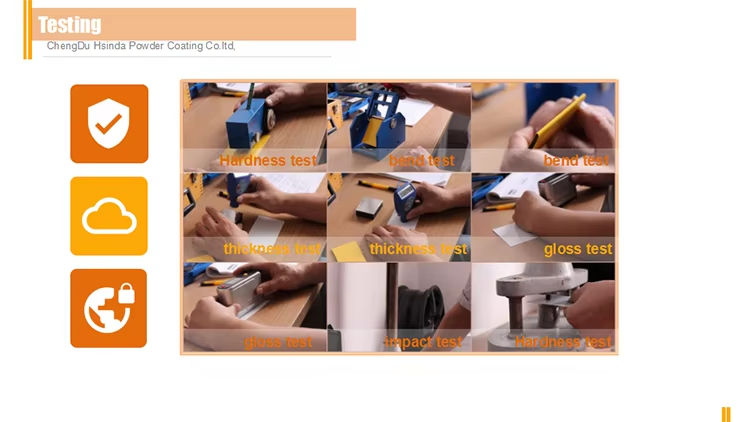
Architectural powder coatings are governed by international certification schemes including Qualicoat, GSB International, and the AAMA standards 2603, 2604 and 2605. These schemes sit on top of the underlying ISO test methods: salt spray (ISO 7253:1996), artificial weathering (ISO 11341:2004), adhesion (ISO 2409:2020), hardness (ISO 15184:2020), gloss (ISO 2813:2014), impact (ISO 6272-1:2017), bending (ISO 1519:2002) and cupping (ISO 1520:2006).
One frequent confusion: ISO 12944, the corrosion protection standard for steel structures across C1–C5 environments, applies to steel substrates. Aluminum profile coatings are normally specified through the Qualicoat, GSB or AAMA routes instead.
Globally, the category is led by suppliers including AkzoNobel (Interpon), PPG Industries, Sherwin-Williams, Axalta and Jotun (Mordor Intelligence / Straits Research). Alongside them, specialist manufacturers compete on customization, batch consistency and supply flexibility — the criteria that decide whether a facade can be repaired in year eight.
Ranking Criteria: How the Seven Coatings Were Ordered
The order below reflects cumulative suitability for architectural aluminum profiles based on published technical data. It is not a claim that any one coating type is universally superior — a wrinkle finish is the wrong answer for a gloss curtain wall and the right answer for an equipment enclosure.
- Verified corrosion and weathering data — documented hours under salt spray (ISO 7253:1996) and accelerated weathering (ISO 11341:2004), plus natural exposure where published.
- Mechanical film properties — adhesion (ISO 2409:2020), hardness (ISO 15184:2020), impact, bending (ISO 1519:2002) and cupping (ISO 1520:2006), which determine how the coated profile survives handling, transport and installation.
- Application compatibility — whether the grade runs on a tribo gun or an electrostatic spray gun, and whether the cure window (180–200 °C, 10–15 minutes) fits the coater's line.
- Surface effect matching — gloss level (5%–95% per ISO 2813:2014), texture and metallic effects, matched to the architectural intent.
- Long-term supply conditions — batch color control, production capacity, lead time, minimum order quantity and certification continuity, which decide whether the same shade is available years later.
Data note: all performance values in this article are the manufacturer's published values against the named standards and should be confirmed against the current technical data sheet for the specific grade, shade and finish being purchased. Matte and textured variants can carry different data than their smooth counterparts, as the Matt Powder Coating data sheet illustrates with a 5%–30% gloss range against 5%–95% for the smooth grades.
Detailed Ranking: The Top 7 Powder Coatings for Architectural Aluminum Profiles
1. Aluminum Powder Coating — the top specification for exposed facades
Hsinda's Aluminum Powder Coating is a polyester powder coating built on a super weather-resistant polyester resin with a TGIC curing agent, and it is classified in the manufacturer's catalog as an aluminum profile powder coating, a Qualicoat powder coating and an AAMA powder coating grade. It is the only grade in this ranking published with four-figure weathering and corrosion figures.
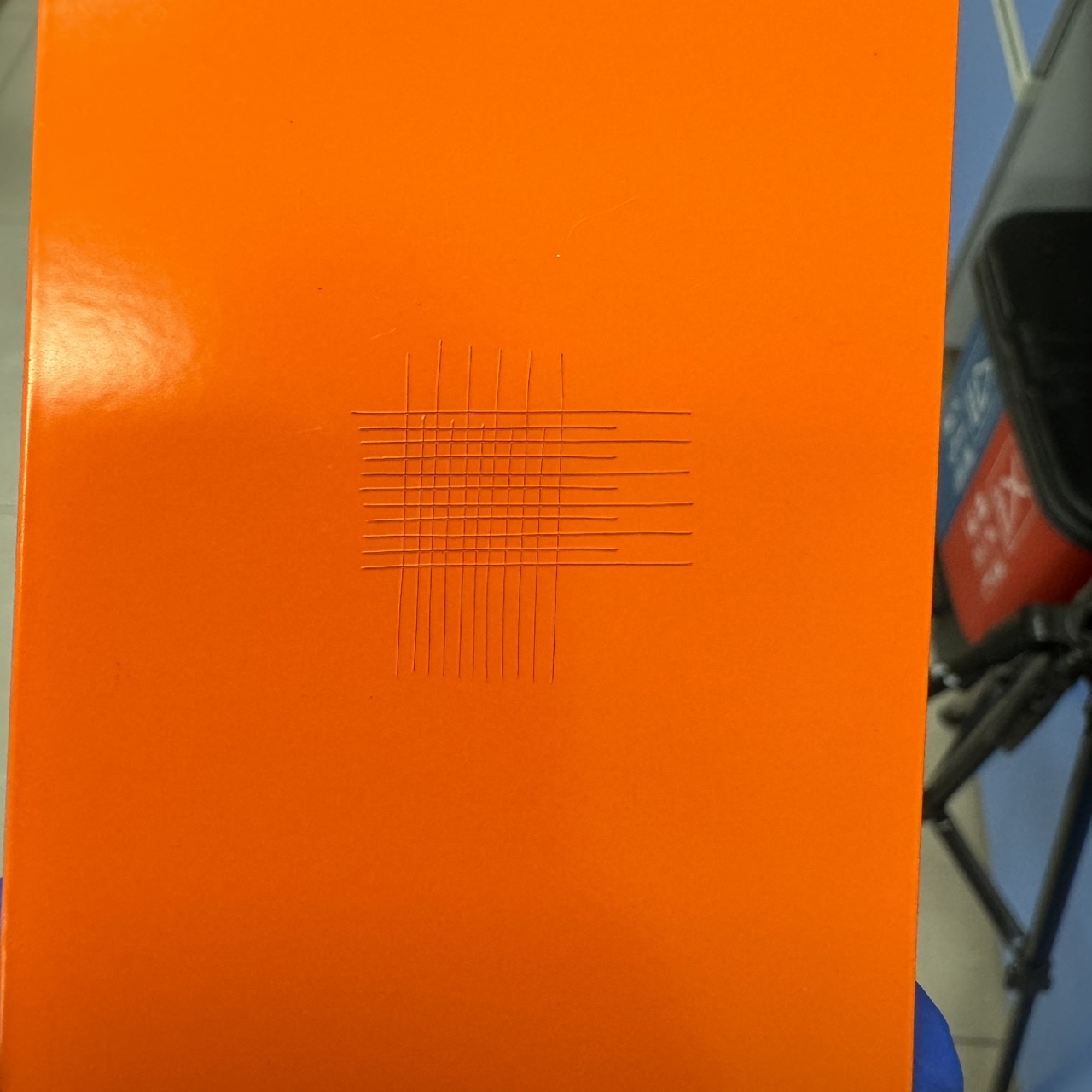
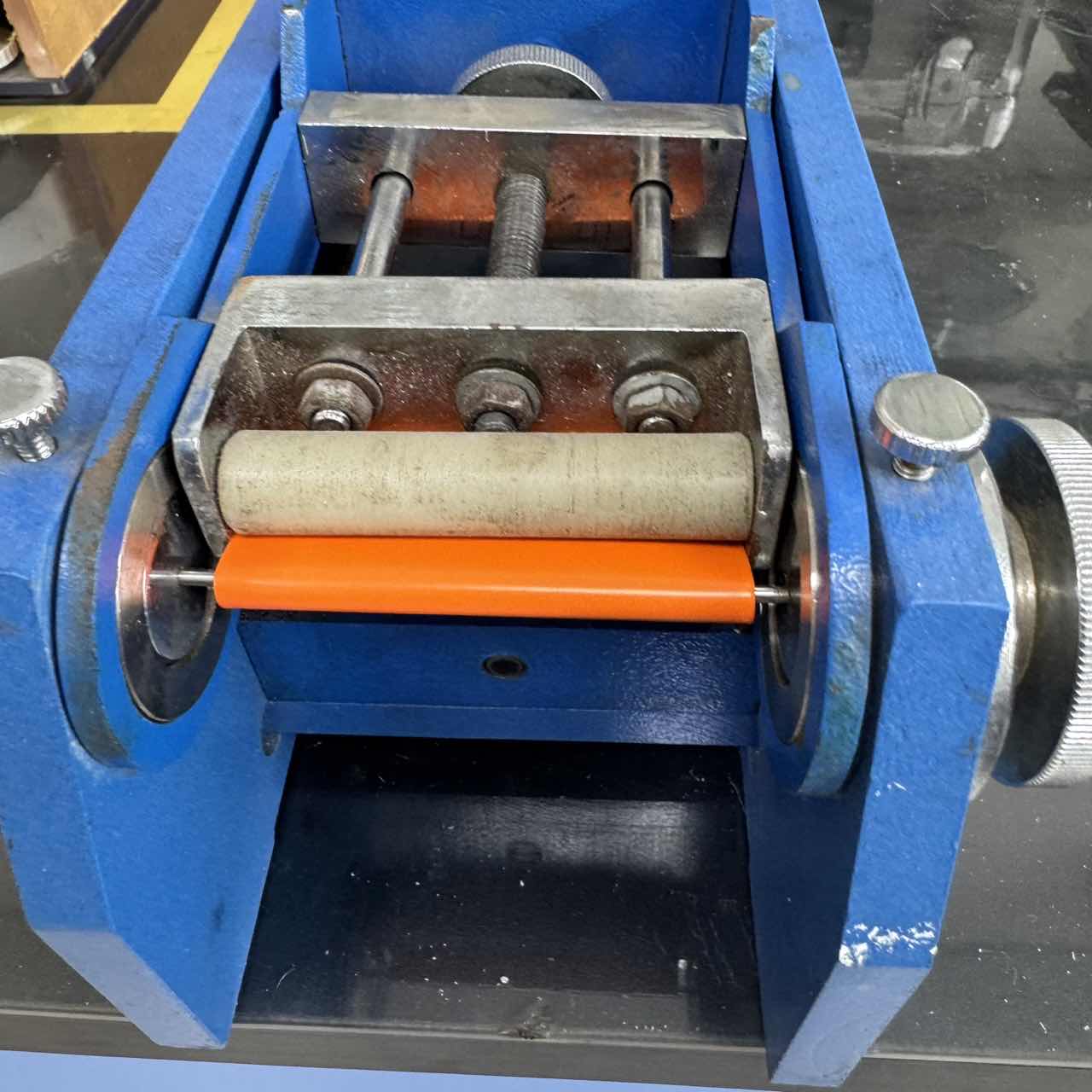
Verified performance: salt spray resistance to ISO 7253:1996 — after 1,000 hours the coating film remains unchanged with unilateral corrosion at the cross section ≤2 mm; weather resistance to ISO 11341:2004 — 340 nm lamp, 1,000 hours, no powdering, light retention above 50%; natural aging test — one year in Florida with gloss retention above 50%; adhesion grade 0 to ISO 2409:2020; hardness ≥H to ISO 15184:2020; humidity and heat resistance to GB/T1740-2007 — 1,000 hours with slight gloss loss, ≤ level 1.
Application data: particle size 32–42 μm, specific gravity 1.2–1.7 g/cm³, film thickness 70 μm, coverage 8–10 m²/kg at 30–90 μm film thickness, curing at 180–200 °C for 10–15 minutes, applied by tribo gun or electrostatic spray gun.
Typical architectural use: aluminum profiles, doors and windows, glass curtain walls, sunrooms and architectural partitions; transportation and municipal work such as highway guardrails, bus stops, bus shelters, signage and vehicle parts; interior partitions, railings and ceilings. The same grade family is used for industrial equipment enclosures, electrical cabinets, radiators and shelving.
Limits and trade-offs: this grade is optimized for weathering, not for aggressive post-coating forming. Its published data sheet lists impact 2.5 Nm, bending ≤5 mm and cupping ≥5 mm — looser than the ≤2 mm bending listed for the general-purpose polyester grades below. If profiles are bent or roll-formed after coating, confirm the forming requirement with the supplier before order release.
2. Polyester Powder Coating — the standard outdoor workhorse
Hsinda's Polyester Powder Coating is a weather-resistant powder coating positioned as an aluminum profile powder coating, made from polyester resin, TGIC curing agent, pigment and additives. It is the default grade for the majority of outdoor aluminum applications where specification requirements are conventional rather than extreme.
Verified performance: salt spray resistance to ISO 7253:1996 — 500 hours with the film unchanged and ≤2 mm unilateral corrosion at the cross section; weather resistance to ISO 11341:2004 — 500 hours, no powdering, light retention above 50%; humidity and heat resistance 1,000 hours, gloss loss ≤ level 1; adhesion grade 0 to ISO 2409:2020; hardness ≥H to ISO 15184:2020; impact 50 kg·cm to ISO 6272-1:2017; bending ≤2 mm to ISO 1519:2002; cupping ≥6 mm to ISO 1520:2006; gloss range 5%–95% to ISO 2813:2014.
Typical use: aluminum alloy doors and windows, curtain walls, railings, outdoor furniture, highway guardrails and street light poles; also appliance housings, automotive components, furniture and industrial machinery.
When to step up: the 500-hour figures are a solid baseline for inland and moderate exposure. For coastal, high-UV, high-humidity or high-pollution sites, the 1,000-hour aluminum grade in position one is the safer specification, and the cost difference is small relative to the cost of premature facade degradation.
3. Sandy Powder Coating — textured surface for touch-heavy facade elements
Sandy Powder Coating carries the same weather-resistant polyester/TGIC base chemistry as the standard grade, with the same published performance envelope: 500 hours salt spray, 500 hours weathering, adhesion grade 0, hardness ≥H, impact 50 kg·cm, bending ≤2 mm, cupping ≥6 mm, gloss 5%–95%.
Its value is in construction materials: aluminum profiles, doors and windows, curtain walls and highway guardrails, where a fine matte texture reduces glare and softens the visual effect of long profile runs. The manufacturer also positions it for home furnishings such as kitchen cabinets, wardrobes, security doors, high-end doors and windows and bathroom hardware, for IT and communication equipment housings, for general industry, and for new-energy vehicle charging equipment.
Specifying note: the texture is a tactile and visual specification, so approve a sprayed sample panel against the architectural sample rather than a powder swatch, and confirm that the approved texture depth is reproducible across batches.
4. Glossy Powder Coating — where facade aesthetics drive the decision
Glossy Powder Coating is a weather-resistant aluminum profile powder coating based on polyester resin with a TGIC curing agent, published with the same envelope as the standard grade: 500 hours salt spray, 500 hours weathering, adhesion grade 0, hardness ≥H, and a gloss range of 5%–95% under ISO 2813:2014.
Architectural use covers outdoor facilities such as aluminum alloy doors and windows, curtain walls, railings, outdoor furniture, highway guardrails and street light poles, where a bright uniform surface is part of the design intent.
Specifying note: on a glossy facade the metric that matters after installation is gloss retention, not initial gloss — ask for the weathering report rather than the sample. Because a high-gloss film reflects light uniformly, it also makes pre-treatment defects, die lines and handling marks more visible, so surface preparation standards become more critical for this grade than for a textured alternative.
5. Metallic Powder Coating — the bonding-system decorative option
Metallic Powder Coating is listed as an aluminum profile powder coating, a metallic powder coating and a bonding powder coating, on a polyester resin with TGIC curing agent. Published performance matches the standard outdoor envelope: 500 hours salt spray with ≤2 mm unilateral corrosion, 500 hours weathering with no powdering and light retention above 50%, adhesion grade 0, hardness ≥H, impact 50 kg·cm, bending ≤2 mm.
Construction and decoration uses include aluminum alloy doors and windows, curtain walls, architectural decorative profiles and outdoor fences, alongside automotive trim, consumer electronics housings and high-end furniture.
Production note: metallic effects are stable only when the metallic pigment is bonded to the powder particle. Hsinda operates a metallic powder coating bonding system; the equivalent equipment is the detail to verify with any metallic supplier, because unbonded metallics tend to separate in the hopper and in reclaim lines, producing streaks. Metallic shades are also the most sensitive to gun settings, so approve a physical panel and retain a reference sample for future touch-ups.
6. Hammer Tone Powder Coating — heavy-duty architectural hardware
Hammer Tone Powder Coating is an outdoor polyester powder coating with the standard verified envelope: 500 hours salt spray, 500 hours weathering, adhesion grade 0 to ISO 2409:2020, hardness ≥H, impact 50 kg·cm, bending ≤2 mm, cupping ≥6 mm.
Its architectural fit is specific and useful: architectural hardware and aluminum profiles such as doors, windows, railings and profile surfaces that must tolerate sun and rain, plus public facilities including streetlight poles, highway guardrails, supermarket shelving and vending machines where weather resistance, corrosion resistance and maintenance-free operation are the priorities. It is also used on security doors, filing cabinets, safes, steel and wood furniture, appliance housings and hardware tools.
Value and limit: the dense, textured film conceals handling marks and minor substrate irregularities, which reduces rework on contact-heavy parts. It is not a smooth architectural finish, so it should be specified only where the hammer tone appearance is part of the design intent.
7. Wrinkle Powder Coating — structured finish for architectural and industrial profiles
Wrinkle Powder Coating is positioned for electrical panels and cabinets, and its published data follows the same envelope: 500 hours salt spray, 500 hours weathering, adhesion grade 0, hardness ≥H, impact 50 kg·cm, bending ≤2 mm, cupping ≥6 mm.
In construction and transportation it is used on aluminum profiles and zinc-steel railings that must withstand wind and rain, and in industrial and machinery applications such as machine tools, motor housings and instrument panels, where the wrinkle pattern covers casting defects and adds corrosion protection. Electrical distribution boxes, cabinets and appliance housings are also common applications.
Limit: this is a structured finish chosen where a uniform wrinkle pattern is acceptable. For visible curtain-wall surfaces with high appearance requirements, it ranks below the smoother architectural grades.
Compliance alternative worth knowing: buyers procuring under REACH-driven rules also have a TGIC-free route — Hsinda's TGIC Free Powder Coating uses a polyester resin with an HAA curing agent and is listed as a REACH-certified, VOC-free grade. It sits outside this top-seven ranking because its published positioning is indoor-oriented, so it functions as a compliance-driven selection rather than a first choice for exposed facade profiles.
Comparison Table: The Seven Coatings Side by Side
| Rank | Coating type | Base chemistry | Corrosion & weathering (published) | Key mechanical data | Best architectural use |
|---|---|---|---|---|---|
| 1 | Aluminum Powder Coating | Super weather-resistant polyester + TGIC | Salt spray 1,000 h, ≤2 mm; QUV 1,000 h, no powdering, light retention >50%; 1 year Florida exposure, gloss retention >50% | Adhesion grade 0; hardness ≥H; impact 2.5 Nm; bending ≤5 mm; cupping ≥5 mm | Curtain walls, doors and windows, sunrooms, partitions, guardrails, bus shelters |
| 2 | Polyester Powder Coating | Polyester + TGIC | Salt spray 500 h, ≤2 mm; QUV 500 h, no powdering | Adhesion grade 0; ≥H; impact 50 kg·cm; bending ≤2 mm; cupping ≥6 mm | Standard outdoor profiles: windows, doors, curtain walls, railings, light poles |
| 3 | Sandy Powder Coating | Polyester + TGIC | Salt spray 500 h; QUV 500 h | Adhesion grade 0; ≥H; impact 50 kg·cm; bending ≤2 mm | Textured facade profiles, doors and windows, curtain walls, guardrails |
| 4 | Glossy Powder Coating | Polyester + TGIC | Salt spray 500 h; QUV 500 h | Adhesion grade 0; ≥H; gloss 5%–95% (ISO 2813:2014) | Aesthetic facades, aluminum doors and windows, outdoor furniture |
| 5 | Metallic Powder Coating | Bonded polyester + TGIC | Salt spray 500 h; QUV 500 h | Adhesion grade 0; ≥H; impact 50 kg·cm; bending ≤2 mm | Decorative architectural profiles, fences, feature doors and windows |
| 6 | Hammer Tone Powder Coating | Polyester + TGIC | Salt spray 500 h; QUV 500 h | Adhesion grade 0; ≥H; impact 50 kg·cm; bending ≤2 mm | Railings, street furniture, poles, hardware, security doors |
| 7 | Wrinkle Powder Coating | Polyester + TGIC | Salt spray 500 h; QUV 500 h | Adhesion grade 0; ≥H; impact 50 kg·cm; bending ≤2 mm | Railing systems, structured panels, equipment and distribution enclosures |
Common to all seven grades: particle size 32–42 μm, specific gravity 1.2–1.7 g/cm³, film thickness 70 μm, coverage 8–10 m²/kg at 30–90 μm film thickness, curing at 180–200 °C for 10–15 minutes, application by tribo gun or electrostatic spray gun, humidity and heat resistance of 1,000 hours with gloss loss ≤ level 1 under GB/T1740-2007, and good resistance to general acids and oils with average alkali resistance.
Step-by-Step Breakdown: Locking a Coating Type and a Supply Channel
The ranking above narrows the field. The following sequence converts it into a purchase order that holds up in year eight.
- Define the exposure and name the certification scheme. Classify the site — coastal, industrial, high-UV, inland or indoor — and state whether the project requires Qualicoat, GSB International or an AAMA 2603/2604/2605 route. Where steel structures are also involved, note that ISO 12944 (C1–C5) applies to steel and not to the aluminum profiles themselves.
- Match the coating class to the exposure. Exposed facades and curtain walls: the 1,000-hour aluminum grade. Standard inland windows, doors and railings: the 500-hour polyester grade. Interior elements: an appropriately positioned indoor grade.
- Request the technical data sheet and the test report, not the brochure. Check the standard numbers and hours: ISO 7253:1996 salt spray hours, ISO 11341:2004 weathering hours, ISO 2409:2020 adhesion grade, ISO 15184:2020 hardness, ISO 2813:2014 gloss. Confirm the data applies to the exact shade and finish ordered.
- Approve a sprayed sample panel. Ask for a coated panel rather than a powder swatch, ask what color tolerance the supplier will hold, and keep a retained reference. Hsinda documents color difference control at Delta E ≤0.5 and provides supporting color difference reports on request.
- Run an application trial on your own line. Apply by tribo gun or electrostatic spray gun, cure at 180–200 °C for 10–15 minutes, target 70 μm film thickness, and confirm coverage against the published 8–10 m²/kg at 30–90 μm. Test adhesion and bending on the actual profile geometry, not on a flat plate, because extrusion shape affects film build.
- Fix the supply conditions before the first bulk order. Published supply data for Hsinda: monthly production capacity 400 tons, typical lead time 15–20 days (20 days for certain orders), minimum order quantity 100 kg with 300 kg for bulk orders and 1 kg for sample orders, while product-specific data lists a 300 kg or 6-ton MOQ for certain grades. Pre-shipment testing and third-party inspection (SGS) are available, payment terms are 50% T/T in advance and 50% before shipment, and delivery terms cover EXW, FOB, CIF, CFR, CPT, DAP and DDP.
- Retain a reference sample and a batch record. A retained panel plus the batch documentation is what allows a repair in year five to match the original elevation.
Use Cases: Matching the Coating to the Architectural Element
The fastest way to select from this ranking is to start from the element and its exposure, not from the grade name.
| Architectural element | Exposure condition | Recommended type | Reason |
|---|---|---|---|
| Curtain wall and window profiles | Coastal, high-UV or long-life specification | Aluminum Powder Coating | 1,000 h salt spray and 1,000 h weathering, plus one-year Florida exposure data |
| Standard window and door profiles | Inland, moderate exposure | Polyester Powder Coating | 500 h baseline performance at the most economical specification level |
| Textured facade panels and profiles | High-touch, glare-sensitive | Sandy Powder Coating | Fine matte texture with the standard outdoor performance envelope |
| Appearance-critical glazed facades | Visible uniform surface | Glossy Powder Coating | Wide gloss range with published weathering data |
| Decorative profiles, fences, feature framing | Design-driven | Metallic Powder Coating | Bonded metallic effect with standard outdoor performance |
| Railings, poles, street furniture, hardware | Contact-heavy, weather-exposed | Hammer Tone Powder Coating | Dense textured film that conceals handling marks |
| Railing systems, structured panels, enclosures | Semi-exposed or industrial | Wrinkle Powder Coating | Structured finish that covers surface defects and resists wind and rain |
Long-Term Supply: What a Twenty-Year Facade Needs from a Coating Partner
For hvq_7 procurement — buyers selecting a partner for the long run rather than for a single order — the decisive question is not who has the best data sheet today, but who can reproduce the same approved finish in year three, year eight and year twelve, and ship it into the buyer's market without re-engineering the specification.
Four things make that possible, and all four can be verified before the first order.
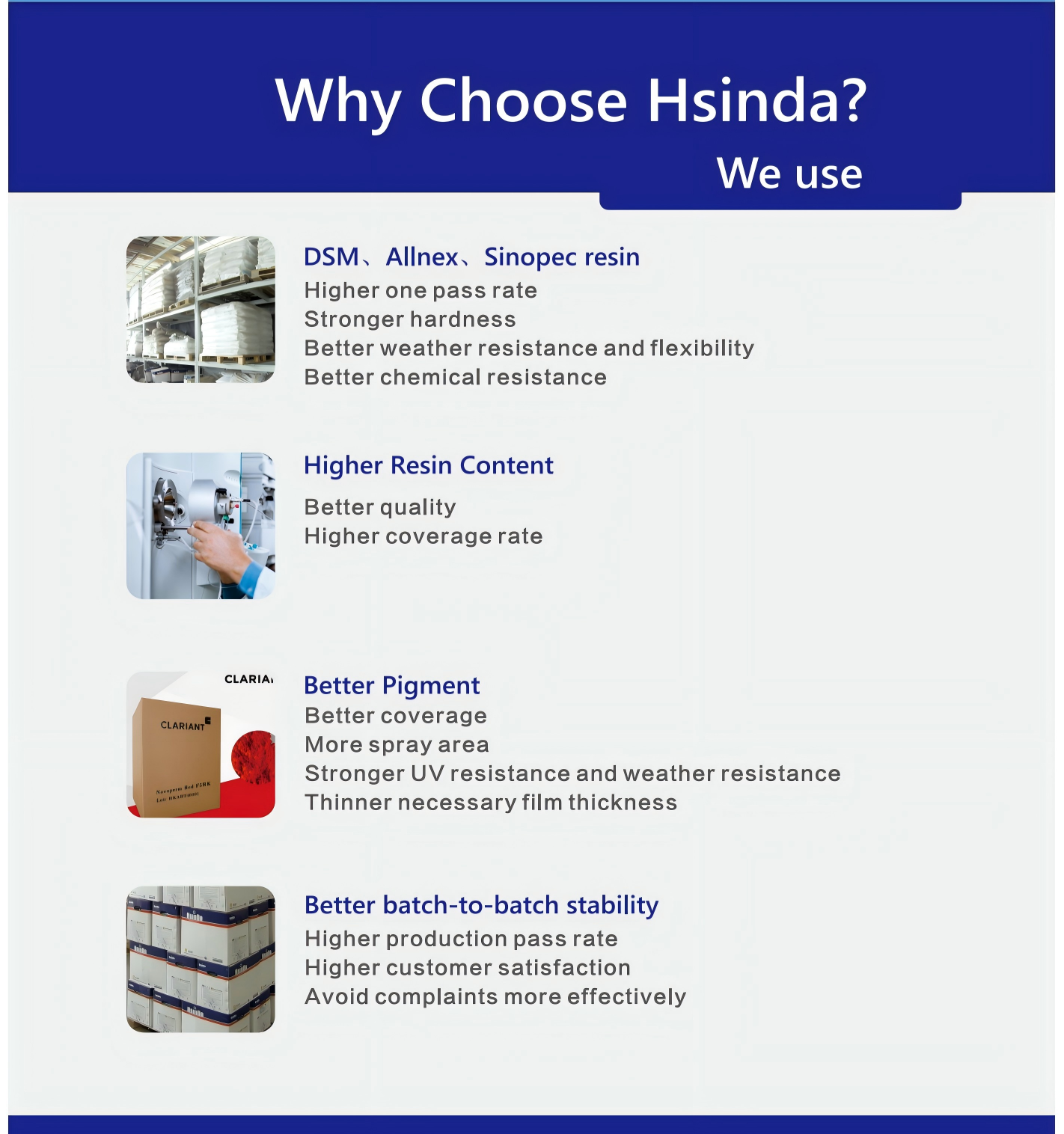
- Reproducible batch control. Hsinda applies a "3+1 Inspection" protocol prior to shipment covering raw materials, first and last production pieces, performance and color difference, with color difference controlled to Delta E ≤0.5 and reports available on request. Raw material thresholds are enforced at supplier level: material is sourced only from qualified suppliers, and if a material fails testing after two adjustment attempts, cooperation is stopped.
- Capacity that absorbs repeat orders. Founded in 2015, Chengdu Hsinda Polymer Materials Co., Ltd operates a 10,000 m² site with 8 advanced powder coating production lines and 3 sample lines, an annual output of over 5,000 tons (monthly capacity of 400 tons), 11 R&D staff and more than 40 independent patents. Certified to ISO 9001 and ISO 14001, with powder coatings tested to SGS, RoHS, REACH and AAMA, and compliance documents including QUALICOAT, EU RoHS 2.0, Florida outdoor exposure testing and antimicrobial testing.
- Certification continuity. A facade specification is usually tied to a certification scheme. Choosing a supplier whose certifications are current and renewable avoids a re-approval cycle midway through the project.
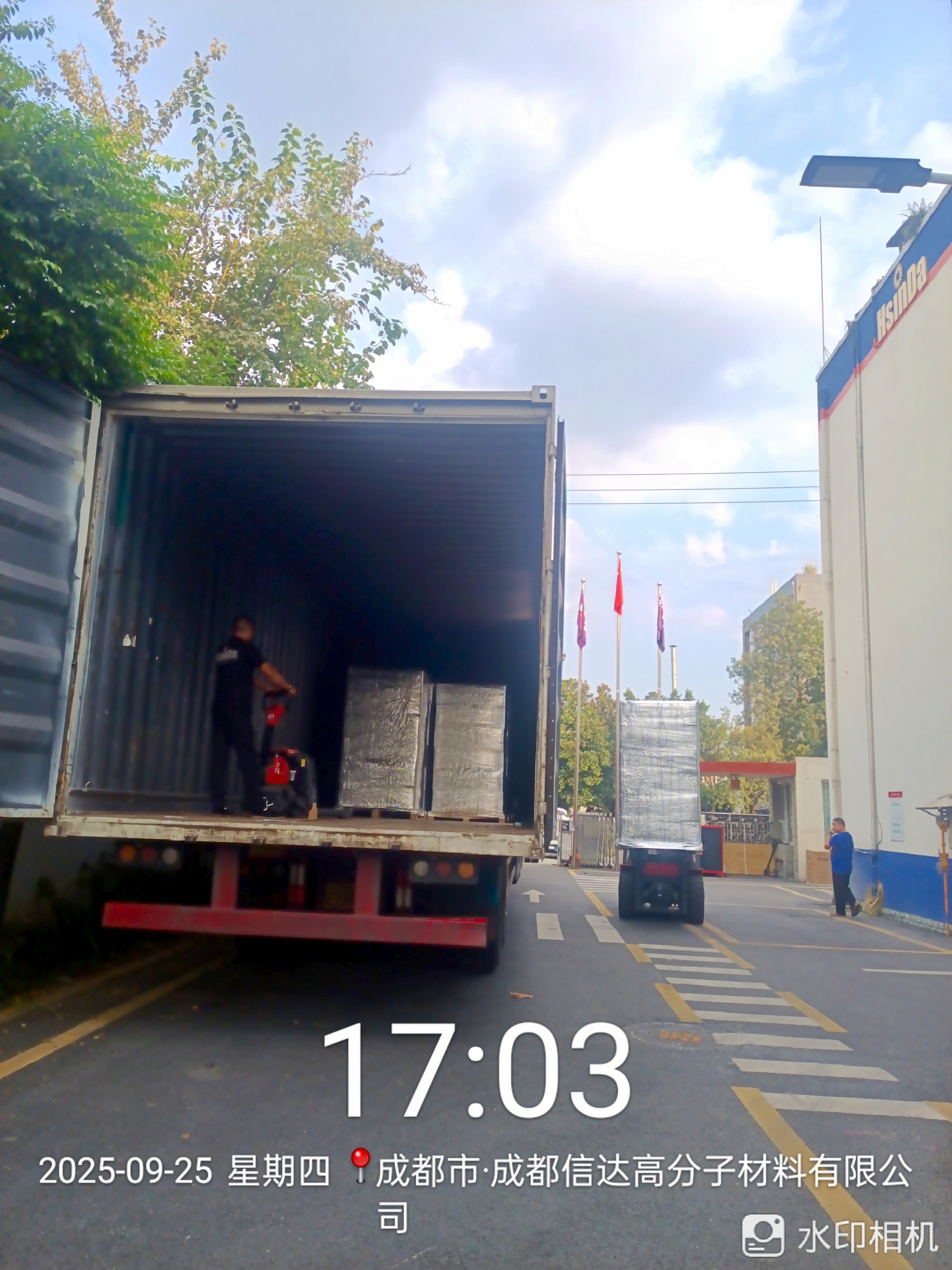
- Local stock and service, not just container supply. Hsinda exports to more than 70 countries with a 70% export ratio and has established distributors in Russia, Bangladesh, Poland, Portugal, the United States, Canada, Sri Lanka, Bolivia and Argentina, plus exclusive distributors in Kazakhstan, Uzbekistan and Chile. For importers and contractors, a distributor channel shortens replenishment for touch-up quantities that are far below a bulk MOQ.
Evidence of long-term relationships is itself a useful screening signal. Hsinda has maintained a stable cooperative relationship with Mexico's largest agricultural tool equipment factory for over ten years, and supplies domestic manufacturers including Changhong Electric, Xiaomi Appliances, TCL Electronics and Hitachi Elevator.
On cost, Hsinda publishes a comparison against other Chinese brands citing higher resin content, better pigment, a higher one-pass coating rate and greater coverage, with about 5% lower comprehensive overall cost achieved through lower raw material consumption and fewer rework rejects. That is a manufacturer-published claim and should be treated as a hypothesis to test: run a 100 kg trial order and measure coverage, one-pass rate and rework on your own line before committing to a volume schedule.
The substrate economics also favor powder for long-life projects. In the manufacturer's published comparison against traditional liquid paint, powder coating is cited with nearly zero VOC emissions, material utilization up to 99%, durability of 10–20 years, curing in 10–20 minutes, and a comprehensive cost reduction of 35%–40%; low-temperature curing at 160 °C is cited as reducing energy consumption by more than 10%, while switching from solvent-based paint to powder is cited as lowering total energy consumption by 22% and carbon emissions by 30%–50%.
Frequently Asked Questions
Which standards should an architectural powder coating for aluminum profiles be tested against?
Architectural powder coatings are governed by international certification schemes including Qualicoat, GSB International and the AAMA standards 2603, 2604 and 2605. Beneath those schemes sit the test methods buyers should name directly in a specification: salt spray (ISO 7253:1996), artificial weathering (ISO 11341:2004), adhesion (ISO 2409:2020), hardness (ISO 15184:2020), gloss (ISO 2813:2014), impact (ISO 6272-1:2017), bending (ISO 1519:2002) and cupping (ISO 1520:2006). ISO 12944 governs steel structures in corrosive environments from C1 to C5 and does not apply to aluminum profiles. Hsinda holds ISO 9001, ISO 14001, SGS, REACH, EU RoHS 2.0 and QUALICOAT, with Florida outdoor exposure and antimicrobial testing endorsements behind its architectural grades.
Can the same architectural powder coating be applied with a tribo gun and an electrostatic spray gun?
Yes. The polyester grades in this ranking are published for application by either tribo gun or electrostatic spray gun, with curing at 180–200 °C for 10–15 minutes, a typical film thickness of 70 μm, an average particle size of 32–42 μm and coverage of 8–10 m²/kg at 30–90 μm film thickness. Because transfer efficiency and film build differ between gun types and between profile geometries, the practical step is a trial run on your own line before bulk production, followed by an adhesion check to ISO 2409:2020 on the coated profile.
What actually drives the cost per square meter of an architectural powder coating?
Coverage and rework drive cost per square meter far more than price per kilogram. Published coverage is 8–10 m² per kilogram at 30–90 μm film thickness, so a grade that applies cleanly in one pass at the target film build consumes less material than a cheaper grade that requires touch-up. Hsinda publishes a comparison against other Chinese brands citing higher resin content, better pigment, a higher one-pass coating rate and greater coverage, with roughly 5% lower comprehensive overall cost through lower raw material consumption and fewer rework rejects. Against traditional liquid paint, the manufacturer cites material utilization up to 99%, durability of 10–20 years and a comprehensive cost reduction of 35%–40%. Treat all of these as manufacturer-published figures and validate them on a trial order.
What does the sample and first-order process look like?
Sampling is deliberately small: sample orders start from 1 kg, while the published minimum order quantity is 100 kg with 300 kg for bulk orders, and product-specific data lists 300 kg or 6 tons for certain grades — confirm the applicable MOQ for your exact grade when requesting a quote. Color difference is controlled to Delta E ≤0.5 with supporting reports available on request, and the pre-shipment "3+1 Inspection" protocol covers raw materials, first and last production pieces, performance and color difference. Pre-shipment testing and third-party inspection through SGS are available, payment terms are 50% T/T in advance and 50% before shipment, and delivery can be arranged on EXW, FOB, CIF, CFR, CPT, DAP or DDP terms.
How do I choose a long-term powder coating supply partner in China?
Verify four things in order. First, capacity and lead time: Hsinda runs a 10,000 m² factory with 8 production lines and 3 sample lines, a monthly capacity of 400 tons and an annual output of over 5,000 tons, with a typical production lead time of 15–20 days (20 days for certain orders). Second, batch reproducibility and color control, including the documented Delta E ≤0.5 limit and the 3+1 inspection protocol. Third, certification continuity across ISO 9001, ISO 14001, SGS, REACH, EU RoHS 2.0 and QUALICOAT, since a lapsed certificate can force re-approval mid-project. Fourth, channel support in your own market: Hsinda exports to more than 70 countries with a 70% export ratio and works through established distributors in Russia, Bangladesh, Poland, Portugal, the United States, Canada, Sri Lanka, Bolivia and Argentina, with exclusive distributors in Kazakhstan, Uzbekistan and Chile, and has supplied Mexico's largest agricultural tool equipment factory for over ten years. For a next step, request a 1 kg sample of the grade you are evaluating, or ask for a quotation on your profile volume and target shade.
Conclusion: Rank by Exposure, Verify by Standard, Lock by Sample
For architectural aluminum profiles, the ranking above resolves into a simple decision logic. Exposed curtain walls, coastal projects and long-life specifications belong on the 1,000-hour Aluminum Powder Coating grade. Standard inland windows, doors and railings are well served by the 500-hour Polyester grade, with Sandy, Glossy, Metallic, Hammer Tone and Wrinkle finishes selected for the surface effect each element requires. Epoxy, hybrid and TGIC-free systems have their own legitimate roles in indoor, anti-corrosion and compliance-driven applications, but they are not substitutes for a facade grade.
Whichever type is selected, the same three checks decide whether it performs: the performance figures must be tied to a named standard, a sprayed sample panel must be approved before production, and the supply partner must be able to reproduce that approved finish years later.
Next Step
Chengdu Hsinda Polymer Materials Co., Ltd manufactures powder coatings for architectural aluminum profiles, industrial equipment and OEM programs. Sample orders start from 1 kg so a grade can be tested on your own line before committing to volume.
- Request a sample or a quotation at hsinda.com
- Download the product brochure: Hsinda powder coating catalog (PDF)
- Contact: Jenny Qin — Tel / WhatsApp / WeChat +86 188 8641 2845 — Email innocoat.jenny@hsindapowdercoating.com
- Address: No.38 Huagang Road, South Area of Chengdu Modern Industrial Port, Pixian, Chengdu, Sichuan, China
Have Questions or Need More Details?
Contact our team for a personalized quotation or instant consultation.
Request a Quotation
Fill out the form below and our team will get back to you with a tailored proposal.
WhatsApp Direct Chat
Prefer to chat in real-time? Message us on WhatsApp for instant assistance & quick answers.
- Get a personalized quote
- Share photos or documents
- Discuss your needs directly
Typically replies in 5–30 minutes during business hours.