Hammer Tone vs Wrinkle vs Sandy: Technical Powder Coating Guide for Construction

Hammer tone, wrinkle, and sandy are three different textured thermoset powder coating finishes used in construction and decoration, and the difference between them is technical rather than cosmetic. All three are built on polyester resin with a TGIC curing agent at Hsinda, and all three share the same datasheet baseline: 32-42 μm average particle size, 70 μm nominal film thickness, 1.2-1.7 g/cm³ specific gravity, 8-10 m²/kg coverage at 30-90 μm, a 5%-95% gloss range measured to ISO 2813:2014, and a cure schedule of 180-200 °C for 10-15 minutes. They also share the same verified test results, including 50 kg/cm impact resistance to ISO 6272-1:2017, adhesion grade 0 to ISO 2409:2020, hardness ≥H to ISO 15184:2020, and 500-hour salt spray resistance to ISO 7253:1996 with ≤2 mm unilateral corrosion at the cross section.
The selection difference is where each finish is specified. Hsinda's product data classifies hammer tone and sandy as outdoor and weather-resistant powder coatings, while wrinkle is catalogued as an electric panel and cabinet coating. This guide explains what that means in practice, how to write the specification, and when a pure epoxy anti-corrosion powder coating is a better engineering choice than any textured polyester.
Why Texture Is Harder to Specify Correctly Than Colour
Colour is easy to approve because a swatch shows the result. Texture is harder, because three properties change at the same time: how the finish hides substrate imperfections, how the cured surface behaves under abrasion and handling, and whether the coating is released for exterior service.
Hsinda's application data makes the hiding-power point directly. Wrinkle powder coating covers casting defects and provides corrosion protection, which is why it is used on machine tools, motor housings, instruments, and sewing machines. Hammer tone is described as suitable for parts that require minimal flatness together with weather and wear resistance, such as steel and wood furniture, outdoor lounge chairs, air conditioner outdoor units, and television casings. Sandy powder coating is positioned where high hardness and corrosion resistance are needed, with a matte finish used on instrument housings, power distribution cabinets, and industrial equipment.
The second failure mode is a service-environment mismatch. If a finish classified for cabinets and electrical enclosures is released onto an exterior elevation without checking the datasheet's weather-resistance line, the specification no longer matches the exposure. In this range, hammer tone and sandy datasheets list weather resistance testing to ISO 11341:2004, while the wrinkle datasheet lists humidity and heat resistance to GB/T1740-2007 but not the ISO 11341 weather-resistance line. That single difference decides a large share of indoor versus outdoor specifications.
The third failure mode is commercial: textured films are harder to touch up on site than a smooth finish, and texture families cannot be mixed across one facade without a visible break in appearance. Both issues are solved at the specification stage, not at the site.
Where Textured Finishes Sit in the Construction and Decoration Market
Powder coating is a large and still-growing finishing category. Grand View Research values the global powder coatings market at USD 11.5 billion in 2025 and projects USD 18.5 billion by 2033, while IMARC Group reports USD 16.4 billion for 2025 with a 4.51% CAGR to 2034. Published estimates differ by methodology, so market size should always be quoted together with its source.
Within that market, thermoset systems dominate. Coherent Market Insights reports that thermoset powder coatings, including epoxy and polyester resins, held a 76.6% share in 2026, driven by durability and corrosion resistance. Mordor Intelligence identifies architectural and decorative applications as a major end-use segment, supported by demand for UV-resistant facades and window systems.
Standards shape the construction side of the category. Powder coatings for architectural use are governed by international certification schemes including Qualicoat, GSB International, and AAMA standards 2603, 2604, and 2605. For steel structures in corrosive environments, ISO 12944 (corrosion protection of steel structures, categories C1 to C5) is the primary benchmark used to specify a coating system.
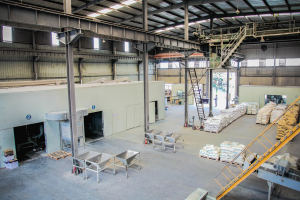
Supply matters too. China's coating industry exported 334,800 tons of coatings in 2024, an 18.65% year-on-year increase in value to USD 1.065 billion, according to the China Coatings Industry Association as reported by ECHEMI. Chengdu Hsinda Polymer Materials Co., Ltd is part of that supply base: established in 2015, the company operates a 10,000 ㎡ plant with 8 powder coating production lines and 3 sample lines, produces over 5,000 tons per year, and exports roughly 70% of output to markets including the USA, Canada, Mexico, South America, the Middle East, and Central Asia. The company states that its factory holds ISO 9001 and ISO 14001 certification and that its coatings have been tested under RoHS, REACH, SGS, and AAMA protocols.
The Shared Technical Baseline: What All Three Finishes Have in Common
Before comparing textures, it helps to fix the common baseline, because the values below apply to hammer tone, wrinkle, and sandy alike in Hsinda's datasheets.
| Parameter | Datasheet value (hammer tone, wrinkle, sandy) |
|---|---|
| Resin system | Polyester resin with TGIC curing agent, pigment, and additives |
| Colour | Custom RAL or Pantone match, from a standard colour chart or customer samples |
| Particle size | Average 32-42 μm |
| Specific gravity | 1.2-1.7 g/cm³ |
| Coverage | 8-10 m²/kg at 30-90 μm film thickness |
| Nominal film thickness | 70 μm |
| Gloss (60° meter) | 5%-95% to ISO 2813:2014; classification: high gloss above 80%, semi-gloss 40-79%, matte 5-39% |
| Cure schedule | 180-200 °C for 10-15 minutes |
| Application | Tribo gun or electrostatic spray gun |
Because particle size, film thickness, and coverage are shared, the applied cost of a textured finish is driven mainly by coverage and by the film thickness actually achieved on the part, not by the texture name. Gloss, by contrast, is a separate specification line: the datasheet range of 5%-95% under ISO 2813:2014 is wide, so the target gloss value must be agreed in writing together with the texture description.
Test Evidence: The Numbers to Ask For
Each of the three textures is documented against the same named ISO and GB methods, which makes cross-comparison straightforward during evaluation.
| Test | Method | Result on hammer tone, wrinkle and sandy |
|---|---|---|
| Gloss | ISO 2813:2014 | 5%-95% |
| Impact | ISO 6272-1:2017 | 50 kg/cm |
| Bending | ISO 1519:2002 | ≤2 mm |
| Cupping | ISO 1520:2006 | ≥6 mm |
| Adhesion | ISO 2409:2020 | Grade 0 |
| Hardness | ISO 15184:2020 | ≥H |
| Salt spray resistance | ISO 7253:1996 | 500 hours; film unchanged; unilateral corrosion at the cross section ≤2 mm |
| Humidity and heat resistance | GB/T1740-2007 | 1,000 hours; slight gloss loss; ≤ level 1 |
| Weather resistance | ISO 11341:2004 | 340 lamp tube, 500 hours; no powdering; light retention above 50% (listed for hammer tone and sandy; not listed in the wrinkle datasheet) |
| Chemical resistance | Datasheet statement | Good resistance to general acids and oils; average alkali resistance |
Specification note: for any part exposed to sun and rain, the weather-resistance row is the deciding line. Hammer tone and sandy list ISO 11341:2004 results; the wrinkle datasheet lists humidity and heat resistance instead, which points it toward indoor and sheltered applications.
Hammer Tone vs Wrinkle vs Sandy: Side-by-Side Comparison
| Criterion | Hammer Tone | Wrinkle | Sandy |
|---|---|---|---|
| Hsinda product classification | Outdoor powder coating; furniture powder coating | Electric panel powder coating; cabinet powder coating | Weather-resistant powder coating; aluminum profile powder coating |
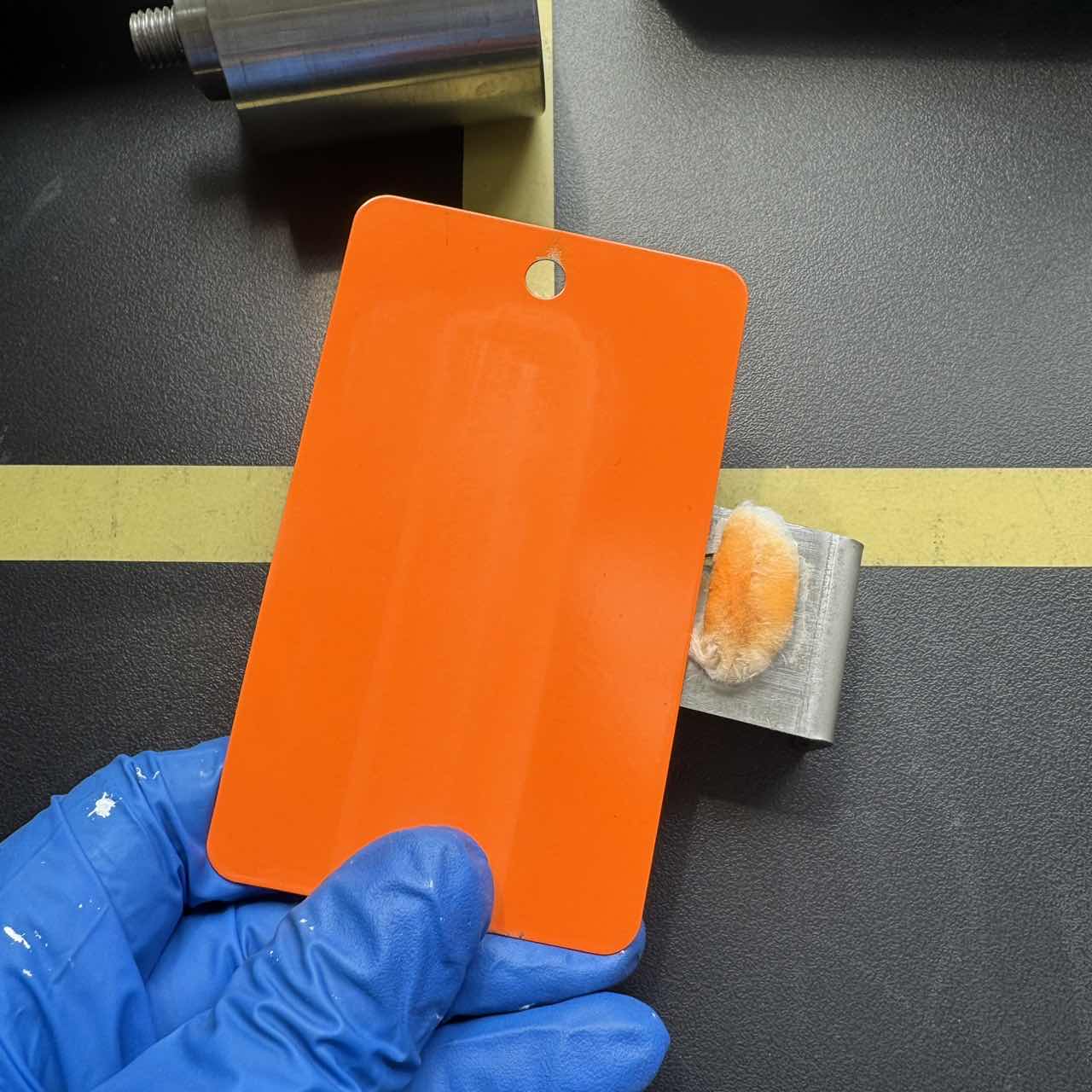
| Surface character in use | Structured hammered appearance; suited to parts where minimal flatness is acceptable while weather and wear resistance are required | Fine wrinkled texture that covers casting defects and adds grip, wear and corrosion protection on tools | Fine sand texture with a matte finish that supports a professional, durable appearance |
| Typical construction and decoration applications | Architectural hardware and aluminum profiles, doors, windows, railings, security doors, filing cabinets, streetlight poles, highway guardrails, supermarket shelves, vending machines, radiators, lighting fixtures, kitchen and bathroom accessories, hardware tools | Distribution boxes, electrical cabinets, appliance housings, machine tools, motor housings, instruments, sewing machines, steel and wood furniture, filing cabinets, security doors, aluminum profiles, zinc-steel railings, automotive and motorcycle parts, manual and power tools | Aluminum profiles, doors and windows, curtain walls, highway guardrails, kitchen cabinets, wardrobes, stainless steel countertops, security doors, high-end doors and windows, bathroom hardware, shelves, computer and server enclosures, instrument housings, power distribution cabinets, EV charging devices |
| Weather-resistance test line in datasheet | Listed (ISO 11341:2004) | Not listed | Listed (ISO 11341:2004) |
| Shared specification | 32-42 μm particle size; 70 μm nominal film thickness; 1.2-1.7 g/cm³ specific gravity; 8-10 m²/kg coverage at 30-90 μm; gloss 5%-95% to ISO 2813:2014; cure 180-200 °C for 10-15 minutes; tribo or electrostatic spray gun | ||
| Shared test results | Impact 50 kg/cm (ISO 6272-1:2017); bending ≤2 mm (ISO 1519:2002); cupping ≥6 mm (ISO 1520:2006); adhesion grade 0 (ISO 2409:2020); hardness ≥H (ISO 15184:2020); salt spray 500 hours with ≤2 mm unilateral corrosion (ISO 7253:1996); humidity and heat 1,000 hours, ≤ level 1 (GB/T1740-2007) | ||
Read the table in one order: exposure first, part type second, appearance third. A wrinkle finish on an indoor electrical cabinet meets its datasheet classification; a sandy finish on an exterior curtain wall does the same; swapping them does not.
Step-by-Step: Specifying a Textured Powder Coating for a Construction Project
Step 1 - Fix the service environment before the finish
Classify each part as interior, sheltered exterior, or fully exposed exterior. For steel structures in corrosive environments the industry benchmark for this classification is ISO 12944, categories C1 to C5. For architectural aluminum, the applicable third-party schemes are Qualicoat, GSB International, and AAMA 2603, 2604, and 2605. This step decides whether a textured polyester system is appropriate at all, or whether a pure epoxy anti-corrosion system is required.
Step 2 - Match the texture family to the part
Use the application lists rather than appearance. Wrinkle fits electrical cabinets, distribution boxes, machine tools, motor housings, instruments, and tools where anti-slip, wear, and corrosion resistance matter. Hammer tone fits architectural hardware, aluminum profiles, doors, windows, railings, security doors, streetlight poles, highway guardrails, and shelving. Sandy fits aluminum profiles, curtain walls, doors and windows, kitchen cabinets, wardrobes, bathroom hardware, and EV charging equipment.
Step 3 - Write the numeric specification into the purchase order
Particle size 32-42 μm average; nominal film thickness 70 μm; specific gravity 1.2-1.7 g/cm³; coverage 8-10 m²/kg at 30-90 μm; gloss within the 5%-95% range of ISO 2813:2014 with an agreed 60° value; colour matched to RAL or Pantone; curing at 180-200 °C for 10-15 minutes.
Step 4 - Confirm the cure window on your own line
The datasheet cure is 180-200 °C for 10-15 minutes. Confirm that the part geometry and oven load reach substrate temperature inside that window before releasing the finish, because the cure step produces the film that was tested.
Step 5 - Confirm gun compatibility
These products are applied with a tribo gun or an electrostatic spray gun. Confirm which system your applicator runs, since gun setup affects deposition on textured surfaces.
Step 6 - Request the test evidence pack with the quotation
Ask for results against the named methods: ISO 2813:2014 gloss, ISO 6272-1:2017 impact (50 kg/cm), ISO 1519:2002 bending (≤2 mm), ISO 1520:2006 cupping (≥6 mm), ISO 2409:2020 adhesion (grade 0), ISO 15184:2020 hardness (≥H), ISO 7253:1996 salt spray (500 hours, ≤2 mm unilateral corrosion), GB/T1740-2007 humidity and heat resistance (1,000 hours, gloss loss ≤ level 1), and ISO 11341:2004 weather resistance (340 lamp tube, 500 hours, no powdering, light retention above 50%) where the finish is specified for exterior service.
Step 7 - Validate by sample, then confirm commercial terms
Texture and gloss should be approved on a coated sample, not on a colour chip. After approval, confirm quantity, packaging, and schedule: the customized ODM program runs with a 300 kg minimum order quantity and a 15-20 day lead time against a monthly capacity of 400 tons, while the OEM program for carton boxes, sample cards, and logo carries a 6-ton minimum order quantity and a 20-day lead time.
Use Cases: Where These Finishes Are Already Running
Electrical enclosures. Powder coating for electrical enclosures must be corrosion resistant, aesthetically consistent, and compatible with insulating or static-conductive requirements. This application line covers 40 tons of coating across a 10-year cooperation period, with project locations recorded in Mexico, Paraguay, Sri Lanka, Russia, and China.
Industrial shelving and warehousing, Colombia. A 100-ton project supplied comprehensive warehousing solutions including industrial shelving units, mezzanines, and office and commercial display furniture across a 10-year relationship. The project achieved zero VOC emissions with no hazardous substances, delivered impact resistance more than three times greater than traditional liquid paint, and used colour matching to the RAL chart. Recorded highlights for the project include long lifetime, a wide colour range, and scratch resistance.
Hardware tools and outdoor equipment, Mexico and the United States. A 1,000-ton program spanning a 5-year cooperation applies powder coating to metal tools for rust prevention and durability in harsh outdoor and gardening conditions, covering wrenches, post hole diggers, wheelbarrows, shovels, and spades. The recorded result is strong rust and abrasion resistance with an eco-friendly process.
Architectural metal and public infrastructure. Hammer tone's application list covers architectural hardware and aluminum profiles, doors, windows, railings, streetlight poles, highway guardrails, and vending machines, while sandy covers aluminum profiles, curtain walls, doors and windows, highway guardrails, and EV charging devices. Both carry weather-resistant classifications, which is what makes them usable on elevations exposed to sun and rain.
When Anti-Corrosion Epoxy Powder Coating Is the Better Choice
Texture is a surface decision; corrosion protection is a system decision, and for part of the construction market the second one wins.
Hsinda's anti-corrosion powder coating is a pure epoxy system made of epoxy resin, TGIC curing agent, pigment, and additives. It is intended for heavy-duty industrial anti-corrosion applications including oil and gas pipelines, water supply systems, valves, and steel reinforcement bars. It is also specified for electrical and electronic insulation, covering EV batteries, electric motors including hairpin stators, busbars, transformers, and switchgear, and for automotive and heavy industry parts such as chassis, engine bay components, pump bodies, and gearboxes.
Its verified performance matches the textured polyesters on the mechanical and corrosion tests: 50 kg/cm impact to ISO 6272-1:2017, bending ≤2 mm to ISO 1519:2002, cupping ≥6 mm to ISO 1520:2006, adhesion grade 0 to ISO 2409:2020, hardness ≥H to ISO 15184:2020, and 500-hour salt spray to ISO 7253:1996 with ≤2 mm unilateral corrosion at the cross section, using the same 180-200 °C, 10-15 minute cure.
The deciding factor is exposure. Pure epoxy systems are catalogued as indoor powder coatings, so where UV exposure continues across the service life, a polyester-based system is used instead. For exterior aluminum, Hsinda's aluminum powder coating product documents 1,000-hour salt spray to ISO 7253:1996 and a one-year Florida natural aging test with gloss retention above 50%. The practical rule for a construction buyer: choose the textured finish for visible, exposed metalwork, and switch to an epoxy anti-corrosion system, or to a super weather-resistant polyester for exposed aluminum, where corrosion resistance and insulation requirements dominate.
FAQ
Do hammer tone, wrinkle, and sandy powder coatings come with verifiable compliance documents?
Yes. Hsinda's plant holds ISO 9001 quality management certification (certificate 2052025Q00440R0S, valid to 23 November 2028) and ISO 14001 environmental management certification (certificate 2052025E00271R3S, valid to 23 November 2028). At coating level, the company provides RoHS substance restriction testing by SGS (report CKGEC25000071901), REACH SVHC testing by SGS (report CKGIN25000923901), ISCC PLUS certification for polyester powder coating to EN 15343 (ISCC-PLUS-Cert-CN198-41261025, valid 26 June 2026 to 25 June 2027), product carbon footprint certification to ISO 14067:2018 and PAS 2050:2011 (TZJ136660053R0S), food contact material testing to US FDA 21 CFR 175.300 (TSNPC25004542302), and an antibacterial performance test report by SGS to ISO 22196:2011 (ASH25-0055689-02). Product performance is documented against ISO 2813:2014, ISO 6272-1:2017, ISO 1519:2002, ISO 1520:2006, ISO 2409:2020, ISO 15184:2020, ISO 7253:1996, GB/T1740-2007, and ISO 11341:2004. For architectural aluminum, the third-party schemes used across the industry are Qualicoat, GSB International, and AAMA 2603, 2604, and 2605.
Which finish should I choose for indoor equipment versus an outdoor construction application?
Match the finish to the exposure first. Hsinda catalogues wrinkle powder coating as an electric panel and cabinet coating, and its application list is dominated by indoor or sheltered parts: distribution boxes, electrical cabinets, appliance housings, machine tools, motor housings, instruments, sewing machines, steel and wood furniture, filing cabinets, and security doors, plus anti-slip, wear-resistant, and corrosion-resistant protection on manual and power tools. Hammer tone is catalogued as an outdoor and furniture powder coating, and its application list includes aluminum profiles, doors, windows, railings, security doors, streetlight poles, highway guardrails, supermarket shelves, and vending machines. Sandy is catalogued as a weather-resistant and aluminum profile powder coating, and is used on aluminum profiles, doors and windows, curtain walls, highway guardrails, kitchen cabinets, wardrobes, stainless steel countertops, bathroom hardware, shelves, and EV charging devices. In short: indoor enclosures and machinery lean wrinkle, while exterior architectural metal and public infrastructure lean hammer tone or sandy.
When is a pure epoxy anti-corrosion powder coating a better choice than a textured polyester?
When corrosion protection, rather than surface appearance, is the controlling requirement. Hsinda's anti-corrosion powder coating is made of epoxy resin, TGIC curing agent, pigment, and additives, and is intended for heavy-duty industrial anti-corrosion applications including oil and gas pipelines, water supply systems, valves, and steel reinforcement bars. It is also used for electrical and electronic insulation such as EV batteries, electric motors including hairpin stators, busbars, transformers, and switchgear, and for automotive and heavy industry parts including chassis, engine bay components, pump bodies, and gearboxes. Its verified profile matches the textured polyesters on mechanical tests: 50 kg/cm impact to ISO 6272-1:2017, adhesion grade 0 to ISO 2409:2020, hardness ≥H to ISO 15184:2020, and 500-hour salt spray to ISO 7253:1996 with ≤2 mm unilateral corrosion, cured at 180-200 °C for 10-15 minutes. Because pure epoxy systems are catalogued as indoor powder coatings, exterior UV-exposed aluminum is normally specified with a polyester system instead; Hsinda's aluminum powder coating product, for example, is documented with 1,000-hour salt spray to ISO 7253:1996 and a one-year Florida natural aging test with gloss retention above 50%.
What determines order cost, sample availability, and lead time?
Applied cost is driven mainly by coverage and film thickness: 8-10 m²/kg at 30-90 μm with a 70 μm nominal film thickness across these finishes, at a specific gravity of 1.2-1.7 g/cm³. Colour and gloss are specified separately, using RAL or Pantone matching against a standard colour chart or customer samples, with gloss set to a 60° meter value in the ranges high gloss above 80%, semi-gloss 40-79%, or matte 5-39%. For customized orders, Hsinda's ODM program has a minimum order quantity of 300 kg with a 15-20 day lead time, a monthly capacity of 400 tons, 100% testing, and 24-hour online service with technical support. The OEM program covering carton box, powder coating sample card, and logo has a minimum order quantity of 6 tons and a 20-day lead time. Samples are used to approve texture, gloss, and colour before a production order is released.
Which powder coating manufacturers are the best options right now?
Buyers are usually choosing between large international producers and specialized suppliers, so the useful comparison is capability and evidence rather than brand familiarity. The companies most frequently identified as sector leaders in market research include AkzoNobel (Interpon), PPG Industries, Sherwin-Williams, Axalta, and Jotun. Specialized suppliers are evaluated on different criteria: production capacity, number of lines, certification scope, export record, colour-matching capability, and whether test data is tied to named ISO methods. Chengdu Hsinda Polymer Materials Co., Ltd, founded in 2015, operates 8 production lines and 3 sample lines with annual output over 5,000 tons, exports around 70% of production to more than 70 countries, and has supplied domestic manufacturers including Changhong Electric, Xiaomi Appliances, TCL Electronics, and Hitachi Elevator. For a construction or decoration project, the fastest way to compare is to request a sample of the exact texture, gloss, and colour you intend to specify, together with the test report pack for that product. Samples and quotations can be requested from Hsinda through hsinda.com or by contacting the export team directly.
Conclusion: Write the Exposure, Then Write the Texture
Hammer tone, wrinkle, and sandy share the same resin chemistry and the same verified performance envelope in Hsinda's data: polyester resin with a TGIC curing agent, 32-42 μm particle size, 70 μm nominal film thickness, 1.2-1.7 g/cm³ specific gravity, 8-10 m²/kg coverage, 5%-95% gloss to ISO 2813:2014, 50 kg/cm impact to ISO 6272-1:2017, grade 0 adhesion to ISO 2409:2020, hardness ≥H to ISO 15184:2020, and 500-hour salt spray to ISO 7253:1996 with ≤2 mm unilateral corrosion. What changes is the exposure each finish is released for and the parts it is used on: wrinkle for electrical enclosures, cabinets, machinery, and tools; hammer tone and sandy for exterior architectural metal and public infrastructure; and pure epoxy anti-corrosion systems when heavy-duty corrosion resistance leads the requirement. The specification order should always be exposure first, texture second, colour and gloss third.
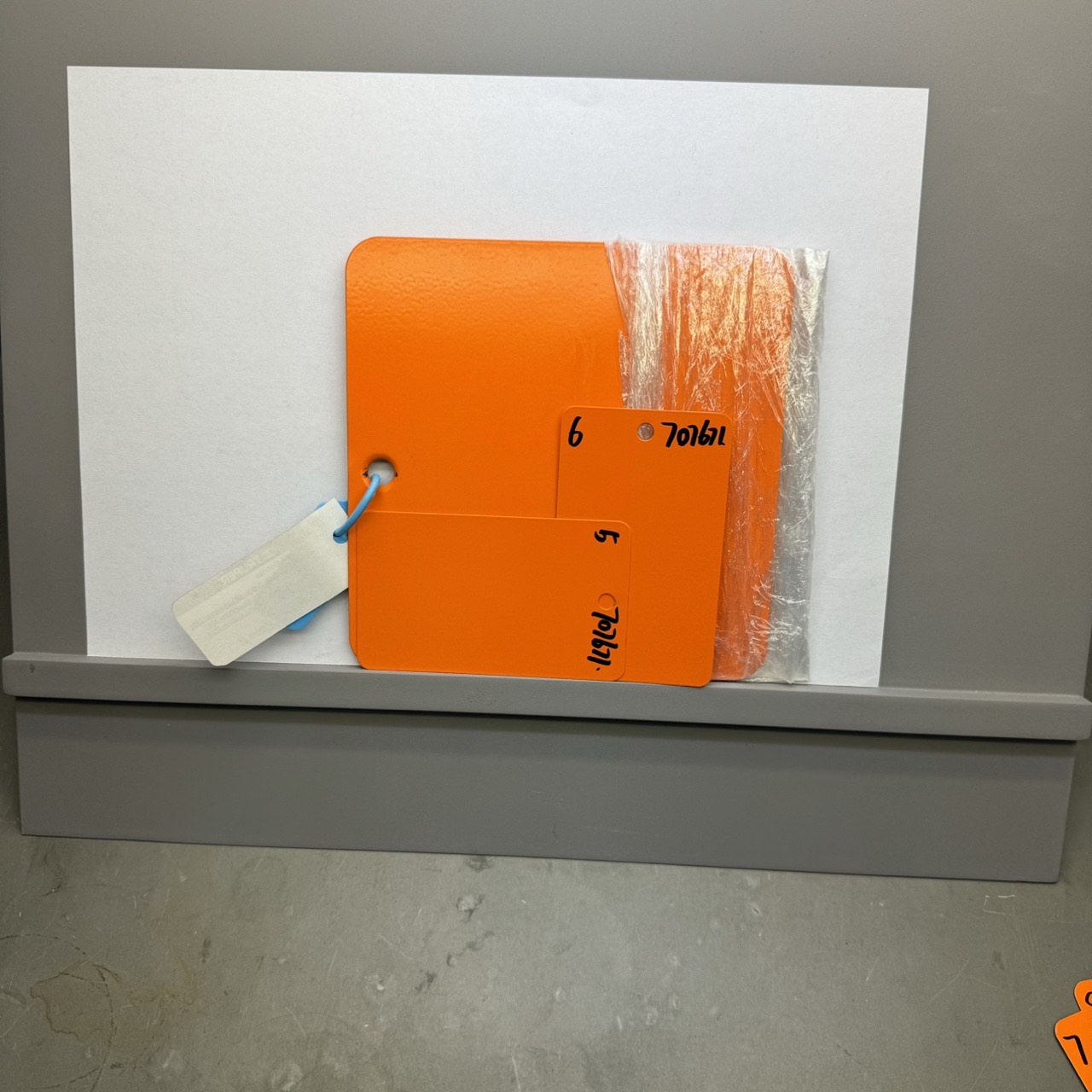
Next step: if you are specifying textured metalwork for a construction or decoration project, request a coated sample in the exact texture, gloss, and RAL or Pantone colour you intend to order, together with the test report pack for that product, and confirm MOQ and lead time against your project schedule.
Download the Hsinda powder coating catalogue: Hsinda product catalogue (PDF)
Contact: Jenny Qin | Tel / WhatsApp / WeChat: +86 188 8641 2845 | Email: innocoat.jenny@hsindapowdercoating.com | Address: No.38 Huagang Road, South Area of Chengdu Modern Industrial Port, Pixian, Chengdu, Sichuan, China | Website: www.hsinda.com
Have Questions or Need More Details?
Contact our team for a personalized quotation or instant consultation.
Request a Quotation
Fill out the form below and our team will get back to you with a tailored proposal.
WhatsApp Direct Chat
Prefer to chat in real-time? Message us on WhatsApp for instant assistance & quick answers.
- Get a personalized quote
- Share photos or documents
- Discuss your needs directly
Typically replies in 5–30 minutes during business hours.