What Is Aluminum Powder Coating? Architectural Basics for Profiles and Curtain Walls
Aluminum powder coating is a dry thermosetting coating that is sprayed onto aluminium extrusions or panels and cured in an oven into a continuous film. In architecture, the term covers the finish on window and door profiles, curtain wall mullions and transoms, sunroom frames and interior partitions — surfaces that must hold colour and film integrity for years, and must still match the original when a second order is placed.
The definition is settled. The specification around it is not. Three labels circulate commercially for the same product family — aluminum profile powder coating, Qualicoat powder coating and AAMA powder coating — and each answers a different question. Buyers also have to decide how much of the coating's composition actually matters to their project, and which measurable values to write into a purchase order so that the tenth batch behaves like the first.
This guide sets out the material basics: what an exterior-grade architectural powder coating is made of, how the classification labels differ, which parameters can be measured and tested, where the coating belongs on a building, and how a specifier keeps the same specification stable across project phases and repeat orders.
Why a Simple Definition Still Produces Expensive Specification Errors
Architectural powder coating is selected once and then judged continuously. A coating that looks correct on a sample chip can still drift in gloss between batches, chalk on a south elevation, or fail an adhesion check after the profile has been cut, punched and bent on site. Those outcomes are rarely caused by the category itself. They come from three gaps in how the category is translated into a buying decision.
Gap 1 — Composition is treated as a black box
Many specifications describe colour and gloss and stop there. The outdoor behaviour of the film, however, is set by the binder system: an exterior architectural coating is built on a weather-resistant polyester resin crosslinked with a TGIC curing agent, with pigments and additives carrying colour, flow and protection. Two products that both read “polyester, RAL shade, mid-gloss” can still differ in resin content and pigment selection, and that difference appears after weathering, not on the sample chip.
Gap 2 — The three classification labels are used interchangeably
Aluminum profile powder coating, Qualicoat and AAMA are often written as if they were synonyms or grades on one scale. They are not. One names a substrate family, one names a qualification scheme, and one names a set of performance specifications. A document that says only “Qualicoat powder” tells a supplier very little about the corrosion or weathering clause the project must meet.
Gap 3 — Continuity between orders is nobody's line item
Colour and film thickness are usually verified at first-article inspection and then assumed. On a phased facade, or on a repair order placed years later, the new delivery is compared with the original — and that is where colour difference and gloss variation become visible. Nothing in a standard purchase order prevents this, because repeatability is a process-control requirement, not a property of the powder alone.
The workable answer is to convert the three gaps into three written decisions: chemistry matched to exposure, the classification the project warranty actually requires, and numeric acceptance values that any supplier can be measured against on every batch.
Industry Background: Where Aluminum Powder Coating Sits
Powder coating is not a niche finish inside construction. Market segmentation of construction paints and coatings lists powder coating as a distinct product-type segment alongside water-borne, solvent-borne and high-solids technologies (Verified Market Research), which is why it is evaluated in the same specification discussion as liquid systems rather than in a separate procurement category.
The category is large and geographically concentrated on the supply side. Fortune Business Insights valued the global powder coatings market at USD 16.12 billion in 2025 and attributed 63.10% of that revenue to Asia Pacific. Published market values for the same year differ between research houses depending on whether decorative and industrial segments are counted, so a single figure should be read as directional rather than as a benchmark.
Resin mix points in the same direction as architectural practice. Grand View Research recorded a 48.2% share for polyester in 2025 and linked that position to superior weatherability and UV resistance — the same property that makes polyester the default binder for exterior aluminium profiles.
Downstream demand is widely distributed. The Associated General Contractors of America reports more than 919,000 construction establishments in the United States in the first quarter of 2023. That figure measures construction firms, not coating consumption, and should not be used as a volume proxy; it does explain why architectural coating decisions sit with a very large number of buyers rather than a handful of specifiers.
Material standards frame the technical side. ISO 8130-14 provides the vocabulary for coating powders, and ISO 8130-8 defines a method for estimating the storage stability of thermosetting coating powders — a reminder that powder is a stored material whose performance depends on handling as well as formulation.
What Aluminum Powder Coating Is Made Of
The four-part reference formulation
An exterior architectural aluminum powder coating is normally described as four components working as one system:
- Weather-resistant polyester resin — the binder and the largest share of the formulation. It forms the continuous film and governs how the coating responds to UV, moisture and temperature cycling. Exterior grades are built on super weather-resistant polyester for this reason.
- TGIC curing agent — the crosslinker (triglycidyl isocyanurate) that reacts with the polyester during curing and converts the powder from a thermoplastic melt into a thermoset network. Without crosslinking, the film would not develop its resistance to impact, bending and chemical exposure.
- Pigment — provides colour and opacity. Pigment selection drives how a shade holds under sunlight: inorganic pigments are generally more stable outdoors than organic alternatives, which is why a colour match indoors is not proof of exterior colour retention.
- Additives — flow and levelling agents, degassing agents, matting or texturing agents and corrosion-inhibiting additives. Additives are what allow one base chemistry to deliver matt, glossy, sandy, wrinkle or hammer tone finishes, and they influence how evenly the film builds on an extruded profile.
Interior and specialist grades may substitute epoxy or epoxy-polyester (hybrid) chemistry, but those are different products with different exposure limits. For façades and other permanently exterior aluminium, the polyester/TGIC route is the reference.
From powder to cured film
The powder is applied by electrostatic spray gun or tribo gun and then cured in an oven. Typical technical parameters for an exterior-grade product are a specific gravity of 1.2–1.7 g/cm³, an average particle size of 32–42 μm, a recommended film thickness of 70 μm with coverage of 8–10 m²/kg at 30–90 μm film build, and a curing schedule of 180–200 °C for 10–15 minutes. Gloss is adjustable across a 5% to 95% range measured to ISO 2813:2014, which is what allows one chemistry platform to serve both a low-sheen curtain wall and a high-gloss entrance frame.
Because the film is thermoset, it does not re-melt after curing. That is the practical reason powder-coated aluminium can be handled, packed and installed without the finish flowing or marking — and the reason the curing schedule must be verified rather than assumed, since under-cure shows up later as poor adhesion or low impact resistance.
Aluminum profile, Qualicoat and AAMA: three labels, three questions
- Aluminum profile powder coating answers what it is applied to. It is a commercial description of a product intended for extruded aluminium profiles, and on its own it says nothing about weathering class or corrosion performance.
- Qualicoat powder coating answers which qualification scheme the product and the application plant sit under. Qualicoat is a quality labelling scheme for coating of aluminium used in architecture; products and coating plants are approved within it. It signals controlled process and material quality, not a single performance number.
- AAMA powder coating answers which performance specifications the coating has been tested against. AAMA specifications are the reference framework used in North American architectural practice for aluminium extrusions and panels, defining thresholds for properties such as film performance and weathering.
A project may require one of these labels, two, or all three in combination. The specification should say which, and why.
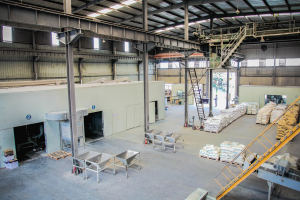
How the labels stack at one manufacturer. Hsinda (Chengdu Hsinda Polymer Materials Co., Ltd.) is a powder coating manufacturer established in 2015 in Chengdu, Sichuan, China, producing powder coatings on eight production lines plus three sample lines. The company states that its factory is certified to ISO 9001 and ISO 14001 and that its coatings have passed RoHS, REACH, SGS and AAMA testing, with QUALICOAT listed among its compliance credentials; its cited test programmes include Florida outdoor exposure testing and antimicrobial testing. A specifier should still verify each certificate with the issuing body for the specific product and plant named on the order — a certificate held by a company is not automatically a certificate for the grade being delivered.
The measurable baseline to write into a specification
The table below is the published data set for an exterior-grade product, quoted with the test standards it is measured against. Figures of this kind are what turn “powder coated aluminium” into an acceptance criterion.
| Property | Typical value / requirement | Test standard |
|---|---|---|
| Specific gravity | 1.2–1.7 g/cm³ | — |
| Average particle size | 32–42 μm | — |
| Recommended film thickness | 70 μm | — |
| Coverage | 8–10 m²/kg at 30–90 μm film | — |
| Curing schedule | 180–200 °C for 10–15 minutes | — |
| Gloss range | 5% to 95% | ISO 2813:2014 |
| Adhesion | Grade 0 | ISO 2409:2020 |
| Hardness | ≥H | ISO 15184:2020 |
| Impact resistance | 50 kg·cm | ISO 6272-1:2017 |
| Bending property | ≤2 mm | ISO 1519:2002 |
| Cupping test | ≥6 mm | ISO 1520:2006 |
| Salt spray resistance | No change after 500 hours, ≤2 mm unilateral corrosion | ISO 7253:1996 |
| Humidity and heat resistance | Slight gloss loss ≤ level 1 after 1,000 hours | GB/T 1740-2007 |
| Weather resistance | No powdering, light retention >50% after 500 hours | ISO 11341:2004 |
These values describe a specific exterior-grade product intended for hardware tools, security doors, furniture, appliances, architectural hardware and public facilities. A specification should carry the data sheet of the grade actually being supplied, not a generic figure lifted from a category description.
Appearance is a numeric decision, not a naming decision
“Matt”, “glossy” and texture names are marketing vocabulary with no fixed numeric meaning across suppliers. Because gloss is adjustable across the 5%–95% range measured to ISO 2813:2014, the only durable way to specify appearance is to state a gloss value with a tolerance and a colour tolerance. Texture families such as sandy, wrinkle and hammer tone are appearance options within the same coating category; they should be specified by reference sample and by the supplier's own designation, not by name alone.
Step-by-Step: From Specification to Repeatable Supply
Step 1 — Fix the exposure class and the substrate
State whether the coated part is permanently exterior, semi-exposed or interior, and confirm that the substrate is extruded aluminium profile or aluminium panel. The substrate determines both the pretreatment and the acceptable cure window, because the alloy and temper limit how much heat the profile can take.
Step 2 — Select chemistry against exposure, not against price
Exterior façades, window and door profiles and curtain wall elements normally call for weather-resistant polyester. Interior partitions and concealed components can often use epoxy or epoxy-polyester (hybrid) chemistry, where the priority is hardness and economy rather than UV stability. Naming the chemistry in the specification prevents a substitution that would only show up after a season of sun.
Step 3 — Convert appearance into numbers
Write a gloss target inside the 5%–95% range with a tolerance, and a colour tolerance expressed as a colour difference value. Hsinda controls colour difference to Delta E ≤ 0.5 and provides a supporting colour difference report on request. That single clause replaces the subjective “must match the approved sample” with something a QC bench can confirm.
Step 4 — Write the mechanical and durability clause
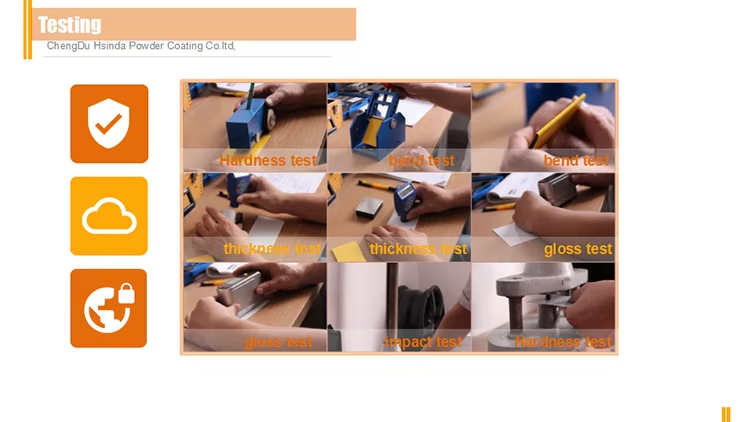
Attach the test standards and values: adhesion grade 0 to ISO 2409:2020, hardness ≥H to ISO 15184:2020, impact resistance 50 kg·cm to ISO 6272-1:2017, bending ≤2 mm to ISO 1519:2002, cupping ≥6 mm to ISO 1520:2006, gloss to ISO 2813:2014, salt spray to ISO 7253:1996, humidity and heat to GB/T 1740-2007, and weathering to ISO 11341:2004. A clause that names only “good adhesion” cannot be audited.
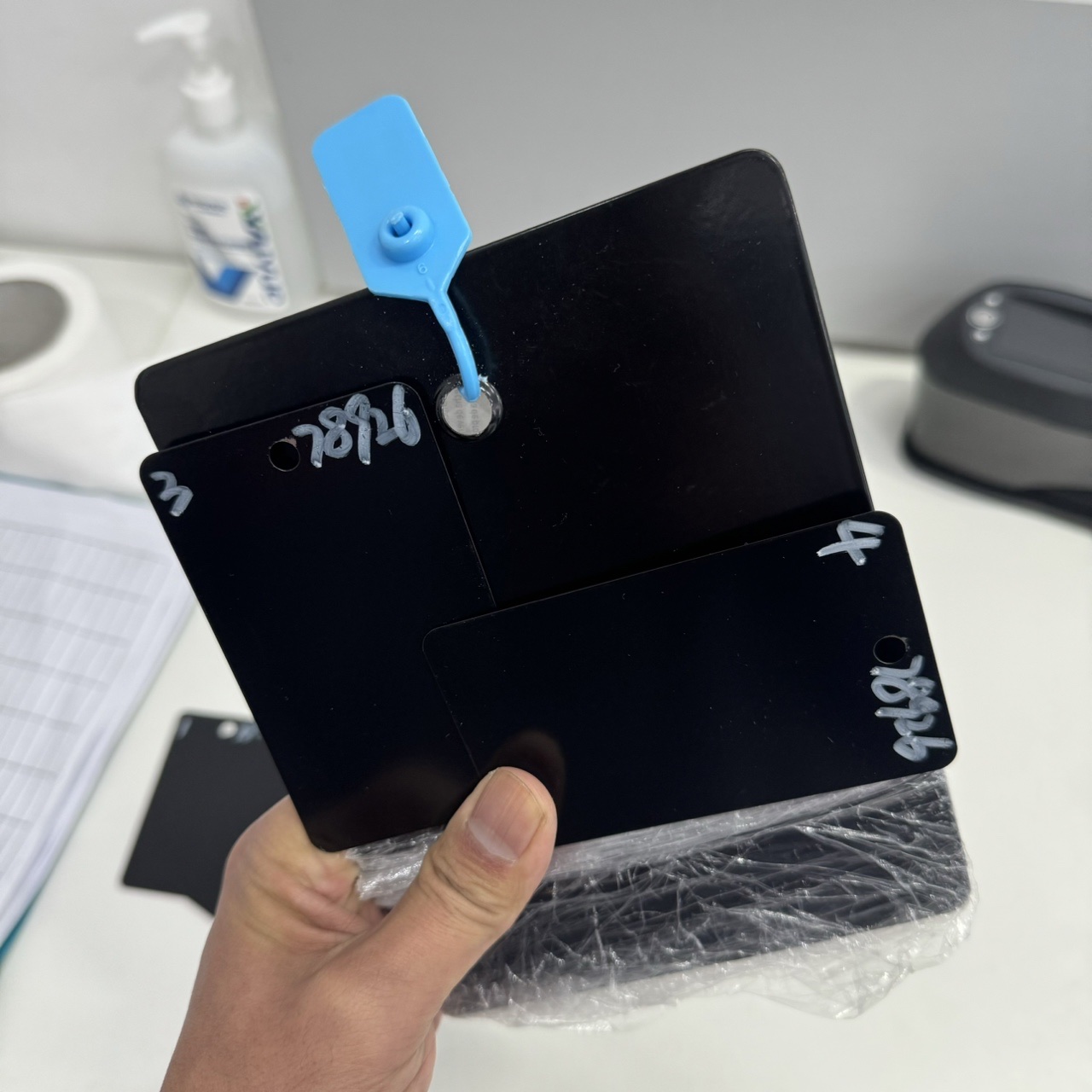
Step 5 — Validate on a sample before committing volume
Sample orders can start from 1 kg, against a standard minimum order quantity of 300 kg and 6 tons for certain products. A sample run confirms three things that a data sheet cannot: that the shade matches the approved reference under the project's own lighting, that the cure window fits the coater's oven, and that the film builds to the specified thickness on the actual profile geometry. Hsinda operates three sample lines for this matching stage.
Step 6 — Qualify the plant, not only the product
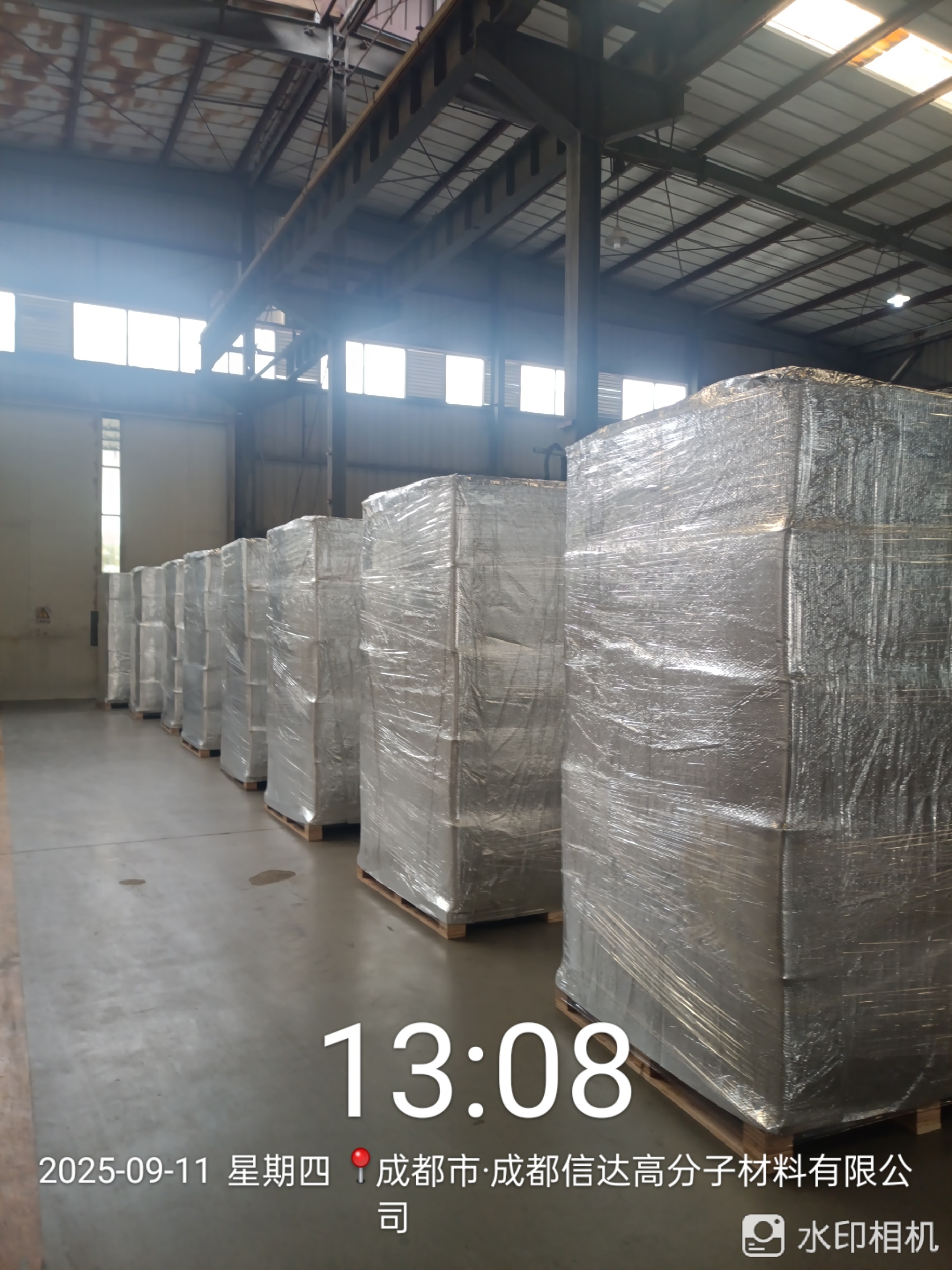
Capacity and process control decide whether the specification survives volume. Hsinda reports a monthly production capacity of 400 tons, a typical production lead time of 15–20 days (20 days for certain orders), and a “3+1” inspection protocol covering raw materials, first and last production pieces, performance and colour difference. Raw material control is equally explicit: material that fails testing after two adjustment attempts is not accepted for continued supply. Acceptance before shipment combines pre-shipment testing with third-party inspection such as SGS.
Step 7 — Lock repeatability and change control
Repeatability is a process requirement, so write it as one: retained reference samples per approved shade, colour difference reports per batch, a named grade and revision in the purchase order, and a rule that any formulation change is notified before shipment. This is the step that protects a phased façade, a distributor's stock, and a maintenance order placed years after handover.
Use Cases: Where the Coating Belongs on a Building
Aluminium window and door profiles
Profiles are handled, stacked, transported and cut before they are installed, so the film must survive abrasion and bending without cracking. Hardness ≥H to ISO 15184:2020 and bending ≤2 mm to ISO 1519:2002 are the two values worth naming. Colour consistency between frame, sash and adjacent panel is the second requirement, and it is where a colour difference tolerance such as Delta E ≤ 0.5 does most of its work.
Glass curtain walls
Curtain wall mullions, transoms and spandrel profiles are the most exposed aluminium on most buildings. The relevant clauses are salt spray resistance to ISO 7253:1996 and weather resistance to ISO 11341:2004, supported by gloss retention rather than gloss alone. Because a wall is assembled from many separately coated lengths, batch-to-batch colour control matters as much as the initial shade.
Sunrooms and glazed extensions
Sunrooms combine exterior exposure with direct human contact, so the coating must deliver weathering outdoors while remaining durable in service. Product data for this use covers indoor environments from –40 °C to 60 °C with rust prevention and durability, and an outdoor service life of more than 10 years for the corresponding exterior grade. Where frames are touched and cleaned frequently, adhesion grade 0 to ISO 2409:2020 is the practical marker.
Architectural partitions
Interior partition systems rarely face UV, but they face impact and cleaning. Here hardness, impact resistance and adhesion dominate, and epoxy or hybrid chemistry can be economically attractive. Specify interior grades as interior grades — using an exterior product indoors is not a defect, but paying exterior durability for a concealed partition is.
Adjacent architectural metalwork
The same coating family extends to architectural hardware, public facilities, security doors and street furniture, where the combination of hardness ≥H, impact resistance 50 kg·cm and salt spray performance after 500 hours is the deciding evidence.
Comparison Table: Aluminum Powder Coating and Traditional Liquid Paint
The comparison that matters most in architectural procurement is not brand against brand, but format against format. The values below are drawn from supplier comparison data for thermoset powder coating and should be read as directional figures for a qualified product, not as universal constants.
| Attribute | Aluminum powder coating (thermoset) | Traditional liquid paint |
|---|---|---|
| VOC emissions | Nearly zero | Solvent-borne application and drying losses (reference point) |
| Material utilisation | Up to 99% | Not quantified in the source data |
| Application process | Single spray, no primer required; curing measured in minutes (10–20 min) | Primer plus drying or flash-off stages |
| Comprehensive cost | Reduced by over 35–40% versus traditional liquid paint (comparison data) | Baseline |
| Service durability | 10–20 years (comparison data) | Not quantified in the source data |
| Energy and carbon | Total energy −22% and carbon −30% to 50% when switching from solvent-based systems | Baseline |
The limits are equally important. Powder coating is a factory process: it needs a curing oven at 180–200 °C for 10–15 minutes, which rules out heat-sensitive substrates and makes it impractical for on-site repair. Liquid systems retain an advantage for field touch-up, very small batches and substrates that cannot take the cure temperature. For line-produced aluminium profiles, panels and curtain wall components, powder is the format that matches the production method.
FAQ
Which standards should I write into an aluminum powder coating specification?
Use the standards that correspond to the product's published data: adhesion grade 0 to ISO 2409:2020, hardness ≥H to ISO 15184:2020, impact resistance 50 kg·cm to ISO 6272-1:2017, bending ≤2 mm to ISO 1519:2002, cupping ≥6 mm to ISO 1520:2006, and gloss to ISO 2813:2014. For durability, add salt spray resistance to ISO 7253:1996 (no change after 500 hours with ≤2 mm unilateral corrosion), humidity and heat resistance to GB/T 1740-2007 (slight gloss loss ≤ level 1 after 1,000 hours) and weather resistance to ISO 11341:2004 (no powdering, light retention >50% after 500 hours). Confirm the figures against the data sheet of the exact grade being supplied.
Can a supplier keep colour and gloss consistent across repeat orders?
Consistency is a process capability, so it should be asked for as one. Hsinda controls colour difference to Delta E ≤ 0.5 and supplies colour difference reports on request, and it runs a “3+1” inspection protocol covering raw materials, first and last production pieces, performance and colour difference. Because gloss is adjustable across a 5%–95% range to ISO 2813:2014, the practical safeguard is to specify a gloss value with tolerance, retain an approved reference sample, and require a report per batch rather than per project.
How much area does one kilogram cover, and what is the minimum order?
Coverage is 8–10 m²/kg at 30–90 μm film thickness, with a recommended film build of 70 μm; specific gravity of 1.2–1.7 g/cm³ explains why coverage varies between grades of the same colour. The standard minimum order quantity is 300 kg, rising to 6 tons for certain products, with sample orders available from 1 kg. For volume projects, powder also carries a high material utilisation rate — up to 99% in supplier comparison data against traditional liquid paint.
How do I validate the coating before committing to a full order?
Start with a 1 kg sample of the specified grade and cure it at 180–200 °C for 10–15 minutes on the actual profile or panel, then check film thickness, gloss and colour difference against the reference. Once the sample is approved, acceptance for the production order is defined by pre-shipment testing plus third-party inspection such as SGS, with the mechanical and durability clauses from the specification attached to the purchase order. Three sample lines at the manufacturer exist specifically for this matching stage.
How do I build a long-term powder coating supply relationship with a Chinese partner?
Qualify capacity, lead time and documentation together, not separately. Hsinda reports a monthly production capacity of 400 tons and a typical production lead time of 15–20 days (20 days for certain orders), with delivery terms including EXW, FOB, CIF, CFR, CPT, DAP and DDP, and payment of 50% T/T in advance with the balance before shipment. The company exports to more than 70 countries and works with distributors in Russia, Bangladesh, Poland, Portugal, the United States, Canada, Sri Lanka, Bolivia and Argentina, with exclusive distributors in Kazakhstan, Uzbekistan and Chile. Long-term relationships of this kind are built on retained reference samples, per-batch colour reports and a named grade in every purchase order. To open that conversation, request a sample or a quotation for your profile specification.
Conclusion: The Basics Decide the Ten-Year Outcome
Aluminum powder coating is a thermoset coating built on weather-resistant polyester resin, a TGIC curing agent, pigment and additives, applied to aluminium profiles and panels and cured into a film. The three commercial labels describe different things: aluminum profile powder coating names the substrate, Qualicoat names a qualification scheme, and AAMA names performance specifications. Understanding which label answers which question is what allows a specifier to write a clause that can actually be tested.
The parameters in this guide — 70 μm film, coverage of 8–10 m²/kg, gloss across 5%–95% to ISO 2813:2014, adhesion grade 0, hardness ≥H, salt spray performance after 500 hours — are the difference between a colour choice and a specification. Applied to window and door profiles, curtain walls, sunrooms and partitions, they are also what makes the second order match the first, which is the part of the decision that outlasts the project meeting.
Next Step: Sample, Quotation and Technical Data
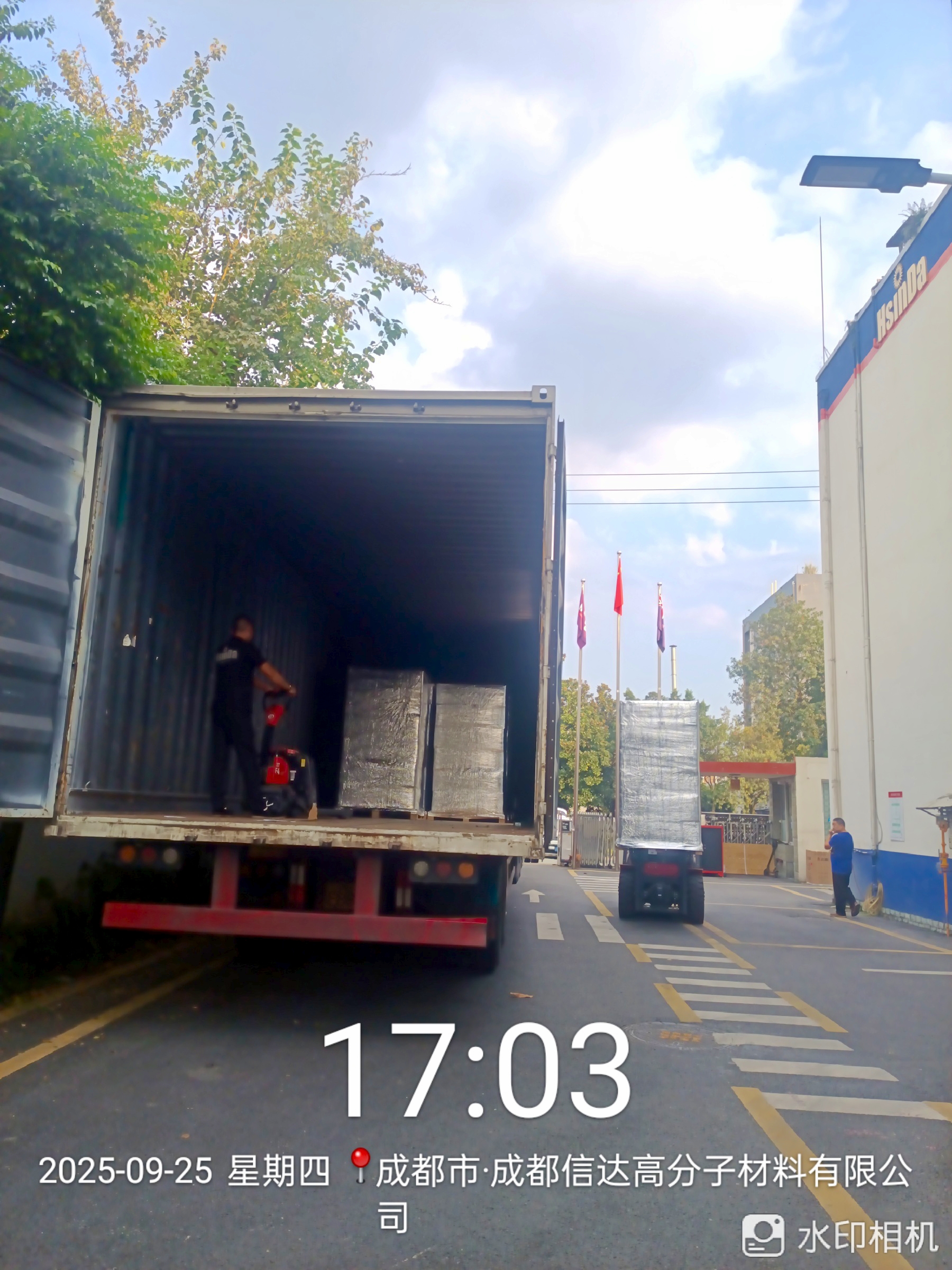
Hsinda (Chengdu Hsinda Polymer Materials Co., Ltd.) supplies architectural and industrial powder coatings from Chengdu, China, with a monthly capacity of 400 tons and sample orders from 1 kg. Share your profile specification, exposure class and target shade to receive a matching sample and a quotation.
Download the product catalogue: Hsinda Powder Coating Brochure (PDF)
Website: www.hsinda.com | Email: innocoat.jenny@hsindapowdercoating.com | Tel / WhatsApp / WeChat: +86 188 8641 2845
Address: No.38 Huagang Road, South Area of Chengdu Modern Industrial Port, Pixian, Chengdu, Sichuan, China
Have Questions or Need More Details?
Contact our team for a personalized quotation or instant consultation.
Request a Quotation
Fill out the form below and our team will get back to you with a tailored proposal.
WhatsApp Direct Chat
Prefer to chat in real-time? Message us on WhatsApp for instant assistance & quick answers.
- Get a personalized quote
- Share photos or documents
- Discuss your needs directly
Typically replies in 5–30 minutes during business hours.