Polyester Powder Coating vs. Epoxy Powder Coating: Head-to-Head for Interior Use
Two quotations come back for the same interior metal part. One is a polyester powder coating, one is an epoxy powder coating. The datasheets look nearly identical, the price differs, and the decision usually falls to whichever resin the previous project happened to use.
For interior use the decision rule is short. Specify epoxy when the coated part never sees direct sunlight and the requirement is chemical resistance, electrical insulation or heavy-duty corrosion protection. Specify polyester when the part may be exposed to UV light at any point in its service life, or when you want one resin system that can be used across both indoor and outdoor assemblies. The rest of this guide is the measured evidence behind that rule: which ISO tests separate the two systems, which values are identical, and what has to be settled afterwards on compliance, finish and supply.
Short answer, with data. In Hsinda's published product data, polyester and pure epoxy powder coatings share the same mechanical and durability profile: impact 50 kg/cm (ISO 6272-1:2017), adhesion 0 Grade (ISO 2409:2020), pencil hardness ≥ H (ISO 15184:2020), bending ≤ 2 mm (ISO 1519:2002), cupping ≥ 6 mm (ISO 1520:2006), and 500-hour salt spray with cross-section corrosion ≤ 2 mm (ISO 7253:1996). The measurable gap appears in weathering. The polyester datasheet lists an ISO 11341:2004 result — 340 nm lamp, 500 hours, no powdering, light retention above 50% — while the pure epoxy datasheet does not list a weathering result at all. For an interior part that never receives sunlight, that gap does not apply, which is exactly why epoxy remains a legitimate and widely used interior specification rather than a compromise.
Why Interior Powder Coating Specifications Go Wrong
Interior coating problems are rarely caused by a defective product. They come from mismatched selection logic. Four patterns repeat in buyer specifications and quotations.
1. An outdoor resin specified on a part that never leaves the building
Polyester powder coating exists largely because of weathering performance. The polyester segment accounted for 48.2% of powder coating market share in 2025, a position attributed to superior weatherability and UV resistance (Grand View Research, 2026). If the coated part lives inside an enclosure, a cabinet or a machine housing, that UV resistance has no function. The specification is not wrong, but it is paying for a property the application never uses.
2. An indoor resin specified on a part that will see daylight
Epoxy systems are positioned by suppliers as indoor, pipe and anti-corrosion coatings. The risk appears when a nominally interior part is stored, transported or installed in a location that gets indirect daylight for years. Because the pure epoxy datasheet does not carry a weathering test result, nobody can predict the appearance outcome from the technical documentation alone. If there is any doubt about daylight exposure, weathering data has to be part of the specification.
3. Treating “indoor” as one single specification
Indoor covers a very wide range of duties: electrical enclosure cabinets, appliance casings, filing cabinets and lockers, office furniture, MDF panels, pipework and machine housings. Each of these has a different dominant stress — chemical, abrasive, electrical or thermal. A single “indoor powder coating” line on a purchase order does not describe which of these stresses matters.
4. Assuming the two datasheets differ more than they actually do
This is the most common and least visible error. Buyers sometimes assume the higher-priced resin must be harder, more adhesive and more corrosion resistant. In the data used here, that is not the case: hardness, adhesion, impact, bending, cupping, humidity and 500-hour salt spray are the same for both systems. Deciding on assumed mechanical superiority produces the wrong trade-off, because the real differences sit in UV exposure and in application positioning.
Industry Background: Where the Two Resins Sit
Powder coating is a defined product segment of the broader construction paints and coatings market, listed alongside water-borne, solvent-borne and high-solids technologies (Verified Market Research). That classification matters for interior specification because it means powder coating is normally evaluated as a capital-relevant surface system, not as a consumable accessory.
The category is large. The global powder coatings market was valued at USD 16.12 billion in 2025, with Asia Pacific holding a 63.10% revenue share (Fortune Business Insights, 2026). A separate commercial estimate put the global market at USD 17.01 billion in 2024 (Market Data Forecast) — a reminder that published market values vary with the product scope each publisher includes, so figures should be read as directional rather than as a purchase benchmark.
Resin mix is where the interior decision becomes visible. Polyester held 48.2% of 2025 market share, and the reason cited is weatherability and UV resistance. Epoxy and hybrid systems occupy the remaining space, concentrated in applications where chemical resistance, insulation or corrosion protection matter more than sunlight. On the demand side, the downstream context is substantial: the United States alone recorded more than 919,000 construction establishments in the first quarter of 2023 (Associated General Contractors of America).
One standards reference is worth noting for anyone storing powder before use: ISO 8130-8 defines the method for estimating the storage stability of thermosetting coating powders. Interior buyers who hold stock for long production cycles should treat storage stability as part of the qualification, not as a warehouse issue.
Detailed Comparison: Polyester vs Epoxy, Point by Point
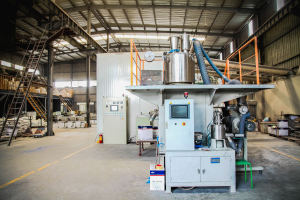
Both materials below are thermosetting powder coatings produced by Chengdu Hsinda Polymer Materials Co., Ltd., a Chinese powder coating manufacturer established in 2015, operating a 10,000 m² plant in Pixian, Chengdu, Sichuan, with 8 large-scale production lines and 3 experimental lines and an annual output of about 5,000 tons.
Polyester Powder Coating
Polyester powder coating is a thermosetting system built on polyester resin with a TGIC curing agent, plus pigment and additives. Hsinda positions it as a weather-resistant powder coating and aluminum profile powder coating, and its declared application base spans outdoor construction elements such as aluminum doors and windows, curtain walls, railings, outdoor furniture, highway guardrails and street light poles, as well as appliance casings, automotive components, metal furniture, shelving, filing cabinets, lockers, agricultural machinery and general industrial equipment.
Its published performance profile includes gloss range 5%–95% measured to ISO 2813:2014, impact 50 kg/cm to ISO 6272-1:2017, bending ≤ 2 mm to ISO 1519:2002, cupping ≥ 6 mm to ISO 1520:2006, adhesion 0 Grade to ISO 2409:2020, pencil hardness ≥ H to ISO 15184:2020, 500-hour salt spray to ISO 7253:1996 with cross-section corrosion ≤ 2 mm, 1,000-hour humidity and heat resistance to GB/T 1740-2007 with slight gloss loss and level 1 or better, and weathering to ISO 11341:2004 — 340 nm lamp, 500 hours, no powdering, light retention above 50%.
Chemical resistance is stated as good resistance to general acids and oils, with average alkali resistance.
Epoxy Powder Coating
Pure epoxy powder coating is a thermosetting system built on epoxy resin with a TGIC curing agent, pigment and additives. Hsinda positions it as an anti-corrosion powder coating, an indoor powder coating and a pipe powder coating. Its declared application base is heavy-duty industrial anti-corrosion — oil and gas pipelines, water supply systems, valves and steel reinforcement bars — electrical and electronic insulation including electric vehicle batteries, electric motors such as hairpin stators and busbars, electrical equipment such as motor copper bars, transformers, switchgear, capacitors and circuit boards, automotive and heavy industry chassis and engine bay components, pump bodies and gearboxes, and home appliance and consumer goods casings including refrigerators, washing machines and air conditioners, plus cookware and lighting fixtures. For appliance exteriors the product is described as offering chemical and scratch resistance.
Its mechanical and durability values are the same as the polyester system: gloss 5%–95% (ISO 2813:2014), impact 50 kg/cm (ISO 6272-1:2017), bending ≤ 2 mm (ISO 1519:2002), cupping ≥ 6 mm (ISO 1520:2006), adhesion 0 Grade (ISO 2409:2020), pencil hardness ≥ H (ISO 15184:2020), 500-hour salt spray to ISO 7253:1996 with cross-section corrosion ≤ 2 mm, and 1,000-hour humidity and heat resistance to GB/T 1740-2007 with slight gloss loss and level 1 or better. No weathering test result is listed on the pure epoxy datasheet. Chemical resistance is stated identically: good resistance to general acids and oils, with average alkali resistance.
Application Parameters: Identical for Both
Particle size averages 32–42 μm; specific gravity is 1.2–1.7; coverage is 8–10 square meters per kilogram at 30–90 μm film thickness; recommended film thickness is 70 μm; application is by tribo gun or electrostatic spray gun; curing is 180–200 °C for 10–15 minutes. Practically, this means a converter or coating line does not need a different process window to switch between the two resins — only a different powder in the hopper.
Weather Resistance
This is the single decisive difference in the data. Polyester carries a weathering result. Pure epoxy does not. Where the interior part will ever be exposed to daylight — sunrooms, glazed facades, semi-outdoor partitions, or products that sit in warehouse daylight for extended periods — the absence of weathering data on epoxy is a real specification risk rather than a theoretical one.
Chemical Resistance and Hardness
On the published datasheets, both systems state good resistance to general acids and oils with average alkali resistance, and both state a pencil hardness of H or harder to ISO 15184:2020. Buyers who expect a large chemical or hardness advantage from one resin will not find it in these values. The differentiator in practice is the product positioning behind the resin: epoxy-based systems are the ones built out into anti-corrosion and electrical-insulation products, and polyester-based systems are the ones built out into weathering and architectural products.
Compliance Options for Interior Work
Interior applications often have stricter indoor-air, contact and recyclability requirements than outdoor architectural work. Hsinda's TGIC Free Powder Coating is an HAA-cured polyester system classified as an indoor powder coating, VOC free, HAA curing and REACH certified, which means an interior specification can be met with a polyester system that does not use a TGIC curing agent. Documented evidence includes an SGS REACH SVHC test report (CKGIN25000923901) against EU REACH Regulation (EC) No 1907/2006 for HAA type powder coating, an SGS RoHS test report (CKGEC25000071901) against the IEC 62321 series, ISO 9001:2015 certificate 2052025Q00440R0S and ISO 14001:2015 certificate 2052025E00271R3S issued by China International Certification Co., Ltd. and valid to 23 November 2028, an ISCC PLUS certificate (ISCC-PLUS-Cert-CN198-41261025, EN 15343) covering polyester powder coating and valid to 25 June 2027, a product carbon footprint verification (TZJ136660053R0S, ISO 14067:2018 and PAS 2050:2011) valid to 17 July 2028, and an SGS antibacterial performance test report (ASH25-0055689-02) to ISO 22196:2011 for antibacterial powder coating.
Where the Hybrid Fits
Epoxy polyester hybrid powder coating is a third option that Hsinda lists as an indoor powder coating, VOC free, MDF powder coating and low-temperature curing powder coating, built on epoxy resin, polyester resin and a TGIC curing agent. It shares the same parameter set as the other two systems. For interior parts where epoxy-level chemical behaviour is wanted but the part is decorative and cost-sensitive, the hybrid is the usual middle route — with the same caveat that no weathering result is published for it.
Step-by-Step: Specifying an Interior Powder Coating
- Establish whether the part can ever receive direct or indirect UV. Include storage, transport, installation and end-use location. If the answer is yes at any stage, weathering data is mandatory and polyester is the default resin.
- Define the dominant chemical and cleaning exposure. Detergents, oils, general acids, alkaline cleaners and solvents pull the specification in different directions. Both resin datasheets state good resistance to general acids and oils but only average alkali resistance, so aggressive alkaline cleaning regimes need to be tested rather than assumed.
- Confirm substrate and pre-treatment before comparing powders. The same powder performs differently on aluminum, steel, galvanised steel or MDF. Substrate and pre-treatment drive adhesion and corrosion results as much as the resin does.
- Choose the resin first, then the finish. Resin selection answers UV, chemical and insulation duty. Finish selection — gloss level and texture — answers appearance, touch and defect hiding. Mixing the two decisions is what produces over-specified or under-specified quotations.
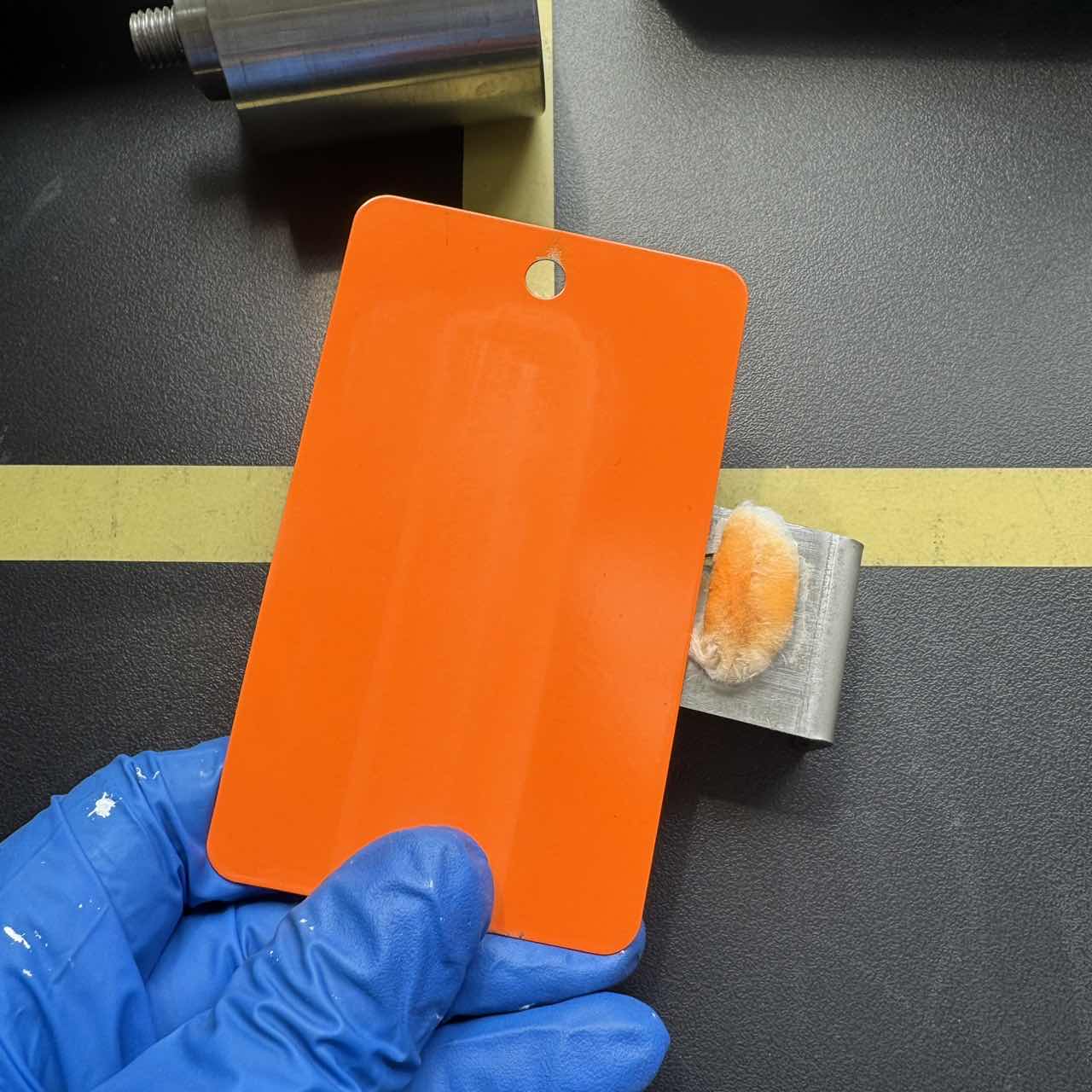
- Validate with a sample before the production order. Ask for a coated panel rather than a color chip where the part has a functional duty, and request the test evidence that matches your risk: hardness, adhesion, impact, salt spray and, for polyester, weathering.
- Lock the specification and the acceptance criteria together. A specification that does not name the test method, the test duration and the acceptance threshold cannot be enforced at goods-in.
Interior Use Cases and What Each One Teaches
Electrical enclosures: corrosion resistance plus insulation
A client manufacturing electrical enclosures needed a coating that could safely house electrical components while enabling centralized control, distribution and protection of electrical energy and industrial equipment. The requirement combined corrosion resistance, insulating or static-conductive behaviour and an acceptable appearance. The project covered 40 tons of powder coating across Mexico, Paraguay, Sri Lanka, Russia and China and has been running for 10 years. This is the classic interior profile: no UV duty, but simultaneous chemical, electrical and aesthetic requirements.
Home appliance casings: chemical and scratch resistance
Refrigerator, washing machine, air conditioner and microwave oven casings are an interior application where the surface meets detergents, fingerprints and daily abrasion rather than sunlight. Epoxy-based systems are positioned for appliance exteriors because of chemical and scratch resistance, and matte powder coating is used for appliance housings, radiators and electric heating equipment, as well as for computer casings, stands and bases where the finish is intended to reduce visible scratches and fingerprints. Where detergent resistance and low emissions are the priority, the TGIC-free HAA polyester option is used for appliance housings and internal structural components.
Filing cabinets, lockers, shelving and office furniture
Office desks and chairs, filing cabinets, shelving units and storage lockers require a smooth, uniform and abrasion-resistant film that survives high-frequency use. Hammer tone polyester coating is also used on security doors, filing cabinets, safes and vaults where a dense, scratch-resistant film is wanted, and on steel and wood furniture and metal shelves.
Industrial shelving: an epoxy-polyester hybrid in practice
An industrial engineering client in Colombia used an epoxy-polyester electrostatic powder coating process across industrial shelving, mezzanines and commercial display furniture, with a project scale of 100 tons of powder coating. The reported outcomes were zero VOC emissions, impact resistance more than three times greater than traditional liquid paint, and precise color matching to the RAL chart with adjustable gloss levels. The lesson is that for mixed indoor furniture and racking programmes, the hybrid route gives both a decorative finish and a functional protective layer in one specification.
Metal tools: rust prevention and abrasion resistance
A hardware tool manufacturer in Mexico and the United States applied 1,000 tons of powder coating to metal tools over a five-year cooperation period, targeting rust prevention and enhanced durability. The results reported were good rust resistance and abrasion resistance, achieved through an eco-friendly powder coating process. This case shows the value of a stable, repeatable specification across a long production series rather than a single high-performance batch.
Comparison Table: Polyester vs Epoxy for Interior Use
| Comparison point | Polyester Powder Coating | Epoxy Powder Coating (pure) |
|---|---|---|
| Resin system | Polyester resin with TGIC curing agent; TGIC-free HAA variant available | Epoxy resin with TGIC curing agent |
| Supplier positioning | Weather resistant powder coating; aluminum profile powder coating | Anti-corrosion powder coating; indoor powder coating; pipe powder coating |
| Weather resistance (ISO 11341:2004) | 340 nm lamp, 500 h, no powdering, light retention > 50% | No weathering result listed on the datasheet |
| Chemical resistance | Good resistance to general acids and oils; average alkali resistance | Good resistance to general acids and oils; average alkali resistance |
| Pencil hardness (ISO 15184:2020) | ≥ H | ≥ H |
| Adhesion (ISO 2409:2020) | 0 Grade | 0 Grade |
| Impact (ISO 6272-1:2017) | 50 kg/cm | 50 kg/cm |
| Bending (ISO 1519:2002) | ≤ 2 mm | ≤ 2 mm |
| Cupping (ISO 1520:2006) | ≥ 6 mm | ≥ 6 mm |
| Salt spray (ISO 7253:1996) | 500 h, film unchanged, cross-section corrosion ≤ 2 mm | 500 h, film unchanged, cross-section corrosion ≤ 2 mm |
| Humidity and heat (GB/T 1740-2007) | 1,000 h, slight gloss loss, ≤ level 1 | 1,000 h, slight gloss loss, ≤ level 1 |
| Gloss range (ISO 2813:2014) | 5%–95% | 5%–95% |
| Particle size / film thickness | 32–42 μm average / 70 μm | 32–42 μm average / 70 μm |
| Coverage | 8–10 m² per kg at 30–90 μm | 8–10 m² per kg at 30–90 μm |
| Curing schedule | 180–200 °C, 10–15 min | 180–200 °C, 10–15 min |
| Typical interior fit | Furniture, cabinets, lockers, parts that may see daylight; TGIC-free HAA variant for low-emission interiors | Enclosures, appliance casings, pipework, insulation and anti-corrosion duty where no UV exposure occurs |
Read the table as a decision filter, not as a ranking. Where a row shows identical values, the resin choice should be driven by the rows that differ plus the compliance and finish requirements of the project.
Supplying Both Resins: OEM, Custom Color and Procurement Facts
Most buyers evaluating polyester against epoxy eventually need to know whether one supplier can hold both specifications, because a single source simplifies color control, sample approval and delivery scheduling. Hsinda's product portfolio covers epoxy powder coating, epoxy-polyester powder coating, polyester powder coating and special functional powder coatings, produced on 8 large-scale lines and 3 experimental lines with an annual capacity of about 5,000 tons and a monthly capacity of 400 tons. Domestic references include appliance and electronics manufacturers such as Changhong Electric, Xiaomi Appliances and TCL Electronics, and the company exports to more than 70 countries with established distributors in markets including Russia, Poland, Portugal, the United States, Canada, Sri Lanka, Argentina and Bolivia.
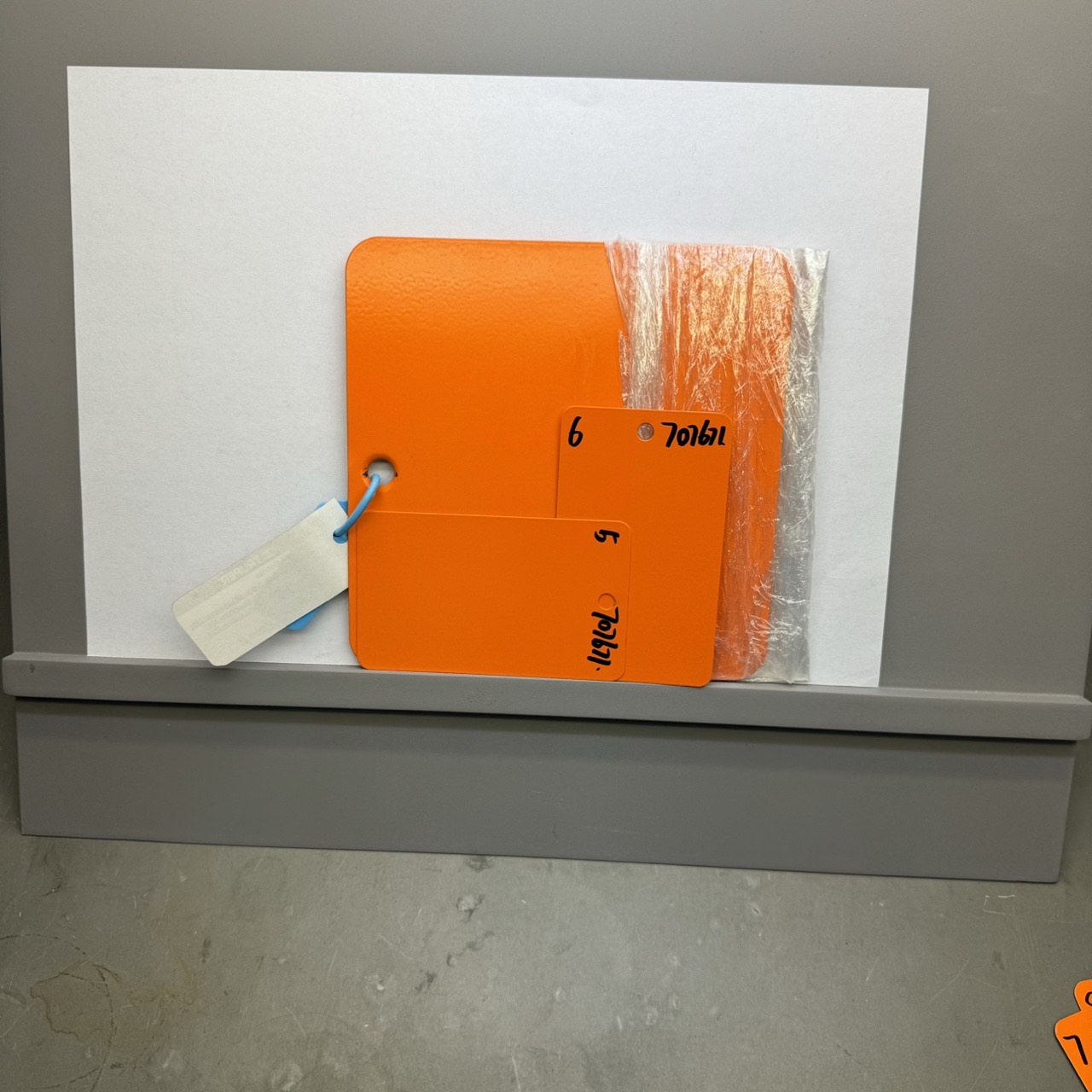
On customization, ODM capability covers color matched to a standard chart or produced to RAL, Pantone or a customer sample; gloss classified by 60° gloss meter value as high gloss above 80%, semi-gloss 40–79% and matte 5–39%; textures including smooth, sandblasted, wrinkled, hammered, watermarked, cracked, stone-like, metallic or pearlescent, chameleon, photochromic, thermochromic, electroplating effect, reflective and luminescent; and performance options such as weather resistance, corrosion resistance, antibacterial, anti-slip, anti-fingerprint, fireproof and explosion resistant, scratch resistant and low-temperature curing. OEM capability covers carton box OEM, powder coating sample card OEM and logo OEM. Quality control is described as 100% testing, with 24-hour online service and technical support, and local distributor support on OEM programmes.
FAQ: Interior Powder Coating Selection
Is there a TGIC-free polyester powder coating for interior use, and which certifications apply?
Yes. Hsinda's TGIC Free Powder Coating is an HAA-cured polyester system classified as an indoor powder coating, VOC free, HAA curing and REACH certified, so an interior specification can avoid a TGIC curing agent while staying on a polyester resin. The supporting documents are an SGS REACH SVHC test report (CKGIN25000923901) against EU REACH Regulation (EC) No 1907/2006 for HAA type powder coating; an SGS RoHS test report (CKGEC25000071901) against the IEC 62321 series; ISO 9001:2015 certificate 2052025Q00440R0S and ISO 14001:2015 certificate 2052025E00271R3S issued by China International Certification Co., Ltd. and valid to 23 November 2028; an ISCC PLUS certificate (ISCC-PLUS-Cert-CN198-41261025, EN 15343) covering polyester powder coating and valid to 25 June 2027; a carbon footprint verification (TZJ136660053R0S, ISO 14067:2018 and PAS 2050:2011) valid to 17 July 2028; and an SGS antibacterial test report (ASH25-0055689-02) to ISO 22196:2011. Buyers should always request the certificate scope and validity date, because a certificate issued for one product family does not automatically cover a different resin system.
Can one supplier deliver both polyester and epoxy powder coating with custom colors and finishes?
Hsinda produces both. Its portfolio covers epoxy powder coating, epoxy-polyester powder coating, polyester powder coating and special functional powder coatings. Customization under ODM covers color matched to a standard chart or produced to RAL, Pantone or a customer sample; gloss classified by 60° gloss meter value as high gloss above 80%, semi-gloss 40–79% and matte 5–39%; textures including smooth, sandblasted, wrinkled, hammered, watermarked, cracked, stone-like, metallic or pearlescent, chameleon, photochromic, thermochromic, electroplating effect, reflective and luminescent; and performance options including weather resistance, corrosion resistance, antibacterial, anti-slip, anti-fingerprint, fireproof and explosion resistant, scratch resistant and low-temperature curing. OEM services cover carton box OEM, powder coating sample card OEM and logo OEM. The practical benefit for an interior program is that the same color reference can be held across a polyester line and an epoxy line without changing supplier or color-approval workflow.
What is the minimum order quantity, and how are payment and delivery handled?
For standard supply the minimum order quantity is 100 kg, with 300 kg for a bulk order and sample orders from 1 kg. For OEM programs that include branded carton boxes, powder coating sample cards or logo printing, the stated minimum order quantity is 6 tons. Delivery terms available are EXW, FOB, CIF, CFR, CPT, DAP and DDP. Payment terms are 50% T/T in advance with the remaining 50% T/T before shipment. Acceptance criteria are a pre-shipment test plus third-party inspection, with SGS named as the inspection route. Because OEM and standard programs carry different minimums, the order quantity should be confirmed against the packaging requirement before the price is compared.
How should a polyester or epoxy coating be validated before a production order?
Start with a sample: sample orders are available from 1 kg, and a coated panel is more informative than a loose color chip when the part has a functional duty. Ask the supplier to state which test method and duration supports each claim you are relying on. For these systems the relevant methods are ISO 15184:2020 for pencil hardness, ISO 2409:2020 for adhesion, ISO 6272-1:2017 for impact, ISO 1519:2002 for bending, ISO 1520:2006 for cupping, ISO 7253:1996 for salt spray, GB/T 1740-2007 for humidity and heat, and ISO 11341:2004 for weathering on polyester. Production acceptance then combines a pre-shipment test with third-party inspection. Requesting a sample panel and the matching test evidence is the fastest way to confirm whether an epoxy or polyester specification will actually hold on your substrate and pre-treatment line.
What lead time and production capacity should be planned for?
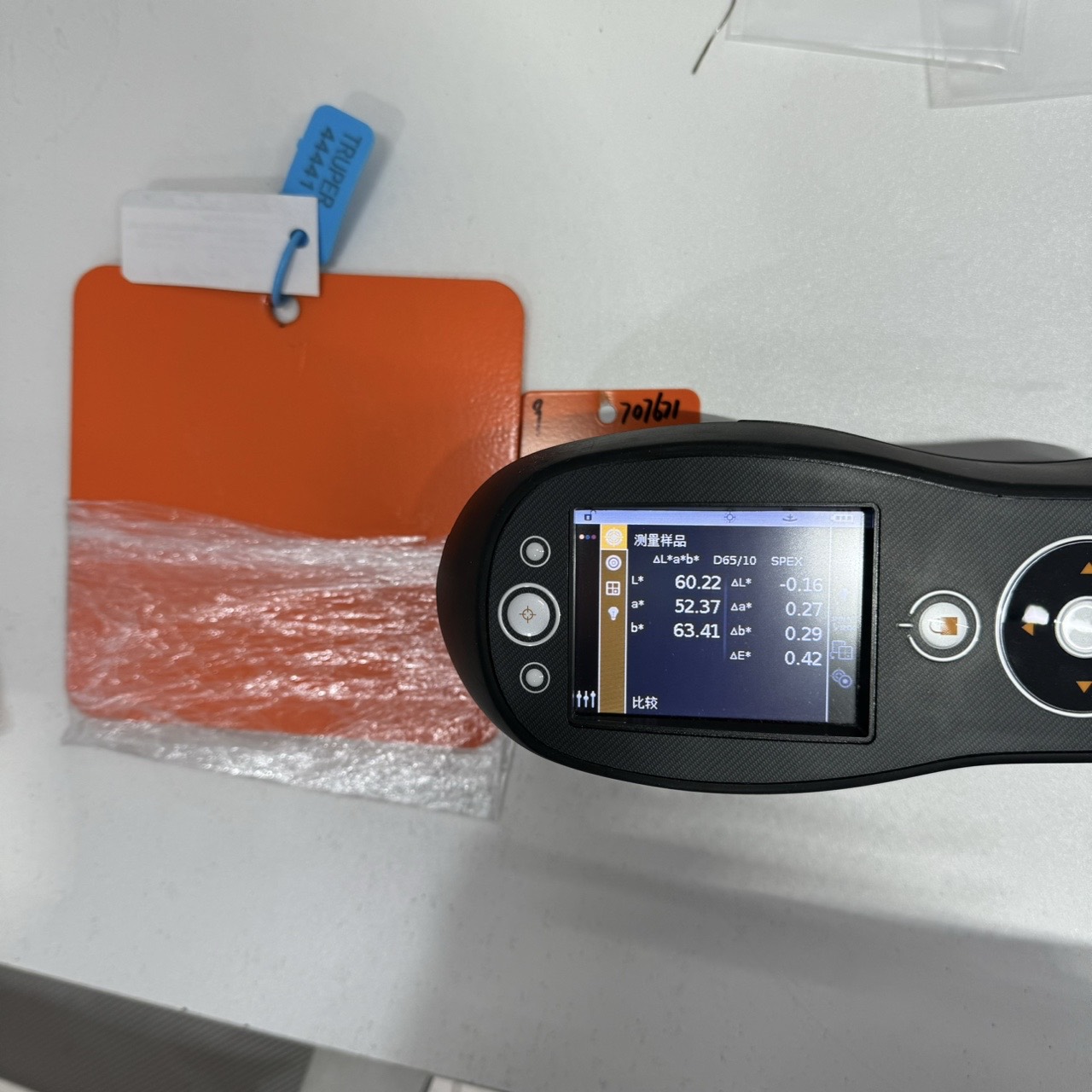
Custom ODM color and finish programs are quoted at 15–20 days, and OEM programs with branded packaging at 20 days. Monthly capacity is 400 tons, and annual output is about 5,000 tons across 8 large-scale production lines and 3 experimental lines. After-sales support is described as 24-hour online service with technical support, plus local distributor support on OEM programs. For a project that mixes polyester and epoxy items in one shipment, the safest planning approach is to confirm the lead time per resin system rather than per order, especially where a custom color has to be matched against a customer sample first. To move from comparison to a firm specification, you can request a coated sample panel, a quotation against your color and finish, or the full product catalog from the Hsinda team.
Conclusion: Choose the Resin for the Environment, Not the Price Tag
For interior use, the polyester versus epoxy decision is narrower than it first appears. Mechanical performance, adhesion, hardness, salt spray and humidity resistance are the same in the data reviewed here. Weathering is where the two systems separate: polyester carries an ISO 11341:2004 result, pure epoxy does not. That single fact explains most of the application logic — epoxy for enclosures, appliance casings, pipework, insulation and anti-corrosion duty where sunlight never reaches the part; polyester where daylight exposure is possible or where one resin has to serve both indoor and outdoor assemblies; and epoxy-polyester hybrid where an interior program needs a decorative, low-emission finish with functional protection, as in the 100-ton industrial shelving project.
The second decision is compliance and finish, and it is where interior projects most often stall. A TGIC-free HAA polyester system, REACH and RoHS test reports, ISO 9001 and ISO 14001 certification, an ISCC PLUS certificate for polyester powder coating and an ISO 22196:2011 antibacterial report give an interior specification a documented base. What remains is validation: a coated sample panel, the test method behind each claim, and acceptance criteria that name the test and the threshold.
Request a Sample Panel or a Quotation
Send your substrate, color reference, gloss target and the environment the part will see indoors. Hsinda can return a coated sample panel, a quotation for polyester, epoxy or hybrid powder coating, and the matching test documentation — with sample orders from 1 kg, a standard MOQ of 100 kg, and 15–20 day lead times on custom color programs.
Contact: Jenny Qin · Tel / WhatsApp / WeChat: +86 188 8641 2845 · Email: innocoat.jenny@hsindapowdercoating.com · Website: www.hsinda.com
Download the full product catalog: Hsinda Powder Coating Product Catalog (PDF)
Have Questions or Need More Details?
Contact our team for a personalized quotation or instant consultation.
Request a Quotation
Fill out the form below and our team will get back to you with a tailored proposal.
WhatsApp Direct Chat
Prefer to chat in real-time? Message us on WhatsApp for instant assistance & quick answers.
- Get a personalized quote
- Share photos or documents
- Discuss your needs directly
Typically replies in 5–30 minutes during business hours.