Powder Coating Application Guide for Aluminum Curtain Walls, Sunrooms & Partitions
Powder Coating Application Guide for Aluminum Curtain Walls, Sunrooms & Architectural Partitions
Aluminum curtain walls, sunrooms and architectural partitions are often produced from the same family of extruded aluminum profiles, but they are almost never exposed to the same conditions. A facade panel faces continuous UV, wind-driven rain and thermal cycling. A sunroom frame sits in the transition zone between interior and exterior, where condensation and handling damage matter as much as sunlight. An interior partition is cleaned, touched and re-specified far more often than it is weathered. This application guide maps powder coating choices to each scenario, so that exposure, substrate and appearance requirements — not habit — decide the specification.
The short answer for project teams is this: for exposed facade work such as aluminum curtain walls and window systems, the primary specification is an aluminum powder coating built on super weather-resistant polyester resin with a TGIC curing agent, applied at a 70 μm film thickness. Sunroom frames require the same weather resistance plus balanced impact and scratch performance, because the assembly is handled and re-glazed during installation. Interior architectural partitions can move to a sandy, matt or TGIC-free (HAA) polyester system where texture, glare control or REACH compliance matters more than long-term UV exposure.
Why a Single Powder Coating Specification Cannot Cover Every Aluminum Structure
Four variables decide whether a coating system will still look and perform correctly after five or ten years on an aluminum building element: exposure, substrate form, appearance requirement and buildability. Each one shifts the specification in a different direction.
Exposure. A vertical curtain wall panel receives direct solar radiation across a large continuous surface, where any loss of gloss or color shift is immediately visible across the whole elevation. A sunroom roof and frame absorbs more heat and experiences sharper temperature swings across the glass-to-frame junction. An interior partition in an office or a hospital corridor is exposed to cleaning agents, abrasion and fingerprints instead.
Substrate form. Extruded profiles, sheet panels and castings differ in how they accept a powder layer, and the coating specification has to be agreed between the profile supplier, the applicator and the project specifier before the first batch is produced.
Appearance requirement. A smooth high-gloss facade, a sandblasted residential window, and a matt interior partition create three different gloss and texture targets. Powder coating systems are available across a gloss range from 5% to 95% measured to ISO 2813:2014, with matt systems defined from 5% to 30%, so the appearance requirement is a technical parameter, not a cosmetic afterthought.
Buildability. The chosen powder has to be applied with the equipment and cure window available in the coating line. Hsinda architectural powder coatings are formulated for a tribo gun or an electrostatic spray gun and cure at 180–200 °C for 10–15 minutes, which allows a project specification to be checked against the applicator's line before ordering.
How the Architectural Powder Coating Market Is Framed in 2026
Thermoset powder coatings — the category that includes epoxy and polyester resins — held a 76.6% share of the powder coatings market in 2026, according to Coherent Market Insights, with durability and corrosion resistance given as the main drivers. That concentration matters for construction buyers, because it means the technology used on aluminum curtain walls and window systems is the mainstream industrial platform rather than a niche product.
Architectural and decorative applications are one of the major end-use segments for powder coatings, driven by demand for UV-resistant facades and window systems, according to Mordor Intelligence. In parallel, estimates for total market value vary between reporting agencies: Grand View Research placed the 2025 market at USD 11.5 billion with a projection of USD 18.5 billion by 2033, while IMARC Group reported USD 16.4 billion for 2025 with growth at a CAGR of 4.51% until 2034. Buyers should treat market size figures as directional and instead anchor specifications in published standards.
Those standards are well defined for architectural coatings. Powder coatings for architectural use are governed by international certification schemes including Qualicoat, GSB International and AAMA standards (2603, 2604 and 2605). Where a project mixes aluminum profiles with steel sub-frames, railings or supporting structures, ISO 12944 (corrosion protection of steel structures) is the primary benchmark for specifying coating systems in corrosive environments across corrosivity categories C1 to C5.
Specifier's note: Qualicoat, GSB and AAMA schemes govern the coating system as a whole — resin, pretreatment, film build and application process. A certificate for a powder product alone is not the same as a qualified system, so the project specification should name the finish, the film thickness and the application route together.
The Five Specifying Variables for Aluminum Powder Coating
1. Resin and curing chemistry
Aluminum powder coating for facade work is classified as aluminum profile powder coating, Qualicoat powder coating and AAMA powder coating, and is built on super weather-resistant polyester resin, a TGIC curing agent, pigment and additives. That combination is what supports long-term exterior performance.
A TGIC-free option exists for projects where the specification or the end market restricts TGIC-cured systems. The TGIC-free powder coating is an HAA polyester powder coating marketed as a REACH-certified powder coating, using polyester resin with an HAA curing agent. It cures in the same 180–200 °C / 10–15 minute window, which means an applicator does not have to change line settings when switching between the two systems.
Two further systems belong to the interior side of the same building package. Epoxy polyester hybrid powder coating — described as an indoor powder coating, VOC-free powder coating, MDF powder coating and low-temperature curing powder coating — is used across appliance housings, office and residential furniture, storage lockers and similar high-frequency metalwork. Pure epoxy powder coating and anti-corrosion powder coating are positioned for heavy-duty anti-corrosion work such as oil and gas pipelines, water supply systems, valves, reinforcement bars and machinery, and are not a direct substitute for exterior architectural aluminum.
2. Film build, coverage and material budgeting
Architectural aluminum powder coatings from Hsinda are specified at a 70 μm film thickness, with coverage of 8–10 square meters per kilogram at 30–90 μm film thickness. Particle size averages 32–42 μm and specific gravity sits between 1.2 and 1.7.
The coverage figure is the number a project estimator should carry into the bill of materials. Because the published range is 8–10 m²/kg, the same surface area can require materially different powder volumes depending on where inside that band the actual application lands, and on how efficiently the spray line transfers powder to the profile. Comparing quotations on a per-kilogram price alone therefore hides the real cost driver. Comparing them on coverage per square meter of finished profile — at an agreed film thickness — is the calculation that reflects the project.
3. Surface finish: glossy, matt, sandy, metallic, hammer tone and wrinkle
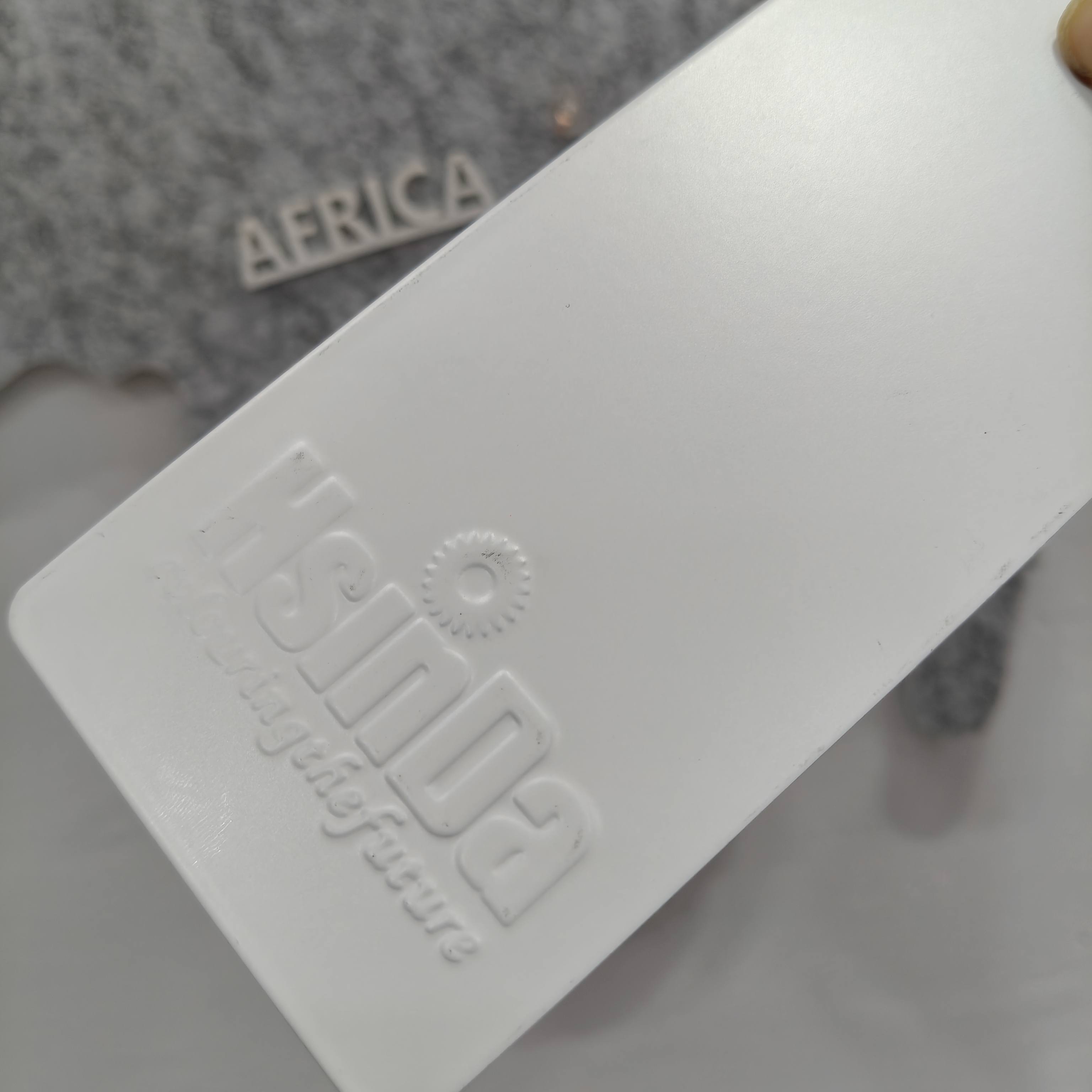
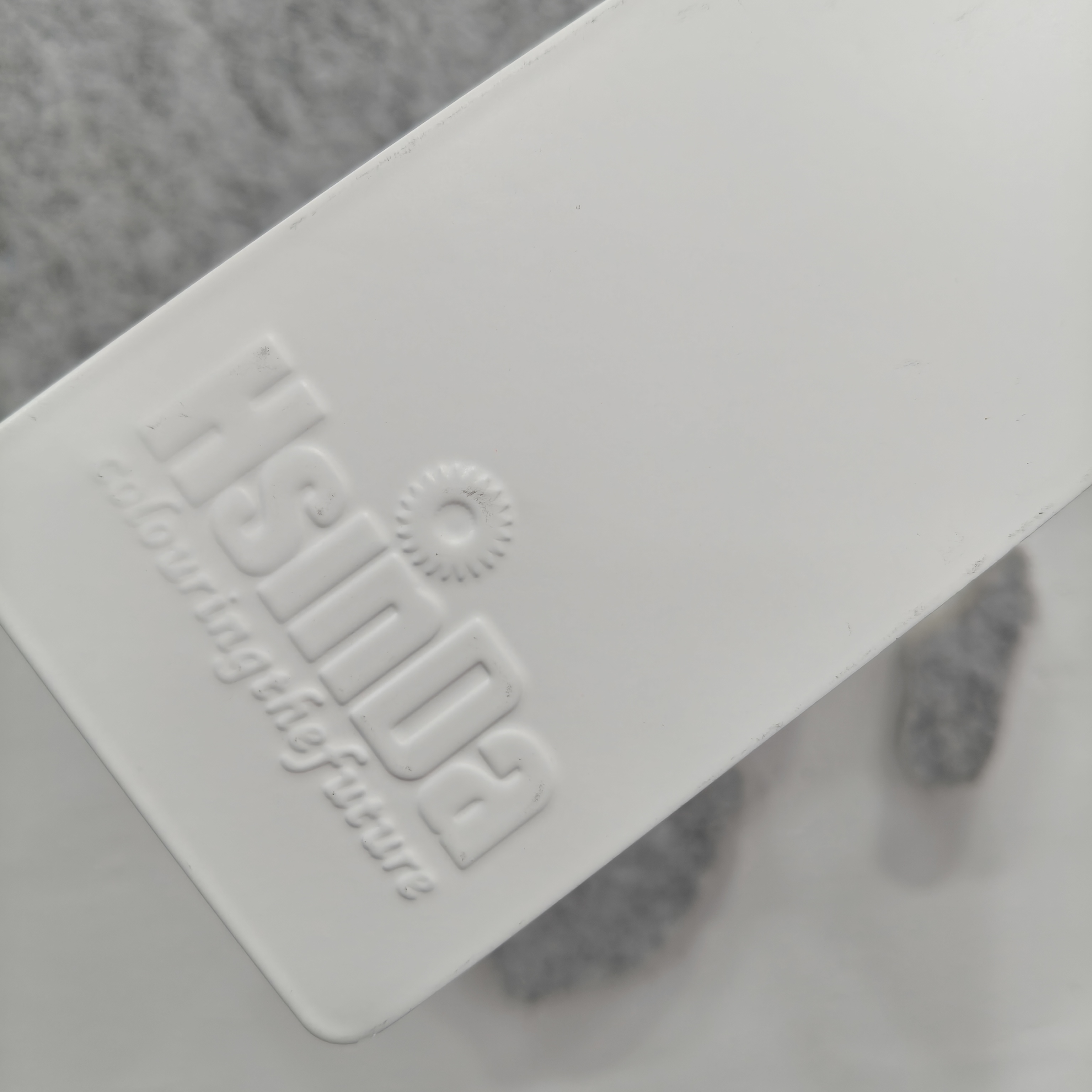
Gloss values are measured to ISO 2813:2014 and span 5% to 95% across the standard product range. Matt powder coating is defined more narrowly at 5% to 30%. Hsinda classifies finishes by 60° gloss meter value into high gloss (above 80%), semi-gloss (40–79%) and matte (5–39%), which gives a specifier a fixed vocabulary for describing a facade target instead of an adjective.
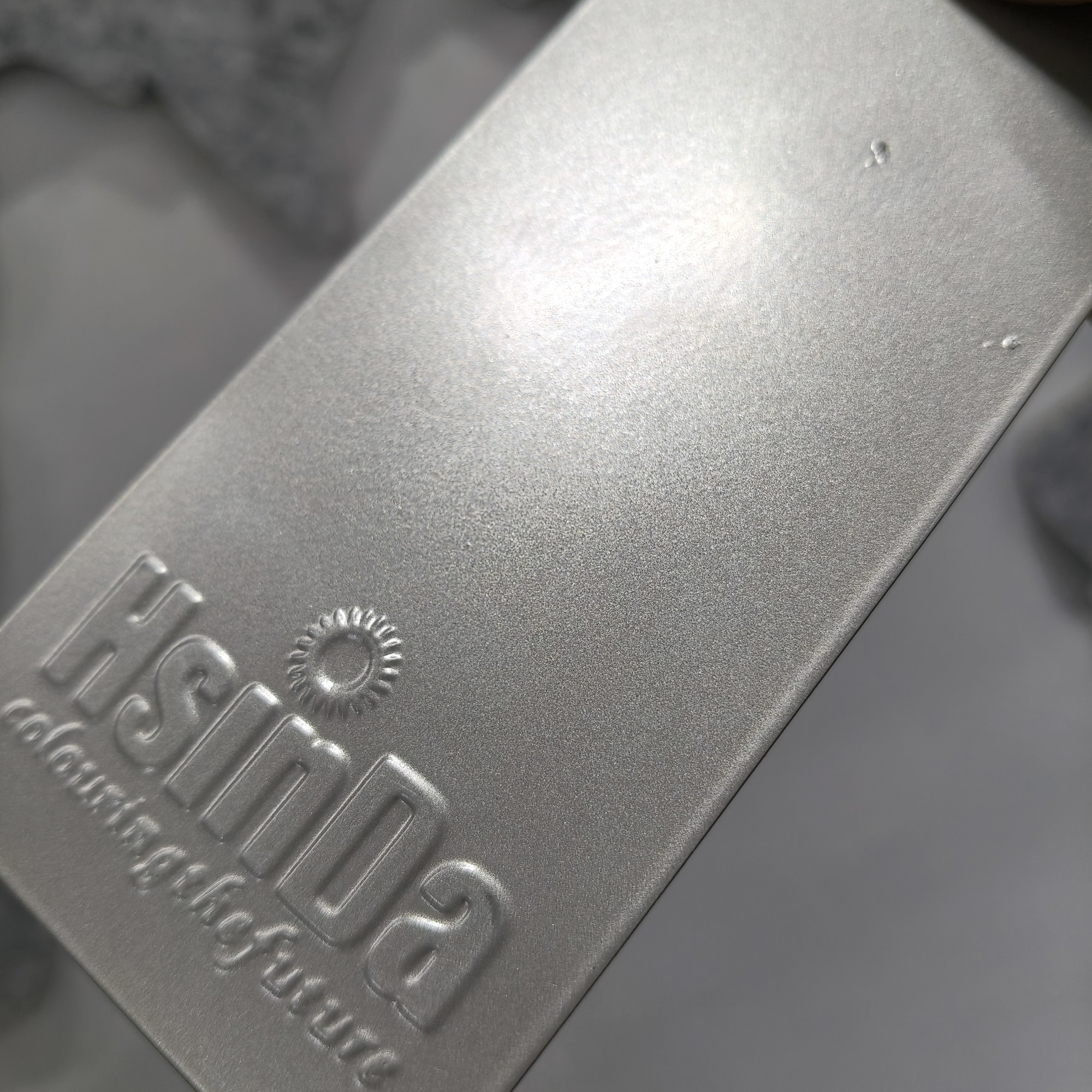
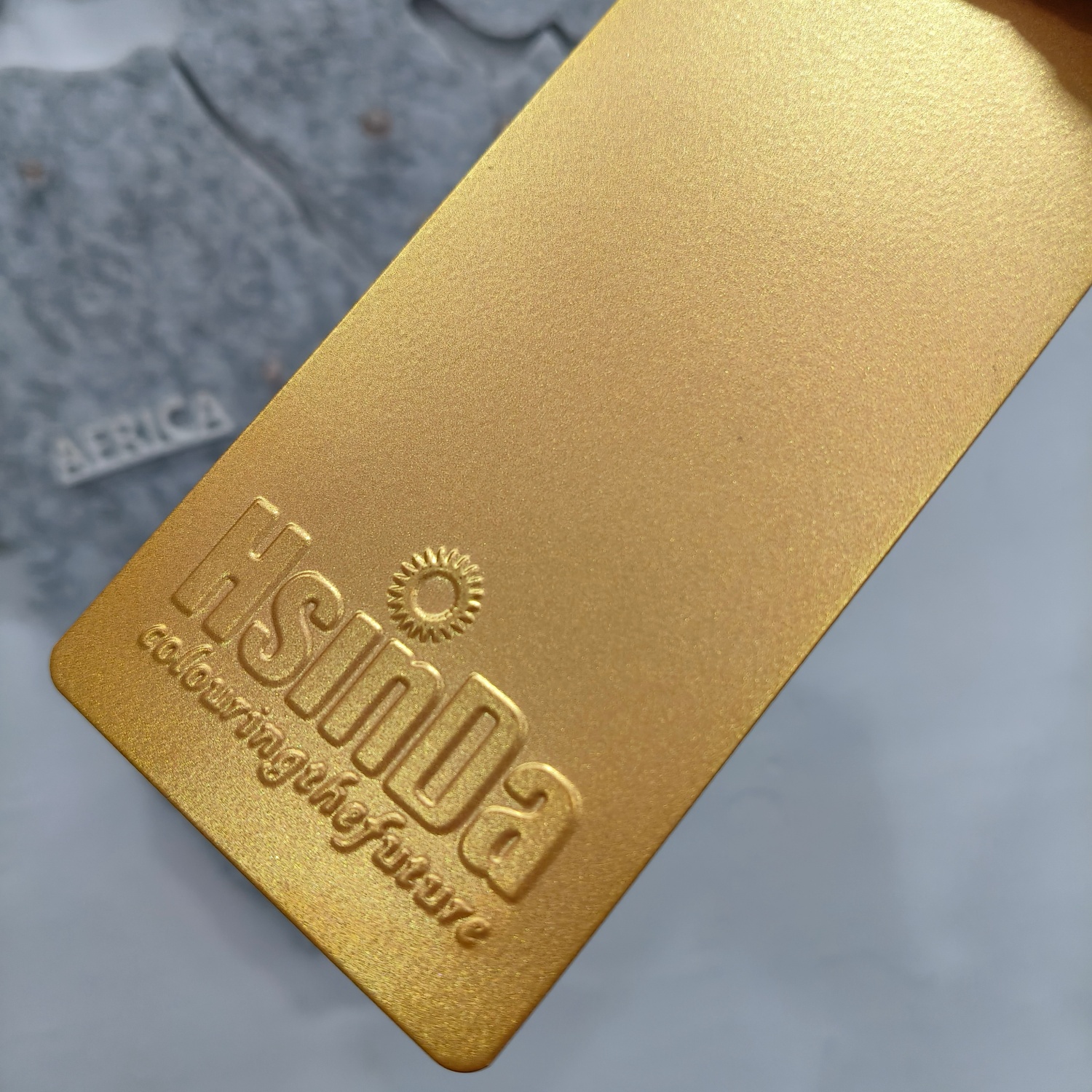
Texture is a separate decision from gloss. Available effects include smooth, sandblasted, wrinkled, hammered, watermarked, cracked, stone-like, metallic and pearlescent, chameleon, photochromic, thermochromic, electroplating effect, reflective and luminescent finishes. Sandy powder coating is polyester-based and specified for aluminum profiles, doors and windows, curtain walls and highway guardrails; the outdoor-grade sandblasted surface provides long-term protection against sun and rain while keeping a decorative appearance. Metallic powder coating is a polyester system that cures at 180–200 °C for 10–15 minutes and offers a gloss range of 5% to 95%, with colour references such as bronze gold, champagne gold and sparkle silver bronze gold used on architectural decorative profiles.
4. Colour control: RAL and Pantone
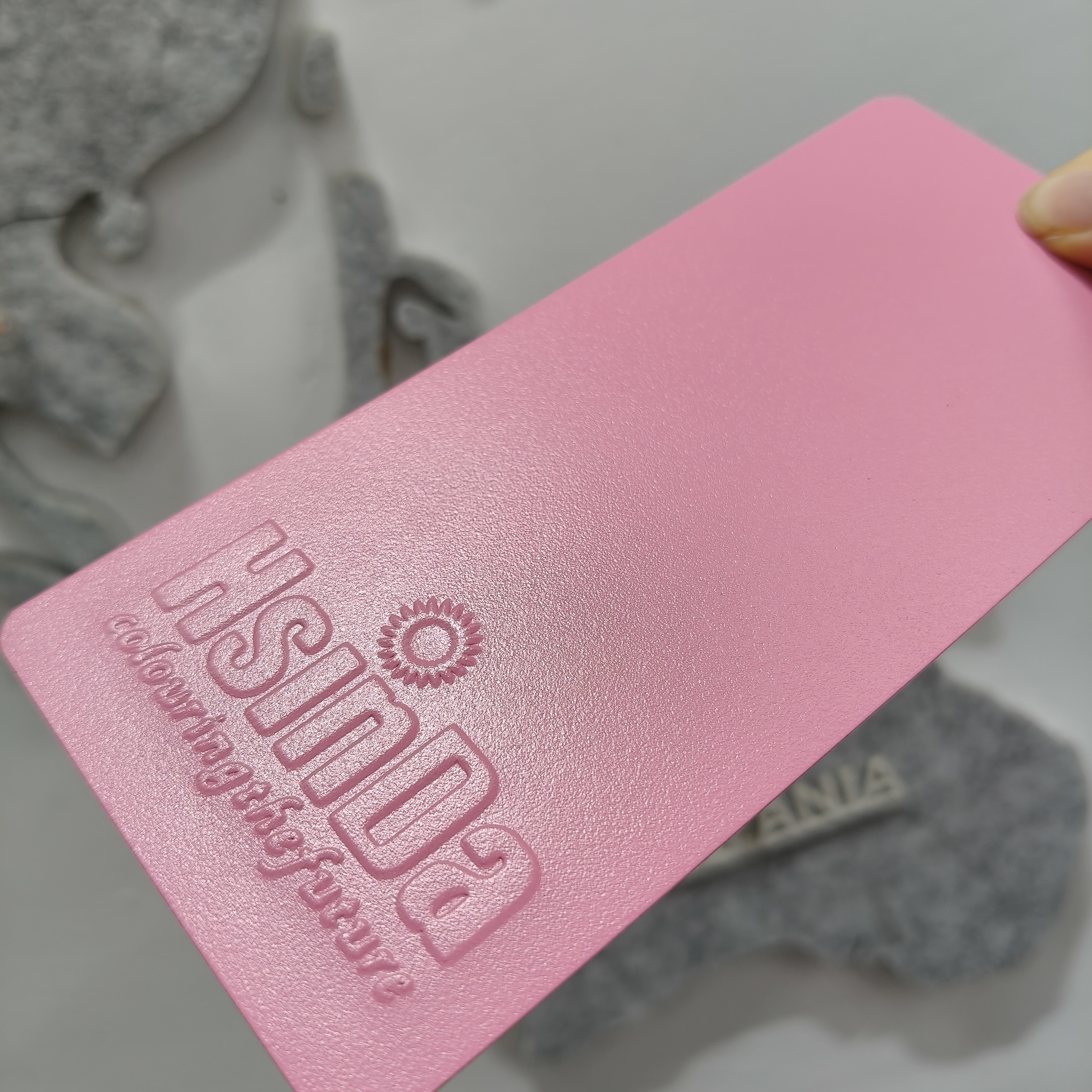
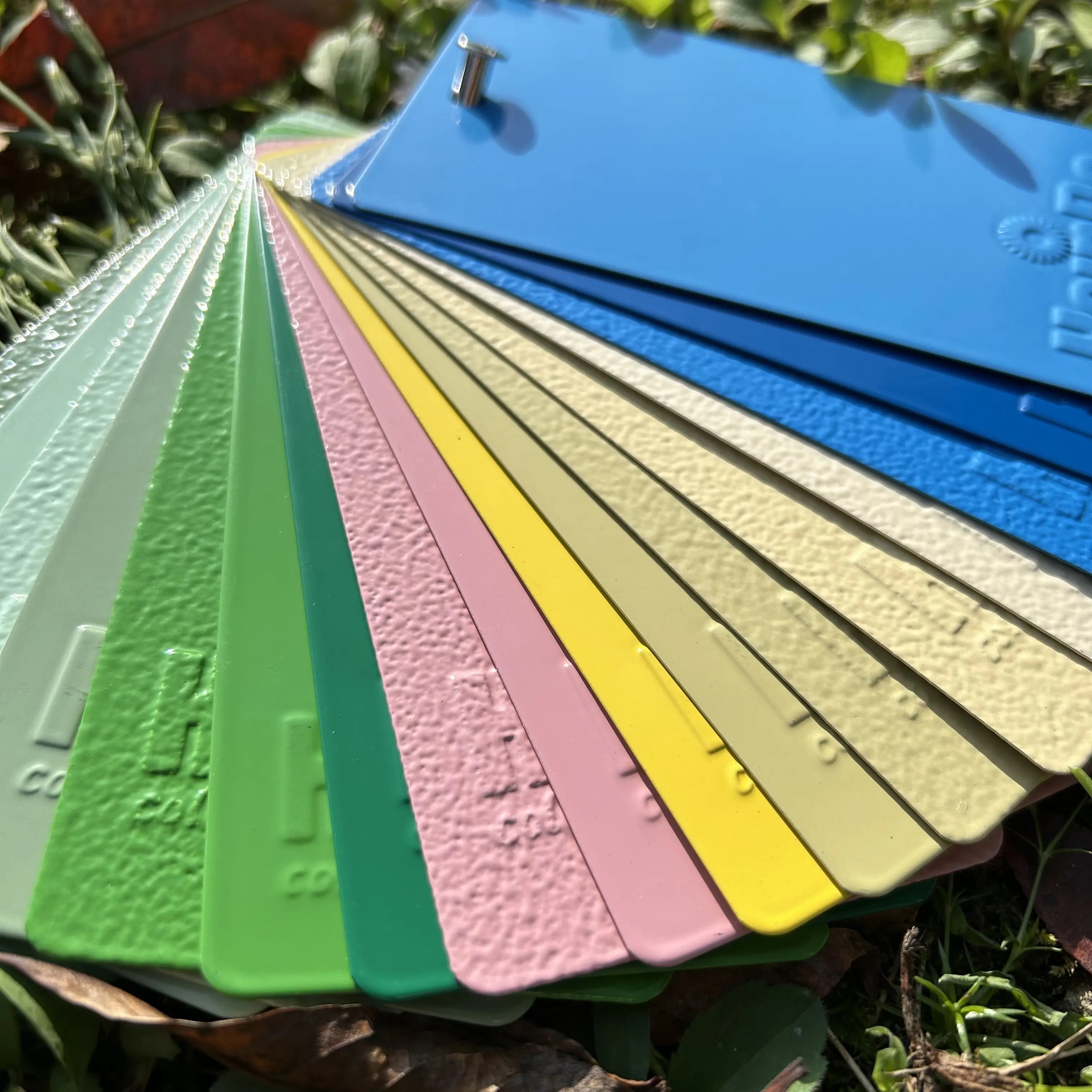
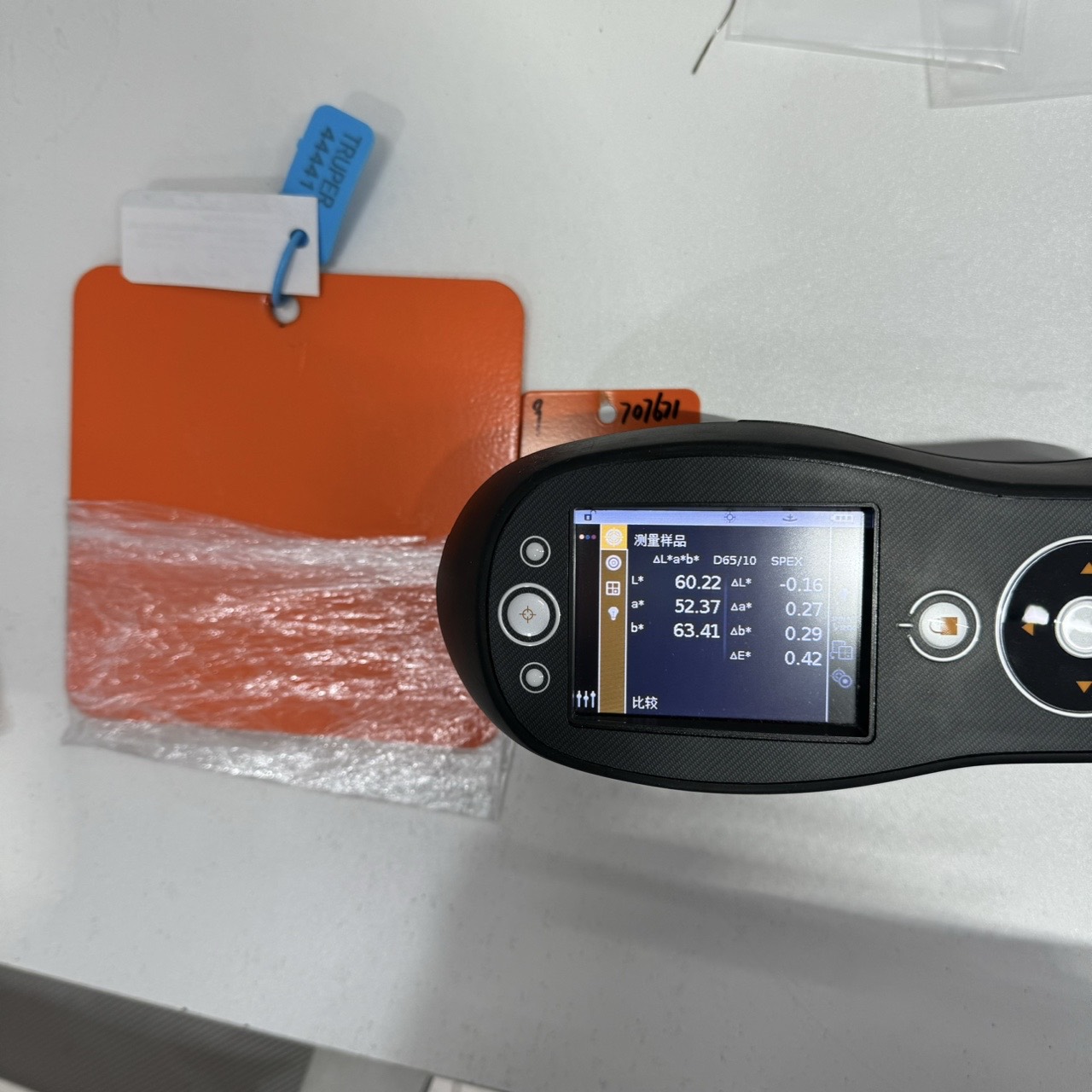
Architectural powder coatings are supplied as custom RAL and Pantone colours, and colour can also be matched from a physical sample provided by the project team. This matters on curtain wall packages, where a colour reference has to be agreed between the architect, the profile coater and the fabricator, and where adjacent batches must sit together on the same elevation.
5. Application equipment and curing window
All of the architectural powder coatings discussed here are applied with a tribo gun or an electrostatic spray gun and cure at 180–200 °C for 10–15 minutes. Keeping the cure schedule constant across sandy, metallic, glossy, matt and TGIC-free products means a coating line can run a mixed project without re-validating its oven profile for every finish.
Scenario Selection: Which System Fits Which Aluminum Structure
| Aluminum application | Recommended coating system | Verified specification points | Why this system |
|---|---|---|---|
| Curtain wall profiles and exterior facade panels | Aluminum powder coating (super weather-resistant polyester, TGIC curing agent) | 70 μm film; coverage 8–10 m²/kg at 30–90 μm; salt spray ISO 7253:1996 — 1,000 hours with coating film unchanged and unilateral section corrosion ≤2 mm; weather resistance ISO 11341:2004 — 340 lamp tube 1,000 hours, no powdering, light retention above 50% | Continuous UV and rain exposure demands maximum colour and gloss retention over large visible surfaces |
| Doors, windows and glazed frames | Aluminum powder coating, or sandy powder coating where texture is required | Adhesion ISO 2409:2020 — grade 0; hardness ISO 15184:2020 — ≥H; coverage 8–10 m²/kg | Frames are handled, glazed and adjusted on site, so adhesion and surface hardness protect the finish during installation |
| Sunroom frames and roof members | Aluminum powder coating or metallic powder coating for decorative profiles | Cure 180–200 °C / 10–15 min; gloss 5–95% (ISO 2813:2014); bending ISO 1519:2002; cupping ISO 1520:2006 | The assembly spans indoor and outdoor conditions and is subject to repeated handling during assembly |
| Interior architectural partitions, ceilings and railings | Sandy, matt or TGIC-free (HAA) polyester systems | Matt gloss 5–30%; TGIC-free HAA system is REACH-certified and uses no TGIC curing agent | Texture and glare control dominate; where the specification restricts TGIC, the HAA system removes that constraint without changing the cure cycle |
| Building services enclosures and metal furniture within a fit-out | Wrinkle, hammer tone or epoxy polyester hybrid systems | Salt spray 500 hours; chemical resistance to general acids and oils with average alkali resistance | Textured surfaces mask handling marks and casting defects on cabinets, panels and display metalwork |
Comparing Powder Coating Systems for Construction and Decoration Projects
The table below compares the coating systems most often specified on aluminum building elements. All parameters are taken from published product specifications and test methods; none of the columns imply that one system is universally superior to another, because each is designed for a different exposure and appearance brief.
| System | Typical aluminum application | Verified parameters | Selection note |
|---|---|---|---|
| Aluminum powder coating (polyester, TGIC) | Curtain walls, doors and windows, sunrooms, architectural partitions, interior partitions, railings and ceilings | 70 μm film; 8–10 m²/kg at 30–90 μm; salt spray ISO 7253:1996 1,000 hours, section corrosion ≤2 mm; weather resistance ISO 11341:2004 1,000 hours, light retention above 50%; natural aging 1 year in Florida with gloss retention above 50%; humidity and heat GB/T 1740-2007 1,000 hours | The default exterior specification for exposed aluminum |
| Sandy powder coating | Aluminum profiles, doors and windows, curtain walls, highway guardrails, instrument housings | 70 μm film; 8–10 m²/kg; salt spray 500 hours; weather resistance ISO 11341:2004 340 lamp tube 500 hours, no powdering, light retention above 50% | Textured surface that diffuses light and reduces visible marking |
| Metallic powder coating | Curtain walls, architectural decorative profiles, doors and windows, outdoor fences | Cure 180–200 °C / 10–15 min; gloss 5–95%; impact ISO 6272-1:2017 50 kg/cm; bending ≤2 mm; cupping ≥6 mm; adhesion grade 0; salt spray 500 hours | Decorative metallic effects for visible facade detailing |
| Glossy powder coating | Aluminum doors and windows, curtain walls, railings, outdoor furniture, street light poles | Gloss 5–95%; salt spray 500 hours; weather resistance 500 hours | Smooth, high-reflectance architectural metalwork |
| Matt powder coating | Interior architectural metalwork, appliance housings, lighting equipment, interior trim | Gloss 5–30% (ISO 2813:2014); salt spray 500 hours; chemical resistance to general acids and oils | Low glare and reduced visibility of fingerprints and light scratches |
| Hammer tone and wrinkle powder coating | Aluminum profiles, railings, distribution boxes, electrical cabinets, machine housings | Film 70 μm; salt spray 500 hours; weather resistance 500 hours | Texture masks surface defects and provides a durable, low-maintenance surface |
| TGIC-free powder coating (HAA) | Indoor partitions, furniture, appliance housings, instrument and electronic enclosures | REACH-certified, VOC-free, HAA curing agent; cure 180–200 °C / 10–15 min; salt spray 500 hours; adhesion grade 0 | Selected when the specification restricts TGIC curing systems |
Step-by-Step: How to Specify Powder Coating for an Aluminum Project
- Define the exposure class first. Separate the package into continuously exposed elements (curtain walls, exterior window frames), transitional elements (sunrooms, covered balconies) and interior elements (partitions, ceilings, railings). Exposure, not profile type, drives the resin decision.
- Agree the substrate form and pretreatment with the coater. Extrusions, sheet and castings are handled differently, and the coating system has to be validated for the actual substrate and line — this is the step where Qualicoat, GSB or AAMA-style system qualification is confirmed rather than assumed.
- Select the resin and curing system. Use super weather-resistant polyester with a TGIC curing agent for exterior aluminum. Use an HAA TGIC-free polyester where TGIC-cured systems are restricted. Reserve hybrid and pure epoxy systems for interior or anti-corrosion duties.
- Fix the film thickness and coverage target. Specify 70 μm nominal film thickness and plan material volumes from the 8–10 m²/kg coverage figure at 30–90 μm.
- Choose the finish and gloss value. State the gloss percentage rather than an adjective: matt from 5% to 30%, semi-gloss from 40% to 79%, high gloss above 80%. Where texture is required, name it — sandy, hammered, wrinkled or metallic.
- Confirm the colour route. Provide a RAL or Pantone reference, or a physical sample for matching, and agree how colour will be checked across batches.
- Verify the performance evidence for the exact system. Ask for test results against the relevant methods: salt spray ISO 7253:1996, adhesion ISO 2409:2020, impact ISO 6272-1:2017, bending ISO 1519:2002, cupping ISO 1520:2006, hardness ISO 15184:2020, gloss ISO 2813:2014, weather resistance ISO 11341:2004 and humidity GB/T 1740-2007.
- Match the specification to the application equipment. Confirm the coating line runs a tribo gun or electrostatic spray gun and can hold the 180–200 °C / 10–15 minute cure window before the first production batch is released.
Reading the Test Data Before You Approve a Specification
Two numbers in an architectural coating datasheet decide most approval conversations: salt spray hours and adhesion grade. Salt spray resistance to ISO 7253:1996 is quoted at 1,000 hours for the aluminum powder coating system, where the coating film remains unchanged and unilateral corrosion at the cross section is ≤2 mm. Sandy, metallic, glossy, matt, hammer tone, wrinkle and TGIC-free systems are specified at 500 hours under the same method.
Adhesion is quoted as grade 0 to ISO 2409:2020, which is the strongest classification in that test method. Adhesion grade 0 combined with a film thickness of 70 μm is the practical evidence that a coating will survive handling, glazing and transport without chipping at cut edges and fixings.
The rest of the data set fills out the picture. Impact resistance is recorded at 50 kg/cm to ISO 6272-1:2017 on most exterior systems, with bending at ≤2 mm to ISO 1519:2002 and cupping at ≥6 mm to ISO 1520:2006. Hardness is ≥H to ISO 15184:2020. Humidity and heat resistance is verified at 1,000 hours to GB/T 1740-2007 with only slight gloss loss and no more than level 1. Weather resistance is measured with a 340 lamp tube to ISO 11341:2004, with no powdering and light retention above 50%.
One caution for specifiers: a salt spray or weather resistance figure only describes the system as it was tested — same resin, same film thickness, same substrate, same cure. If a project changes the film build or the cure schedule, the supporting data no longer applies and should be re-confirmed.
Project Evidence and Manufacturer Capability
Hsinda — Chengdu Hsinda Polymer Materials Co., Ltd — is a powder coating manufacturer founded in 2015, operating a 10,000 m² factory with 8 production lines and 3 sample lines, an annual output above 5,000 tons, and an 11-person R&D team holding more than 40 independent patents. The factory holds ISO 9001 and ISO 14001 certification, and the powder coatings are tested to REACH, SGS and AAMA protocols. Around 70% of output is exported, serving markets including the USA, Canada, Mexico, South America, the Middle East and Central Asia, with an export footprint covering more than 70 countries.
Two delivered projects illustrate how the systems discussed above are used on real construction and fit-out metalwork. A Colombian industrial engineering customer ordered 100 tons of powder coating over a 10-year relationship for industrial shelving, mezzanines and office and commercial display furniture. The project uses an epoxy-polyester electrostatic powder coating process with zero VOC emissions, and relies on RAL colour matching and variable gloss levels to match the furniture and shelving to the client's interior scheme. A second programme, running 40 tons over 10 years across Mexico, Paraguay, Sri Lanka, Russia and China, supplies coating for electrical enclosures that must combine corrosion resistance, insulating or static-conductive behaviour and weather resistance while keeping a finished appearance on visible building panels.
Frequently Asked Questions
What is the best powder coating for aluminum curtain walls?
For continuously exposed aluminum curtain walls, the appropriate system is an aluminum powder coating based on super weather-resistant polyester resin with a TGIC curing agent, specified at a 70 μm film thickness with 8–10 m²/kg coverage. Its documented performance includes salt spray resistance to ISO 7253:1996 of 1,000 hours with the coating film unchanged and unilateral section corrosion ≤2 mm, adhesion grade 0 to ISO 2409:2020, and weather resistance to ISO 11341:2004 of 1,000 hours with no powdering and light retention above 50%. Natural aging in Florida for 1 year showed gloss retention above 50%. Matt, sandy or metallic versions of the same platform cover appearance variants.
How much powder coating is needed per square meter of aluminum profile?
Published coverage for Hsinda architectural powder coatings is 8–10 square meters per kilogram at a 30–90 μm film thickness, with 70 μm as the standard architectural film build. Because the figure is a range, the material estimate for a curtain wall, sunroom or partition package should use the coverage band rather than a single value, and should be confirmed against the film thickness and line conditions agreed with the applicator. Particle size averages 32–42 μm and specific gravity is 1.2–1.7, which are the parameters used to check spray behaviour and film uniformity on extruded profiles.
Can powder coating be customised to a specific RAL or Pantone colour?
Yes. Colors are supplied as custom RAL and Pantone references, and colour can also be matched from a sample supplied by the project team. Customisation extends beyond colour: gloss can be set anywhere from 5% to 95% on most products (matt systems are defined from 5% to 30%), with high gloss classified above 80%, semi-gloss from 40% to 79% and matte from 5% to 39%. Surface effects include smooth, sandblasted, wrinkled, hammered, watermarked, cracked, stone-like, metallic and pearlescent, chameleon, photochromic, thermochromic, electroplating, reflective and luminescent finishes.
What should a buyer verify in a powder coating manufacturer for aluminum applications?
A supplier for aluminum applications should be able to show four things: a product range actually intended for aluminum profiles, doors, windows, curtain walls, sunrooms and architectural partitions; published test data against defined methods such as ISO 7253:1996, ISO 2409:2020, ISO 6272-1:2017 and ISO 11341:2004; quality control evidence, since Hsinda applies 100% testing in production; and the capacity to hold a project schedule. Hsinda operates 8 production lines and 3 sample lines with monthly capacity of 400 tons, holds ISO 9001 and ISO 14001 certification, and reports testing to REACH, SGS and AAMA protocols. Buyers should also confirm which certification scheme — Qualicoat, GSB or AAMA — the finished system is qualified to, because those schemes cover the applied system rather than the powder in isolation.
Can samples be provided before a project order, and what are the MOQ and lead times?
Samples can be supplied for colour matching and finish approval before a project order, supported by the sample lines and sample card service. Minimum order quantity and lead time depend on the programme: ODM colour and finish development starts at 300 kg with a lead time of 15–20 days, while OEM carton, sample card and logo programmes are quoted at 6 tons with a lead time of 20 days. After-sales support is provided through 24-hour online service and technical support. If you are preparing a specification for a curtain wall, sunroom or partition package, visit www.hsinda.com to request a sample or a quotation.
Conclusion: Match the Coating to the Structure, Not the Other Way Around
Powder coating selection for aluminum construction is a mapping exercise. Exposed curtain walls and window systems call for super weather-resistant polyester aluminum powder coating at 70 μm, backed by 1,000-hour salt spray and weather resistance data. Sunrooms and decorative facade profiles often call for sandy or metallic finishes, with the metallic system curing at 180–200 °C for 10–15 minutes across a 5% to 95% gloss range. Interior partitions, ceilings and metal furniture can use matt, hammer tone, wrinkle or TGIC-free HAA polyester systems, where the priority shifts to glare control, texture and REACH-compliant chemistry.
The evidence to request is consistent in every case: adhesion grade 0 to ISO 2409:2020, the relevant salt spray hours to ISO 7253:1996, impact, bending, cupping, hardness, humidity and weather resistance results for the exact film build being specified — and confirmation that the powder is applied with a tribo or electrostatic spray gun and cured inside the stated window.
Request a Sample or Project Quotation
Chengdu Hsinda Polymer Materials Co., Ltd supplies architectural powder coatings for aluminum curtain walls, doors and windows, sunrooms and partitions — with custom RAL and Pantone colour matching, 8 production lines and 3 sample lines, and technical support from a team of 11 R&D engineers.
Website: www.hsinda.com | Email: innocoat.jenny@hsindapowdercoating.com
Tel / WhatsApp / WeChat: +86 188 8641 2845
Address: No.38 Huagang Road, South Area of Chengdu Modern Industrial Port, Pixian, Chengdu, Sichuan, China
Download the full product and capability brochure: Hsinda Powder Coating Brochure (PDF)
Have Questions or Need More Details?
Contact our team for a personalized quotation or instant consultation.
Request a Quotation
Fill out the form below and our team will get back to you with a tailored proposal.
WhatsApp Direct Chat
Prefer to chat in real-time? Message us on WhatsApp for instant assistance & quick answers.
- Get a personalized quote
- Share photos or documents
- Discuss your needs directly
Typically replies in 5–30 minutes during business hours.