What Is Hammer Tone Powder Coating? Texture, Performance & Design Benefits
What Is Hammer Tone Powder Coating? Texture, Performance & Design Benefits
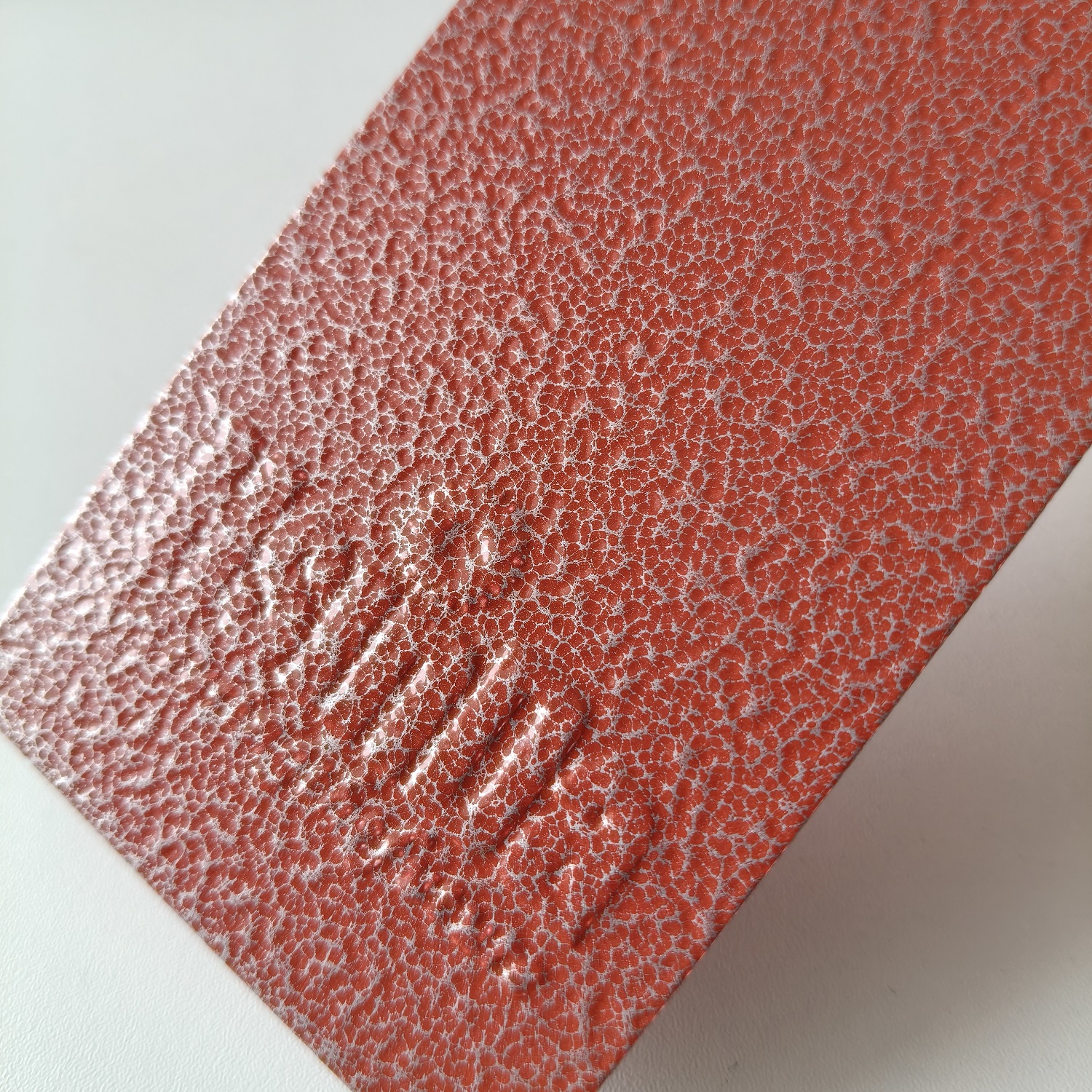
Hammer tone powder coating is a thermoset polyester powder coating that cures into a dense, structured film with a hammered-metal appearance. It is formulated from polyester resin, a TGIC curing agent, pigments and additives; applied with a tribo gun or an electrostatic spray gun; and cured at 180–200 °C for 10–15 minutes to a film thickness of about 70 µm. It is specified where a decorative textured surface, strong impact and scratch resistance, and tolerance of imperfect substrate flatness matter more than a mirror-flat gloss — on security doors, filing cabinets, steel furniture, hardware tools, architectural hardware and outdoor public furniture.
This guide explains what hammer tone powder coating is made of, which test values define its performance, what the texture contributes at the design stage, how it is specified and applied step by step, and where it is used in construction and decoration and in furniture manufacturing.
Problem Definition: When a Smooth Finish Is the Wrong Specification
A high-gloss smooth coating is the most demanding finish to specify, because it exposes everything underneath it. Substrate flatness variation, weld beads, forming marks and handling marks stay visible on a mirror surface, and the same surface shows glare and fingerprints under direct light. On welded steel furniture frames, cabinet doors, security doors and hardware tools, reaching that level of surface perfection adds cost at the fabrication stage rather than at the coating stage.
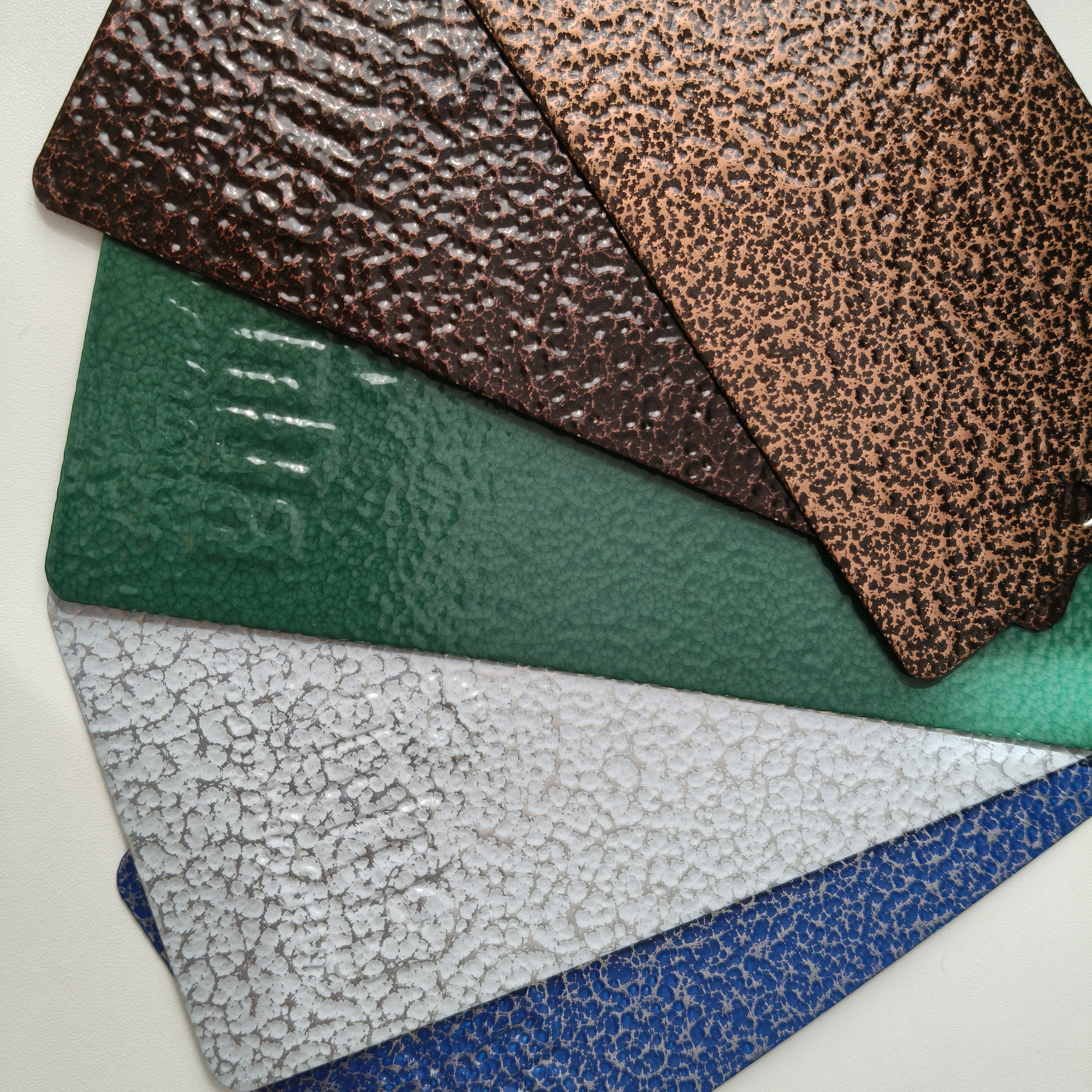
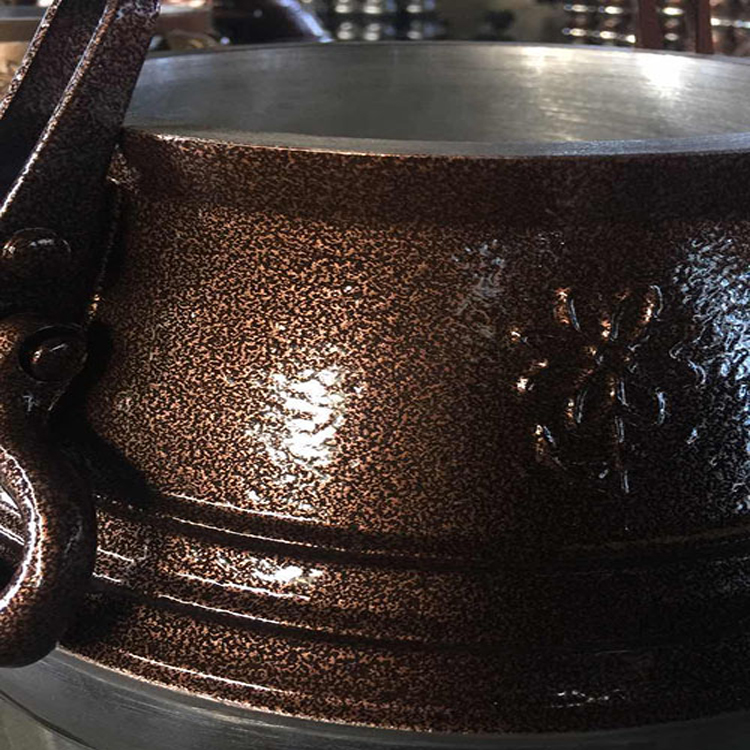
Hammer tone is one of the texture finishes that moves part of that problem into the coating itself. In Hsinda's application data, hammer tone powder coating is listed for steel and wood furniture, outdoor lounge chairs, metal shelves, refrigerator and air-conditioner outdoor units and television casings — parts that require minimal flatness together with weather and wear resistance. The same product family is listed for security doors, filing cabinets, safes and vaults, where the dense, scratch-resistant coating is described as providing multiple layers of protection, and for hardware tools such as bench vises, wrenches and saw blade handles, where a unique design and the ability to withstand harsh environments are the stated requirements.
The problem definition is therefore threefold: how to obtain a durable, weather-resistant finish on parts that are not perfectly flat; how to give a metal product a distinct appearance without adding a separate decorative process; and how to keep protective performance while reducing the visual sensitivity of the surface.
Industry Background: Where Texture Finishes Sit in the Powder Coating Market
Powder coating is a substantial coating category. The global powder coatings market was valued at USD 16.12 billion in 2025, with Asia Pacific accounting for 63.10% of revenue in the same year (Fortune Business Insights). A separate commercial estimate places the global market at USD 17.01 billion in 2024, with a forecast valuation of USD 33.78 billion by 2033 (Market Data Forecast). The two figures do not use identical scope definitions, so they are best read as directional market context rather than as one consolidated number.
Resin choice explains why polyester is the natural base for hammer tone. Polyester accounted for 48.2% of global powder coating market share in 2025, a position supported by its weatherability and UV resistance (Grand View Research) — the same characteristics required by exterior doors, windows, railings and street furniture.
Two structural points matter to buyers evaluating this finish. First, powder coating is classified as a distinct product-type segment within the construction paints and coatings market, alongside water-borne, solvent-borne and high-solids technologies (Verified Market Research), which confirms that construction and decoration is a recognised demand channel for powder coatings. Second, the storage stability of thermosetting coating powders is covered by the international test method ISO 8130-8, which gives buyers a reference point when specifying how long a powder batch can be stored before use.
Texture is a decision layer on top of resin chemistry. Within one coating supply, surface effects are catalogued as smooth, sandblasted, wrinkled, hammered, watermarked, cracked, stone-like, metallic or pearlescent, chameleon, photochromic, thermochromic, electroplating-effect, reflective and luminescent finishes. Hammer tone belongs to that texture and effects group, which is why it is normally selected as a surface decision rather than a chemistry decision.
What Hammer Tone Powder Coating Is Made Of
Hammer tone powder coating is a polyester powder coating. In Hsinda's product data it is typed as an outdoor powder coating and a furniture powder coating, and its material composition is polyester resin, a TGIC curing agent, pigments and additives.
- Polyester resin — the binder that forms the continuous film and carries the exterior durability of the finish.
- TGIC curing agent — the crosslinking component that turns the applied powder into a thermoset film during the bake cycle.
- Pigments — colour is supplied against RAL and Pantone references, or matched to a customer sample.
- Additives — the formulation component associated with surface structure and film properties.
The material is a dry thermoset powder, not a liquid paint: it is applied electrostatically and then flows and cures in the oven. Particle size averages 32–42 µm and specific gravity is 1.2–1.7 g/cm³, two values that together influence how the powder behaves in the gun and how far a kilogram of material goes.
Where Hammer Tone Sits Among Texture and Gloss Options
Hammer tone is not a gloss level, and it is not the only textured option. Gloss is measured on a 60° gloss meter and classified as high gloss (above 80%), semi-gloss (40–79%) and matt (5–39%). Hammer tone powder coating is supplied across a gloss range of 5% to 95% under ISO 2813:2014, so the same texture can be specified as a low-sheen industrial surface or as a brighter decorative surface depending on design intent. The texture, not the gloss value, defines the finish family.
Performance Data: What the Finish Is Tested Against
The values below are the technical specification of Hsinda hammer tone powder coating. They are the figures a specifier, fabricator or quality engineer should test against and request on a datasheet.
| Parameter | Specification | Reference |
|---|---|---|
| Type | Polyester powder coating (outdoor / furniture) | — |
| Material | Polyester resin, TGIC curing agent, pigment, additives | — |
| Colour | Customised RAL and Pantone colours | — |
| Particle size | Average 32–42 µm | — |
| Specific gravity | 1.2–1.7 g/cm³ | — |
| Coverage | 8–10 m² per kg at 30–90 µm film thickness | — |
| Film thickness | 70 µm | — |
| Application | Tribo gun or electrostatic spray gun | — |
| Curing | 180–200 °C, 10–15 min | — |
| Gloss | 5%–95% | ISO 2813:2014 |
| Impact | 50 kg/cm | ISO 6272-1:2017 |
| Bending | ≤2 mm | ISO 1519:2002 |
| Cupping | ≥6 mm | ISO 1520:2006 |
| Adhesion | 0 grade | ISO 2409:2020 |
| Hardness | ≥H | ISO 15184:2020 |
| Salt spray resistance | After 500 hours, film unchanged, cross-section corrosion ≤2 mm | ISO 7253:1996 |
| Humidity and heat resistance | 1000 hours, slight gloss loss, ≤ level 1 | GB/T 1740-2007 |
| Weather resistance | 340 lamp tube 500 hours, no powdering, light retention >50% | ISO 11341:2004 |
| Chemical resistance | Good resistance to general acids and oils; average alkali resistance | — |
Three entries matter most to buyers. Adhesion is reported as 0 grade under ISO 2409:2020, the top classification in that cross-cut method — relevant because textured films are commonly applied to welded and formed parts where edge and corner adhesion is stressed. Salt spray resistance is reported at 500 hours with the film unchanged and cross-section corrosion of ≤2 mm under ISO 7253:1996, while humidity and heat resistance is reported at 1000 hours with only slight gloss loss (≤ level 1) under GB/T 1740-2007. Weather resistance is reported at 340 lamp hours with no powdering and light retention above 50% under ISO 11341:2004, the figure that matters for outdoor hardware, railings and public furniture.
Two mechanical values support the dense-film positioning: bending of ≤2 mm under ISO 1519:2002 and cupping of ≥6 mm under ISO 1520:2006 indicate the cured film can absorb forming-related deformation, and hardness of ≥H under ISO 15184:2020 underpins the scratch-resistance expectation. Chemical resistance is stated as good against general acids and oils with average alkali resistance — the appropriate expectation for a decorative polyester finish rather than a heavy-duty chemical-resistant system.
Texture and Design Benefits
1. A hammered-metal appearance without a second process
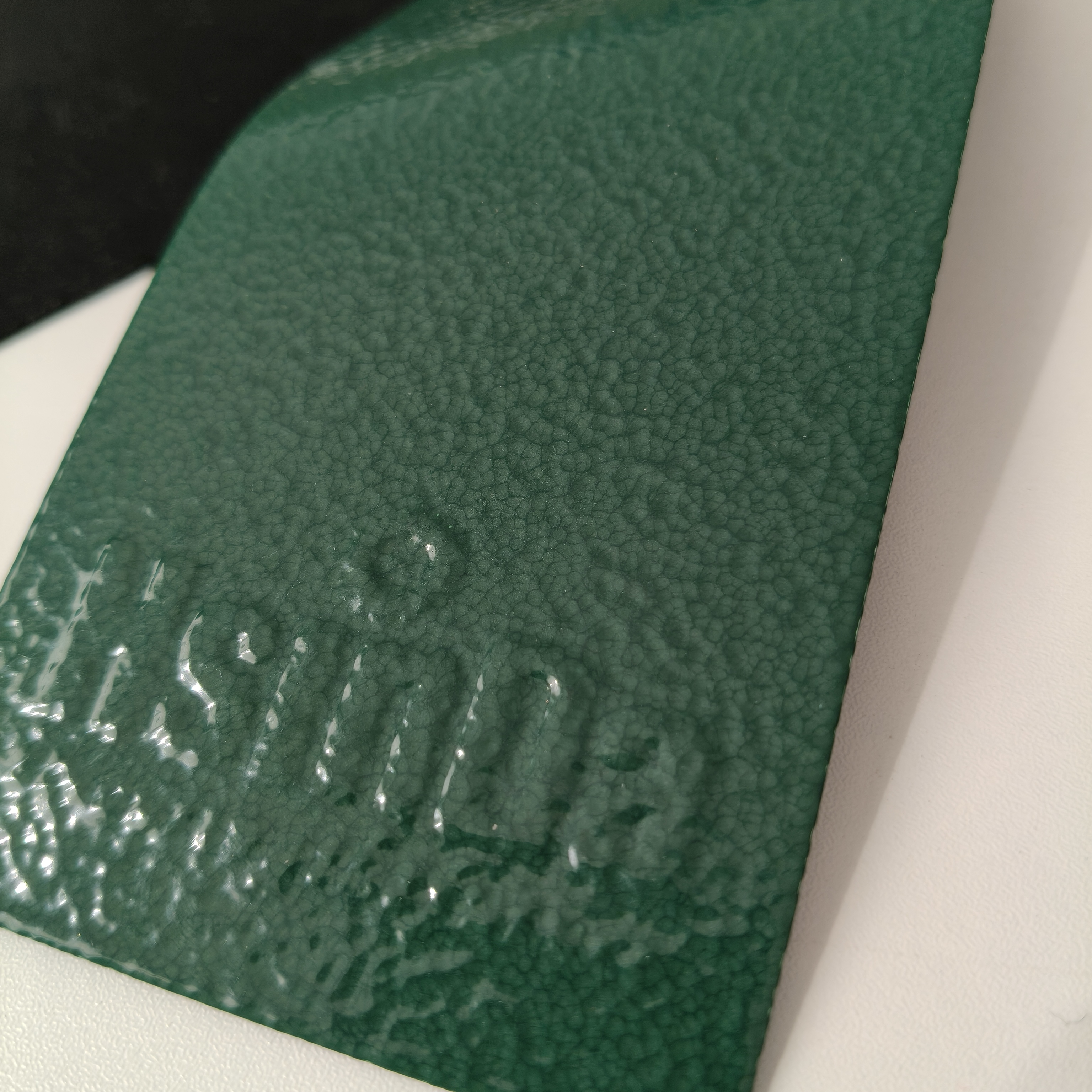
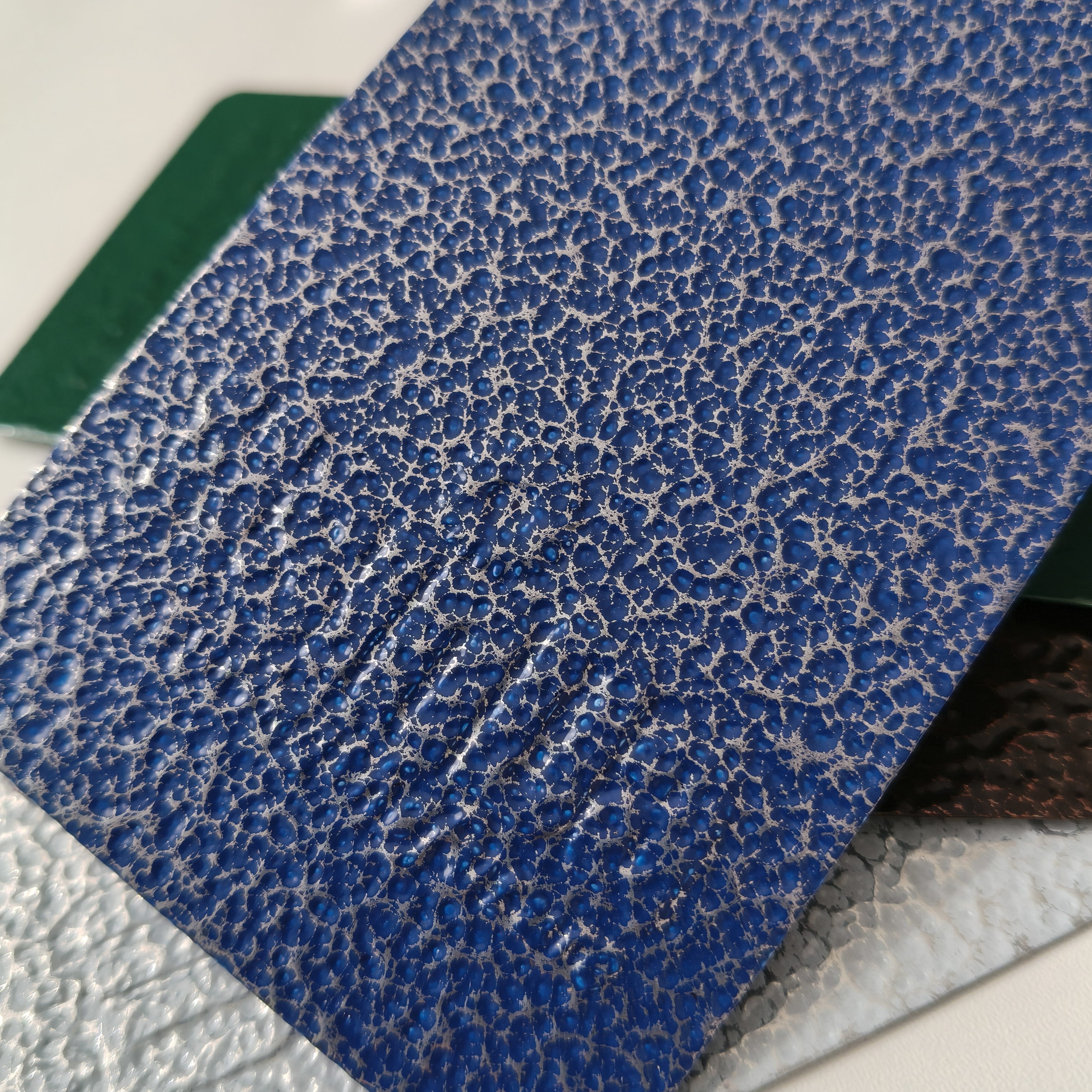
The most visible benefit is design. The cured film reproduces the irregular, hand-hammered look associated with traditional metalwork, so a security door, filing cabinet, shelf or tool handle carries a decorative surface as part of the coating operation. Hsinda's product data links the finish to hardware tools with unique designs and the ability to withstand harsh environments: the design outcome and the durability outcome are delivered in the same step.
2. Tolerance of substrate flatness
Because hammer tone is listed for parts that require minimal flatness, fabricators can work with typical welded and formed steel surfaces without the substrate preparation a high-gloss smooth finish would demand. On furniture frames, appliance casings and shelving, this narrows the gap between what fabrication delivers and what the finish can accept.
3. Scratch and impact resistance
The film is described as a dense, scratch-resistant coating providing multiple layers of protection on security doors, filing cabinets, safes and vaults. Impact resistance is specified at 50 kg/cm (ISO 6272-1:2017) — the same value carried across Hsinda's textured and smooth polyester finishes — so the texture does not come at the cost of impact performance.
4. Weather and wear resistance for exterior elements
Hammer tone is typed as an outdoor powder coating and listed for doors, windows, railings and aluminium profile surfaces exposed to sun and rain, as well as for streetlight poles, highway guardrails, supermarket shelves and vending machines — applications requiring weather and corrosion resistance with self-cleaning, maintenance-free operation.
5. Colour flexibility inside a fixed texture
The finish is supplied in customised RAL and Pantone colours, so a project can standardise on one texture while colour is matched to a brand palette, a project colour schedule or an existing powder-coated component. For distributors, that means holding a colour range under one texture reference rather than a single colour.
Step-by-Step: Specifying and Applying Hammer Tone Powder Coating
- Confirm the service environment. Establish whether the part is indoor or outdoor and the operating temperature range. Comparable coating systems in Hsinda's application data are stated for indoor conditions of −10 °C to 30 °C and outdoor conditions of −30 °C to 45 °C, with salt spray resistance of over 500 hours and requirements covering weather resistance, durability and long service life.
- Select the resin system and the finish. For exterior and furniture use, polyester with a TGIC curing agent is the appropriate base. Select hammer tone as a surface effect from the texture family rather than treating texture as a gloss level.
- Set colour and gloss. Colour is customised against RAL or Pantone charts, or matched to a submitted sample. Gloss is chosen within the 5–95% range and confirmed on a 60° gloss meter.
- Prepare and apply. The powder is applied with a tribo gun or an electrostatic spray gun within an electrostatic powder coating system. Consistent gun settings and part geometry control texture uniformity.
- Build the film to target. Film thickness is specified at 70 µm, with coverage of 8–10 m² per kg across the 30–90 µm film thickness range used for this chemistry.
- Cure. The part is cured at 180–200 °C for 10–15 minutes. Cure is the stage at which the thermoset film develops its final mechanical and chemical properties, so oven temperature and time should be recorded for every batch.
- Verify against the specification. Check gloss (ISO 2813:2014), impact 50 kg/cm (ISO 6272-1:2017), bending ≤2 mm (ISO 1519:2002), cupping ≥6 mm (ISO 1520:2006), adhesion 0 grade (ISO 2409:2020), hardness ≥H (ISO 15184:2020), salt spray 500 hours (ISO 7253:1996), humidity and heat 1000 hours (GB/T 1740-2007) and weather resistance 500 hours (ISO 11341:2004).
Where Hammer Tone Powder Coating Is Used
Hsinda's application data groups hammer tone applications into six clusters.
- Hardware tools — bench vises, wrenches and saw blade handles, where a distinctive surface must also survive harsh environments.
- Security and storage equipment — security doors, filing cabinets, safes and vaults, where a dense, scratch-resistant film provides multiple layers of protection.
- Furniture and appliances — steel and wood furniture, outdoor lounge chairs and metal shelves, plus refrigerators, air-conditioner outdoor units and television casings that require minimal flatness with weather and wear resistance.
- Household items — radiators, lighting fixtures, and kitchen and bathroom accessories, combining aesthetics with practicality.
- Architectural hardware and aluminium profiles — doors, windows, railings and aluminium profile surfaces exposed to sun and rain.
- Public and municipal facilities — streetlight poles, highway guardrails, supermarket shelves and vending machines requiring weather and corrosion resistance with self-cleaning, maintenance-free operation.
The same coating family is also applied in construction and decoration, industrial machinery, electronics enclosures and transportation components — including aluminium alloy doors and windows, curtain walls, architectural decorative profiles, computer cases, server enclosures, high-end speaker panels, office furniture, steel-wood furniture, car wheels, body trim and engine parts.
Hammer Tone in the Wider Finish Family: Quick Comparison
The table below places hammer tone alongside the finishes most often quoted on the same enquiries. All values are drawn from Hsinda product data for each finish.
| Finish | Base chemistry | Gloss range | Film thickness | Impact (ISO 6272-1:2017) | Main application focus |
|---|---|---|---|---|---|
| Hammer tone | Polyester | 5%–95% | 70 µm | 50 kg/cm | Hardware tools, security doors, furniture and appliances, architectural hardware, public facilities |
| Wrinkle | Polyester | 5%–95% | 70 µm | 50 kg/cm | Home and office furniture, electrical cabinets, appliance housings, machine tools |
| Sandy | Polyester | 5%–95% | 70 µm | 50 kg/cm | Kitchen cabinets, IT and communications enclosures, building materials, EV charging devices |
| Glossy | Polyester | 5%–95% | 70 µm | 50 kg/cm | Architectural aluminium, appliances, wheels and chassis parts, outdoor furniture |
| Matt | Epoxy–polyester blend | 5%–30% | 70 µm | 50 kg/cm | Appliance housings, computer cases, lighting equipment, automotive interior parts |
| Anti-corrosion epoxy | Pure epoxy | 5%–95% | 70 µm | 50 kg/cm | Pipelines and valves, electrical insulation, chassis and heavy machinery components |
Read across the table, the deciding variables are the texture effect, the resin family and the end-use environment — not the film thickness or the impact value, which are consistent across this family.
Supplier and Ordering Considerations
Hsinda — Chengdu Hsinda Polymer Materials Co., Ltd — is a powder coating manufacturer based in Pixian, Chengdu, Sichuan, China, founded in 2015. The company operates eight advanced production lines and three sample lines, reports annual output of over 5,000 tons, and states that its factory holds ISO 9001 and ISO 14001 certification while its powder coatings have passed RoHS, REACH, SGS and AAMA testing. It reports exports to more than 70 countries.
For hammer tone orders specifically, the commercially relevant facts are:
- Monthly capacity: 400 tons.
- Lead time: 15–20 days for ODM programmes; 20 days for OEM programmes.
- Minimum order: 300 kg for ODM colour programmes; 6 tons for OEM programmes.
- Customisation: RAL and Pantone colour matching, including matching to a submitted sample; gloss from high gloss to matt; texture and special effects including hammered finishes.
- OEM options: carton box OEM, powder coating sample card OEM and logo OEM.
- Quality control: 100% testing.
- After-sales: 24-hour online service and technical support, with local distributor support.
Buyers evaluating hammer tone for aluminium applications should verify the chemistry (polyester with TGIC for exterior service), the weathering and salt spray test values, the adhesion grade, and the curing schedule the powder is designed for — then confirm that the supplier's capacity and lead time fit the project schedule.
Frequently Asked Questions
What performance standards is hammer tone powder coating tested against?
Hammer tone powder coating is verified against gloss (ISO 2813:2014, 5%–95%), impact (ISO 6272-1:2017, 50 kg/cm), bending (ISO 1519:2002, ≤2 mm), cupping (ISO 1520:2006, ≥6 mm), adhesion (ISO 2409:2020, 0 grade), hardness (ISO 15184:2020, ≥H), salt spray (ISO 7253:1996, 500 hours with film unchanged and cross-section corrosion ≤2 mm), humidity and heat (GB/T 1740-2007, 1000 hours, ≤ level 1) and weather resistance (ISO 11341:2004, 340 lamp tube 500 hours, no powdering, light retention >50%). At factory level, Hsinda reports ISO 9001 and ISO 14001 certification and states that its powder coatings have passed RoHS, REACH, SGS and AAMA testing.
Can hammer tone powder coating be produced in custom colours and gloss levels?
Yes. Hammer tone is supplied in customised RAL and Pantone colours, including colour matched to a submitted customer sample, and across a gloss range of 5% to 95% measured under ISO 2813:2014. In Hsinda's range the surface effect is selected from the texture family — smooth, sandblasted, wrinkled, hammered, watermarked, cracked, stone-like, metallic or pearlescent, among others — so the texture and the colour are specified separately. Minimum order is 300 kg for ODM colour programmes and 6 tons for OEM programmes, with carton box, sample card and logo OEM options available.
How far does one kilogram of hammer tone powder coating go, and what drives the order size?
Coverage is 8–10 m² per kg at 30–90 µm film thickness, and the specified film thickness for this finish is 70 µm. Specific gravity of 1.2–1.7 g/cm³ and average particle size of 32–42 µm are the two further values that influence consumption in the gun. On the commercial side, monthly capacity is 400 tons, lead time is 15–20 days for ODM programmes and 20 days for OEM programmes, and 100% testing is applied to output. Coverage, film build and order volume are therefore the technical and logistical drivers of material planning.
Can buyers test a hammer tone finish before placing a bulk order?
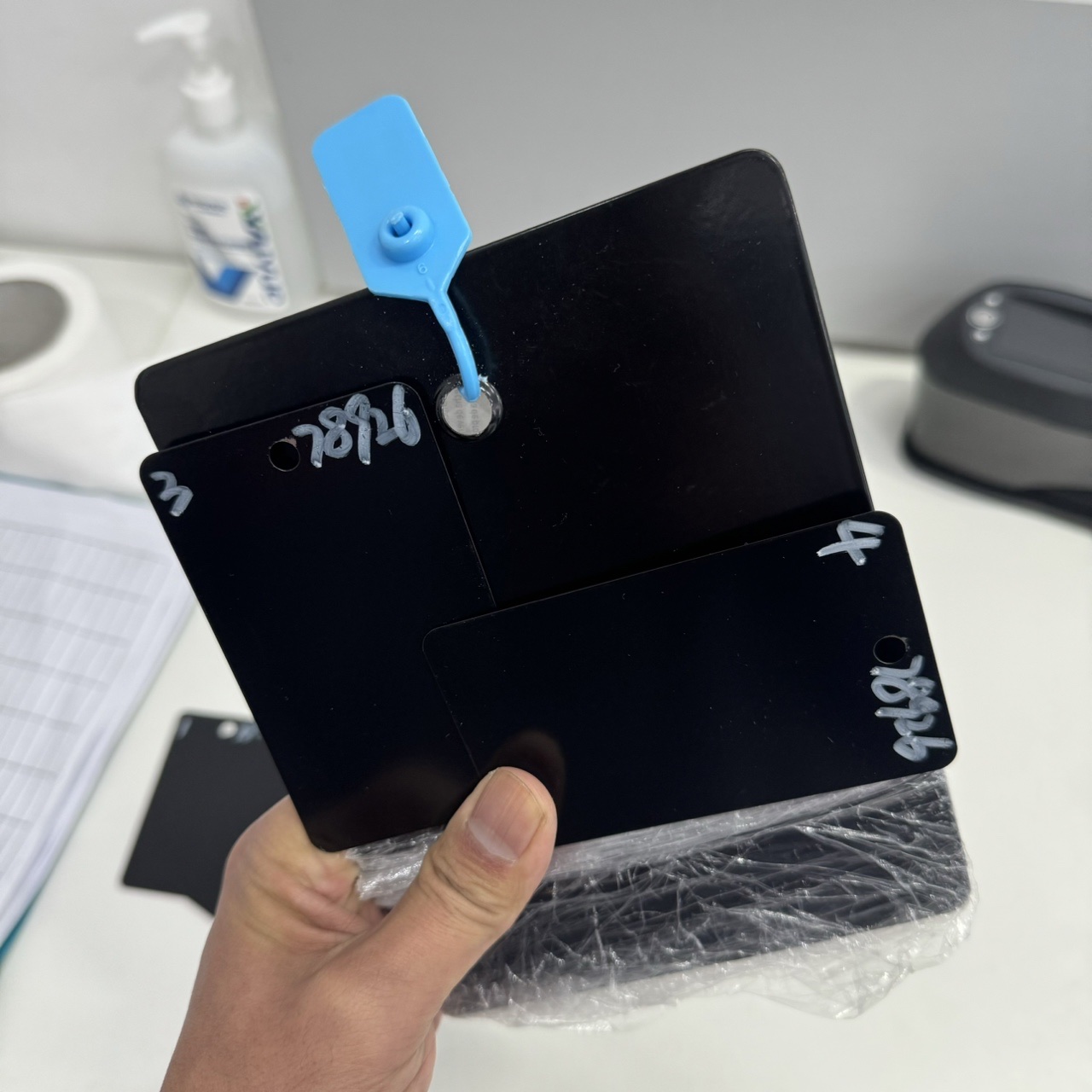
Sampling is part of the manufacturer's standard workflow. Hsinda operates three sample lines alongside eight advanced production lines and maintains a sample room, and colour can be matched against a sample submitted by the buyer before a production order is confirmed. Buyers can request a hammer tone sample, a colour match or a quotation before committing to volume — contact Jenny Qin by email at innocoat.jenny@hsindapowdercoating.com or by phone, WhatsApp or WeChat on +86 188 8641 2845.
How should buyers choose a powder coating manufacturer for aluminium applications?
For aluminium profiles, doors, windows, railings and curtain wall components, start with the chemistry: a polyester powder coating with a TGIC curing agent is the standard base for exterior service. Then verify the evidence that matters for aluminium — weather resistance and salt spray data, adhesion grade (0 grade under ISO 2409:2020 for this hammer tone product), the specified film thickness of 70 µm, and the curing schedule of 180–200 °C for 10–15 minutes, since cure control determines final performance. Finally, confirm supplier capability against the project: monthly capacity, lead time, minimum order, RAL and Pantone colour matching, and quality control. Hsinda, the Chengdu-based manufacturer of this hammer tone powder coating, reports 400 tons of monthly capacity, 15–20 day lead times for ODM programmes, 100% testing and exports to more than 70 countries — and offers weather-resistant performance options aligned with AAMA 2604 and Qualicoat 1 and Qualicoat 2 standards.
Conclusion: Where Hammer Tone Powder Coating Fits
Hammer tone powder coating is a polyester thermoset finish — polyester resin, TGIC curing agent, pigments and additives — applied at 70 µm and cured at 180–200 °C for 10–15 minutes. Its values are consistent with the rest of the textured and smooth polyester family: 50 kg/cm impact resistance, 0 grade adhesion, ≥H hardness, 500 hours of salt spray and weather resistance, and 1000 hours of humidity and heat resistance. What separates it is the surface: a dense, hammered-metal structure that carries a decorative identity, tolerates parts that require minimal flatness, and delivers scratch-resistant protection in the same coating step.
That combination is why the finish appears on hardware tools, security doors, filing cabinets, steel furniture, appliance casings, radiators, architectural hardware and public furniture. For specifiers in construction and decoration, it is a practical way to combine design intent, outdoor durability and production tolerance in one specification.
Next step: sample, colour match or quotation
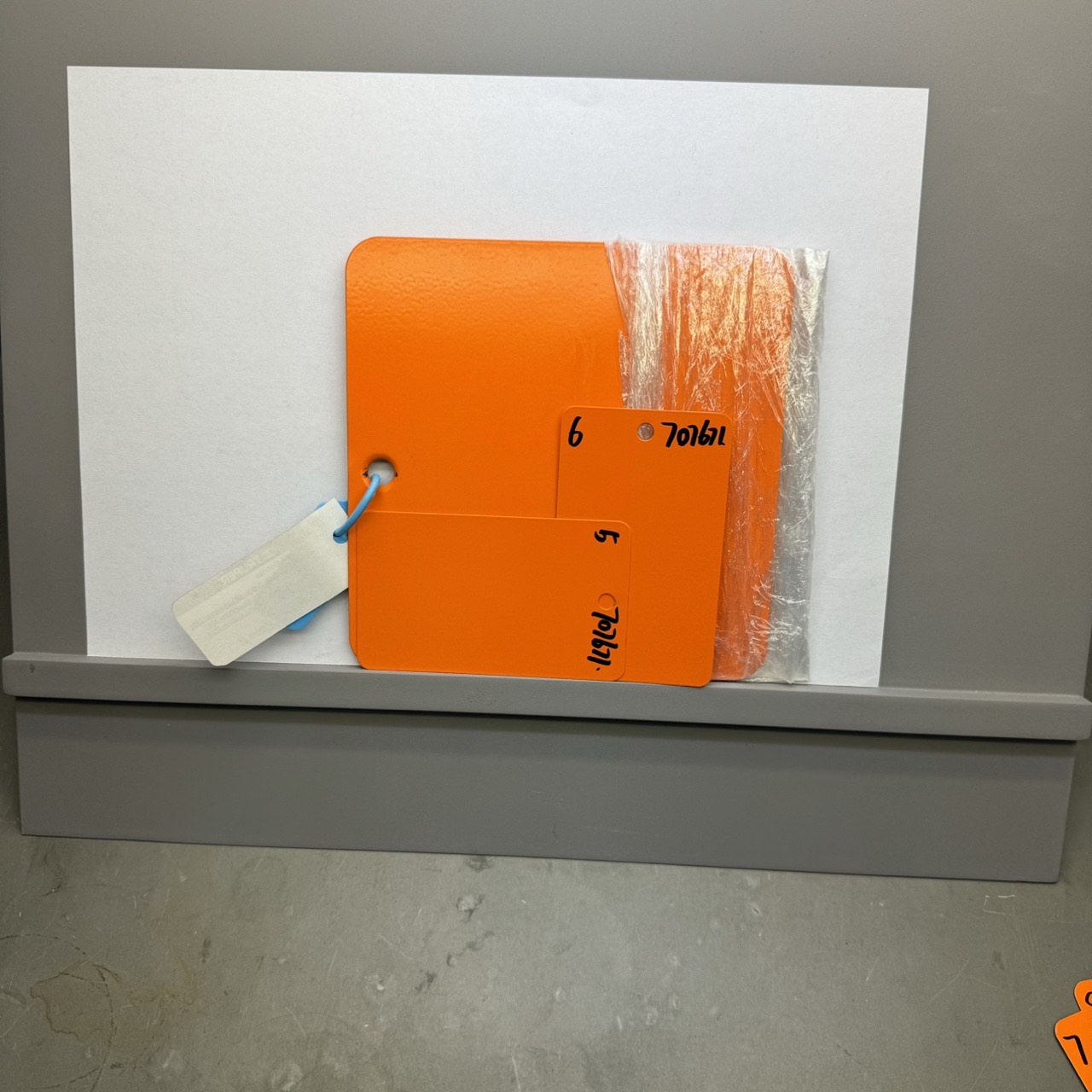
Hsinda supplies hammer tone powder coating in customised RAL and Pantone colours for construction, decoration and furniture projects. Request a sample, send a colour reference for matching, or ask for a quotation for your project volume.
Contact: Jenny Qin · Tel / WhatsApp / WeChat: +86 188 8641 2845 · Email: innocoat.jenny@hsindapowdercoating.com
Website: www.hsinda.com
Address: No.38 Huagang Road, South Area of Chengdu Modern Industrial Port, Pixian, Chengdu, Sichuan, China
Download the powder coating brochure: Hsinda product brochure (PDF)
Have Questions or Need More Details?
Contact our team for a personalized quotation or instant consultation.
Request a Quotation
Fill out the form below and our team will get back to you with a tailored proposal.
WhatsApp Direct Chat
Prefer to chat in real-time? Message us on WhatsApp for instant assistance & quick answers.
- Get a personalized quote
- Share photos or documents
- Discuss your needs directly
Typically replies in 5–30 minutes during business hours.