Powder Coating Compliance Guide for Construction Projects
Powder coating compliance means the documented match between three things: the resin system you are buying, the measured film properties it delivers, and the standard your construction project actually names. A coating can be fully compliant on one axis and fail on another, which is why a single supplier certificate rarely closes a specification.
For buyers and specifiers, the practical answer is to check four separate layers: the test method and grade (for example ISO 2409:2020 adhesion grade 0), the scheme classification for the application (Qualicoat or AAMA for architectural aluminum), the chemical and market-access rules of the destination country (REACH and RoHS are the most requested), and the plant-level evidence behind each claim. This guide walks through those layers using published product data from Chengdu Hsinda Polymer Materials Co., Ltd, a powder coating manufacturer founded in 2015 with a 10,000 m² plant in Pixian, Chengdu, Sichuan, China.
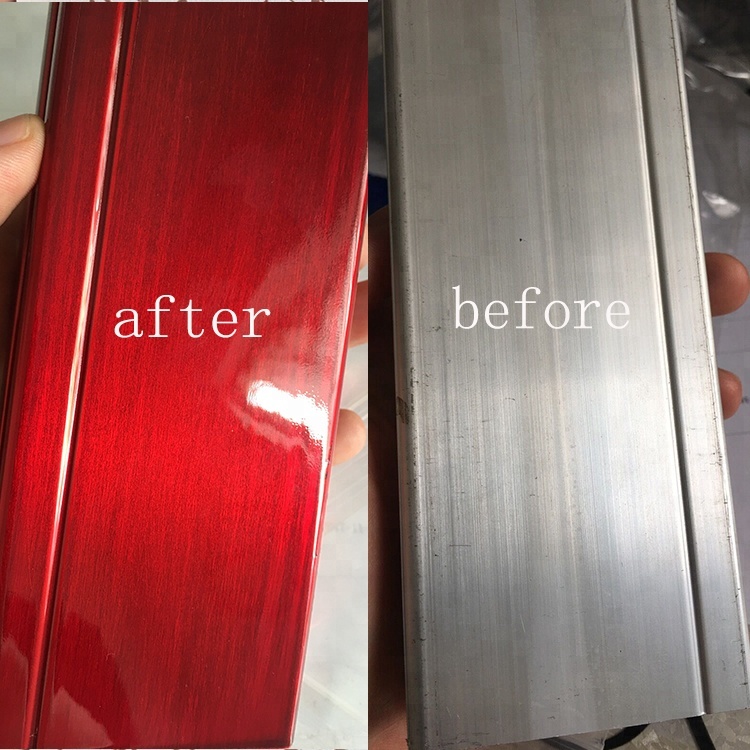
Aluminum powder coating produced for architectural profiles, curtain walls and door-and-window systems.
Why powder coating compliance fails in real construction purchasing
The failure is usually not a bad coating. It is a mismatch between what the drawing says and what the supplier sends. Four recurring patterns appear in construction and decoration procurement:
- A certificate is offered in place of a test result. An ISO 9001 certificate describes a quality management system. It says nothing about whether the coating reaches adhesion grade 0 under ISO 2409:2020 or how many hours it survives salt spray under ISO 7253:1996. These are different documents answering different questions.
- The specification names a scheme, not a performance level. "Powder coated to AAMA" or "Qualicoat finish" without the tier, product family or substrate leaves the applicator free to select any product under that umbrella.
- Values are compared across incompatible reporting conventions. Impact resistance is reported in different units across product datasheets, so a like-for-like comparison requires reading the unit, not the number. One product line in this guide is reported at 2.5 Nm under ISO 6272-1:2017; others are reported at 50 kg/cm.
- Salt spray hours are quoted as if every product line shares one figure. Within a single manufacturer's range, the aluminum line is rated at 1000 hours under ISO 7253:1996 while the standard polyester, epoxy, hybrid and anti-corrosion lines are rated at 500 hours. A buyer comparing three quotes on "salt spray hours" alone may be comparing three different product families.
A working definition is useful. Compliance in powder coating procurement is the ability to produce, on request and for the exact product being shipped, the test method, the measured value, the film thickness at which that value was obtained, and the classification document that covers that plant and that product family.
Industry background: why compliance evidence became a procurement gate
Powder coating is a defined product segment of the construction paints and coatings category, sitting alongside water-borne, solvent-borne and high-solids technologies. Because it is applied dry and cured as a film rather than drying from a solvent carrier, the compliance conversation concentrates on two areas: film performance (adhesion, hardness, impact, corrosion, weathering) and formulation chemistry (what crosslinkers and substances are present).
The category itself is large enough that specification practice has hardened. Commercial research published by Fortune Business Insights placed the global powder coatings market at USD 16.12 billion in 2025, with Asia Pacific holding a 63.10% share. Grand View Research reported that the polyester segment accounted for 48.2% of market share in 2025, attributing that position to weatherability and UV resistance. A separate commercial estimate from Market Data Forecast put the 2024 global market at USD 17.01 billion and projected USD 33.78 billion by 2033. Those figures do not agree, and the difference is usually a matter of which product scopes are counted — a reminder that market numbers should be read with their definition attached, not as a single truth.
On the demand side, the Associated General Contractors of America reported more than 919,000 construction establishments in the United States in the first quarter of 2023. That is a broad downstream indicator rather than a coating-specific measure, but it explains why architectural coating specifications in North America tend to be written by many small and mid-sized firms, each with its own template.
Standards activity reinforces the trend. The ISO 8130 series, for example, extends as far as ISO 8130-8, which establishes a method for estimating the storage stability of thermosetting coating powders. When even storage behaviour has a documented method, a buyer is entitled to ask for a documented method behind every performance claim as well.
The product map: which Hsinda line answers which compliance question
Hsinda manufactures thermoset powder coatings with a reported annual capacity of about 5000 tons across 8 production lines and 3 sample lines, and states that its factory holds ISO 9001 and ISO 14001 certification while its coatings have been tested to RoHS, REACH, SGS and AAMA. The compliance-relevant detail sits in the individual product lines.
Aluminum Powder Coating: the Qualicoat and AAMA classified line
Aluminum Powder Coating is a polyester powder coating positioned for aluminum profiles, doors and windows, glass curtain walls, sunrooms and architectural partitions, and it is listed as a Qualicoat and AAMA classified product. It is supplied in custom RAL and Pantone colours with a 70 µm nominal film thickness, an average particle size of 32–42 µm, a specific gravity of 1.2–1.7, coverage of 8–10 m² per kg at 30–90 µm, and curing at 180–200 °C for 10–15 minutes by tribo or electrostatic spray gun.
Its published performance set is the strongest in the range and is the one to quote on an architectural specification:
- Adhesion: ISO 2409:2020, grade 0
- Hardness: ISO 15184:2020, ≥H
- Impact: ISO 6272-1:2017, 2.5 Nm
- Bending: ISO 1519:2002, ≤5 mm; Cupping: ISO 1520:2006, ≥5 mm
- Salt spray: ISO 7253:1996, 1000 hours with the coating film unchanged and unilateral corrosion at the cross section ≤2 mm
- Humidity and heat: GB/T 1740-2007, 1000 hours, slight gloss loss ≤ level 1
- Weathering: ISO 11341:2004, 340 nm lamp for 1000 hours, no powdering, gloss retention above 50%; natural aging in Florida for 1 year, gloss retention above 50%
- Gloss: ISO 2813:2014, adjustable from 5% to 95%

Gloss and colour retention are specified together on architectural aluminum; the 1000-hour salt spray and 1000-hour weathering figures belong to this line specifically.
TGIC-free polyester: the REACH and VOC position
Polyester is the workhorse chemistry for exterior construction work, and it accounts for the largest single share of the global market. The compliance question attached to it is the curing agent. Standard polyester systems are commonly crosslinked with TGIC, and many European and multinational project owners now ask for a TGIC-free alternative. In that case the formulation shifts to HAA (hydroxyalkylamide) curing.
Hsinda offers a TGIC-free polyester powder coating positioned as REACH compliant. Because powder coating contains no solvent carrier, the coating itself does not release solvent-borne VOC during application — the VOC conversation for powder coating is about formulation substances, not about evaporation from a wet film. For a EU-facing project, that combination — TGIC-free chemistry plus a REACH compliance statement — is typically what a specifier wants to see before approving a finish schedule. The same chemistry carries the range-standard mechanical profile: adhesion grade 0 under ISO 2409:2020, hardness ≥H under ISO 15184:2020, and 500 hours of salt spray under ISO 7253:1996.
Anti-corrosion Powder Coating: pure epoxy for heavy-duty service
Anti-corrosion Powder Coating is a pure epoxy system intended for heavy-duty industrial protection: oil and gas pipelines, water supply systems, valves and steel reinforcement bars, plus electrical insulation applications such as busbars and motor components. It carries the same grade-0 adhesion and ≥H hardness as the rest of the range and 500 hours of salt spray resistance under ISO 7253:1996.
Its limitations deserve equal billing, because a compliance guide that only lists strengths is not useful to a specifier. The published chemical resistance profile is good against general acids and oils but only average against alkali, and pure epoxy systems are not the exterior weathering choice — that role belongs to polyester. Anti-corrosion epoxy is an interior and buried-service specification, not a facade specification.
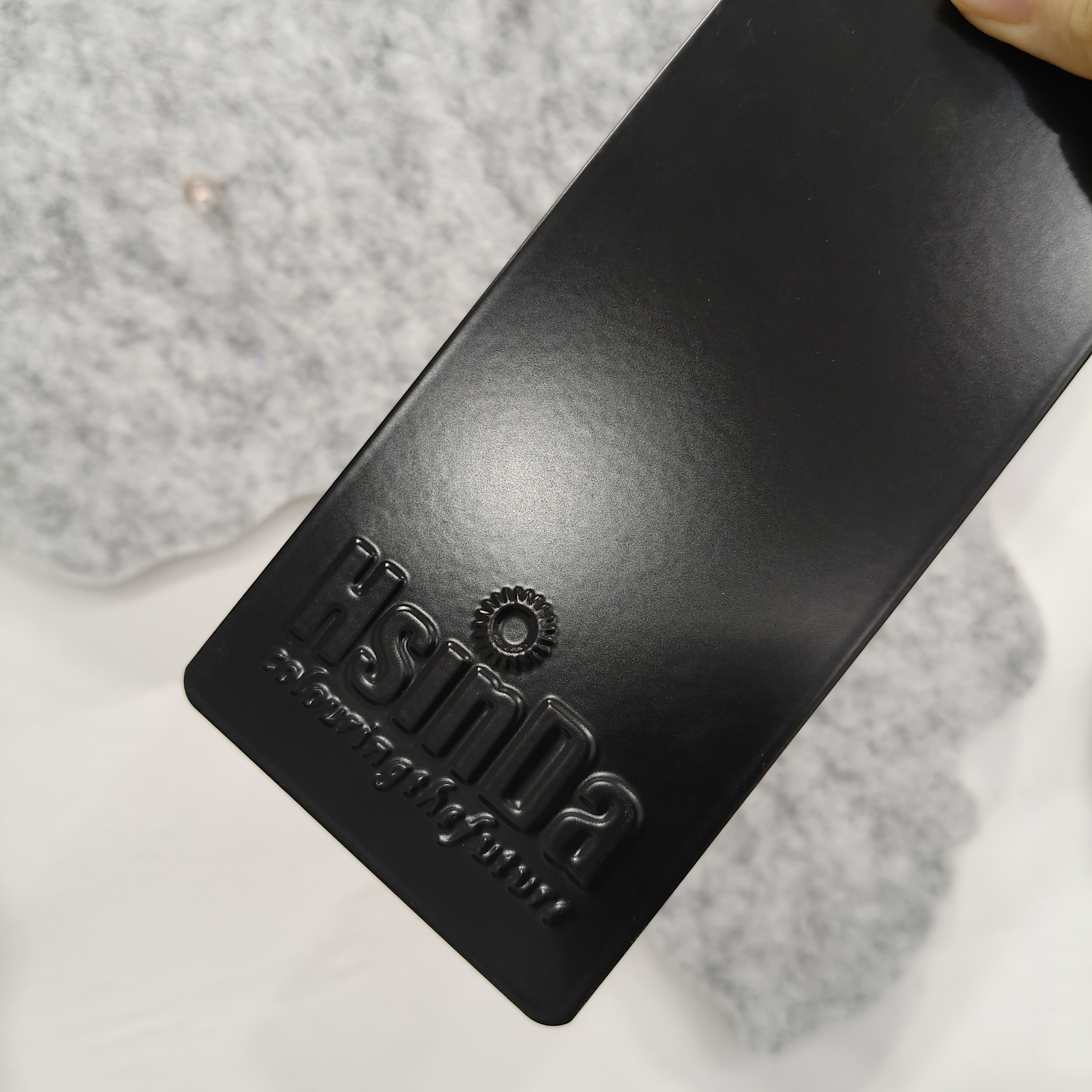
Pure epoxy anti-corrosion coating for pipelines, valves and reinforcement bar; 500-hour salt spray under ISO 7253:1996.
Metrics shared across the range
Several values repeat across Hsinda's polyester, epoxy, epoxy-polyester hybrid, matt, glossy, wrinkle, sandy and metallic lines: adhesion grade 0 (ISO 2409:2020), hardness ≥H (ISO 15184:2020), bending ≤2 mm (ISO 1519:2002), cupping ≥6 mm (ISO 1520:2006), humidity and heat 1000 hours at ≤ level 1 (GB/T 1740-2007), and 500 hours of salt spray (ISO 7253:1996) with cross-section corrosion ≤2 mm. Film thickness is 70 µm and coverage is 8–10 m² per kg at 30–90 µm throughout. Gloss is adjustable within ISO 2813:2014, with the matt line narrowing to the 5%–30% band.
This uniformity is commercially useful. It means a buyer can run one incoming-inspection protocol across several product families, and only the scheme classification and the weathering figure change between an interior cabinet part and an exterior facade panel.
Regional requirements: what changes between markets
Regional compliance is not one rule set. It is a stack of local specification habits layered on top of international test methods. The table below describes typical emphasis, not legal requirements — always confirm against the project specification and the destination market's current rules.
| Market | Typical specification emphasis | What to verify before approval |
|---|---|---|
| Europe | Qualicoat classification for architectural aluminum; REACH compliance; TGIC-free preference on polyester; RoHS where coated parts sit near electrical assemblies | Current classification document naming the plant and product family; REACH statement covering the exact formulation; confirmation that the curing agent is HAA rather than TGIC |
| North America | AAMA classifications for aluminum; test-report-driven review; colour and gloss retention evidence for exterior work | The AAMA test report behind the claim, the tier specified, and the weathering figure (ISO 11341:2004 or equivalent) measured on the same product |
| Middle East and coastal or high-UV regions | Elevated salt spray and weathering expectations; colour stability on sun-exposed facades | Which line the hours belong to — the aluminum line carries 1000-hour salt spray and 1000-hour weathering, not the 500-hour range standard |
| Asia, including China | GB/T methods alongside ISO methods; humidity and heat resistance frequently written into appliance and electrical specifications | GB/T 1740-2007 humidity and heat result at 1000 hours, and the corresponding ISO adhesion and hardness values |
Step-by-step: building a verifiable powder coating specification
This sequence works for a facade package, an industrial anti-corrosion package, or a mixed project with both.
- Start from service conditions, not from a product name. Exterior sun and rain, coastal salt exposure, buried or immersed steel, and interior electrical enclosures produce four different specifications. Polyester is the exterior choice; pure epoxy is the anti-corrosion and interior choice.
- Write the test method and the grade, not the adjective. "Good adhesion" is not a specification. "Adhesion grade 0 per ISO 2409:2020, hardness ≥H per ISO 15184:2020, impact per ISO 6272-1:2017" is.
- Add the scheme classification where the project requires one. For architectural aluminum, name Qualicoat or AAMA and name the tier. Then ask for the classification document that covers the supplying plant and the product family being shipped.
- Fix the formulation constraints. If the project is EU-facing or owner-mandated, state TGIC-free with HAA curing, and ask for the REACH compliance statement. Add RoHS where the coated part is an electrical component.
- Define the film build and the reference conditions. A 70 µm film is the reference thickness behind the published mechanical values. A test result quoted at a different thickness is a different result. Coverage of 8–10 m² per kg at 30–90 µm is the planning figure for quantity take-off.
- Carry the specification into the purchase order and incoming inspection. The order should reference the test methods, and the goods-in check should confirm film thickness, gloss against the approved standard, and adhesion after bending on a sampled part.
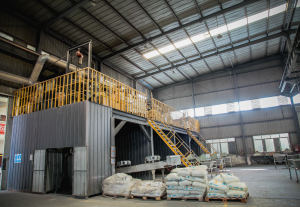
Production capacity of about 5000 tons per year across 8 lines supports specification-locked architectural and industrial orders.
Use cases: where each compliance profile fits
Aluminum curtain walls, high-rise facades and glazed partitions. This is the most heavily specified case. The requirement set is Qualicoat or AAMA classification, adhesion grade 0, hardness ≥H, and the strongest corrosion and weathering evidence in the range — 1000-hour salt spray and 1000-hour weathering with gloss retention above 50%. Natural Florida exposure data over one year supports the exterior claim.
Doors, windows, sunrooms and decorative profiles. The same polyester system, with the compliance emphasis shifting to colour consistency across production batches and to RAL or Pantone matching, since these parts are visible and installed next to each other.
Pipelines, valves, water systems and reinforcement bar. Pure epoxy anti-corrosion coating, specified on salt spray hours, chemical resistance and adhesion. Cylinder and gas-system applications add wide-temperature service requirements, and the substrate must be blasted and pre-treated before coating regardless of the product selected.
Electrical cabinets, appliance housings and enclosures. Epoxy or epoxy-polyester hybrid with matt or wrinkle finishes, where the compliance focus is chemical and scratch resistance plus humidity and heat resistance at 1000 hours. Hsinda reports supply relationships with Changhong Electric, Xiaomi Appliances, TCL Electronics and Hitachi Elevator in the domestic market, alongside export to more than 70 countries.
Comparison table: product lines against compliance metrics
| Product line | Resin system | Adhesion / Hardness | Salt spray (ISO 7253:1996) | Typical construction use |
|---|---|---|---|---|
| Aluminum Powder Coating | Polyester, Qualicoat and AAMA classified; weathering per ISO 11341:2004 at 1000 h | Grade 0 / ≥H | 1000 h, cross-section corrosion ≤2 mm | Curtain walls, aluminum profiles, doors and windows, sunrooms |
| Polyester Powder Coating | Polyester; TGIC-free REACH-compliant variant available with HAA curing | Grade 0 / ≥H | 500 h, cross-section corrosion ≤2 mm | Outdoor furniture, guardrails, light poles, general exterior metal |
| Anti-corrosion Powder Coating | Pure epoxy; good resistance to general acids and oils, average alkali resistance | Grade 0 / ≥H | 500 h, cross-section corrosion ≤2 mm | Pipelines, valves, water systems, rebar, electrical insulation |
| Epoxy-polyester Hybrid | Epoxy and polyester blend; humidity and heat per GB/T 1740-2007 at 1000 h | Grade 0 / ≥H | 500 h, cross-section corrosion ≤2 mm | Interior cabinets, appliance housings, office furniture, instrument cases |
| Matt, glossy, wrinkle, sandy and metallic lines | Polyester or epoxy bases; gloss adjustable within ISO 2813:2014, matt narrowed to 5%–30% | Grade 0 / ≥H | 500 h, cross-section corrosion ≤2 mm | Architectural decoration, furniture, enclosures, visual differentiation |
All lines share a 70 µm reference film thickness, 32–42 µm average particle size and 8–10 m² per kg coverage at 30–90 µm. Values are as published per product line and should be confirmed against the datasheet for the specific colour and finish ordered.
Frequently asked questions
Which standards should a powder coating supplier document for a construction project?
At minimum: ISO 2409:2020 for adhesion (grade 0), ISO 15184:2020 for hardness (≥H), ISO 6272-1:2017 for impact, ISO 7253:1996 for salt spray, ISO 2813:2014 for gloss, and ISO 11341:2004 or natural exposure data for weathering where the part is exterior. Add ISO 1519:2002 and ISO 1520:2006 if the part is formed after coating, and GB/T 1740-2007 if humidity and heat resistance is written into the specification. For architectural aluminum, add the Qualicoat or AAMA classification document for the supplying plant.
Can one supplier cover architectural aluminum, TGIC-free polyester and anti-corrosion requirements?
Yes, if the product families are distinct and each is documented separately. Hsinda's range includes an Aluminum Powder Coating line classified to Qualicoat and AAMA with 1000-hour salt spray, a polyester line with a REACH-compliant TGIC-free option using HAA curing, and a pure epoxy Anti-corrosion Powder Coating line rated at 500-hour salt spray for pipelines, valves and rebar. The production base is reported at about 5000 tons per year across 8 lines and 3 sample lines, with an 11-person R&D team.
What drives the cost of a compliant powder coating specification?
Three variables dominate: the resin system (polyester, pure epoxy or hybrid), the test and classification scope attached to the order, and the colour and finish selected. A specification that adds a scheme classification and extended weathering evidence carries more qualification work than a standard mechanical specification, and a 70 µm reference film consumes more material per square metre than a thinner build. Because pricing depends on colour, volume and specification scope, it is quoted per project rather than published as a list.
Can samples be supplied before a construction order is placed?
Yes. Hsinda operates 3 dedicated sample lines alongside its 8 production lines, which allows a colour and finish to be produced and approved ahead of bulk manufacture. For compliance-driven projects, request the sample together with the test data and the classification document for that product family, so that the approved sample and the approved specification refer to the same material.
How do I obtain compliance documents and a quotation for a project?
Send the project specification — substrate, service environment, required test methods and any named scheme classification — and the response should come back as a product recommendation with matching data, not as a generic catalogue page. You can download the Hsinda product brochure at this link, review the range at www.hsinda.com, or contact Jenny Qin at innocoat.jenny@hsindapowdercoating.com or +86 188 8641 2845 to request samples and a project quotation.
Conclusion
Powder coating compliance in construction comes down to writing a specification that can be verified and then holding the supplier to the same document through sampling, production and delivery. Name the test method and grade, name the scheme classification and the tier where the project requires one, name the formulation constraints such as TGIC-free and REACH compliance, and fix the film thickness the values were measured at. The supplier's job is then to return evidence — not adjectives — for the exact product being shipped.
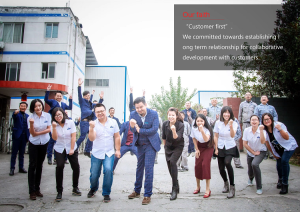
Hsinda supplies powder coating from Chengdu, China, to more than 70 countries, with established distributors in Russia, Bangladesh, Poland, Portugal, the United States, Canada, Sri Lanka, Bolivia and Argentina.
If you are building a compliance-driven finish schedule, start with a sample and the matching test data. Request both together, and let the specification and the approved panel describe the same material.
Have Questions or Need More Details?
Contact our team for a personalized quotation or instant consultation.
Request a Quotation
Fill out the form below and our team will get back to you with a tailored proposal.
WhatsApp Direct Chat
Prefer to chat in real-time? Message us on WhatsApp for instant assistance & quick answers.
- Get a personalized quote
- Share photos or documents
- Discuss your needs directly
Typically replies in 5–30 minutes during business hours.