
Powder Coating Coverage & Film Thickness: Construction Guide
Powder Coating Coverage & Film Thickness: Construction Guide
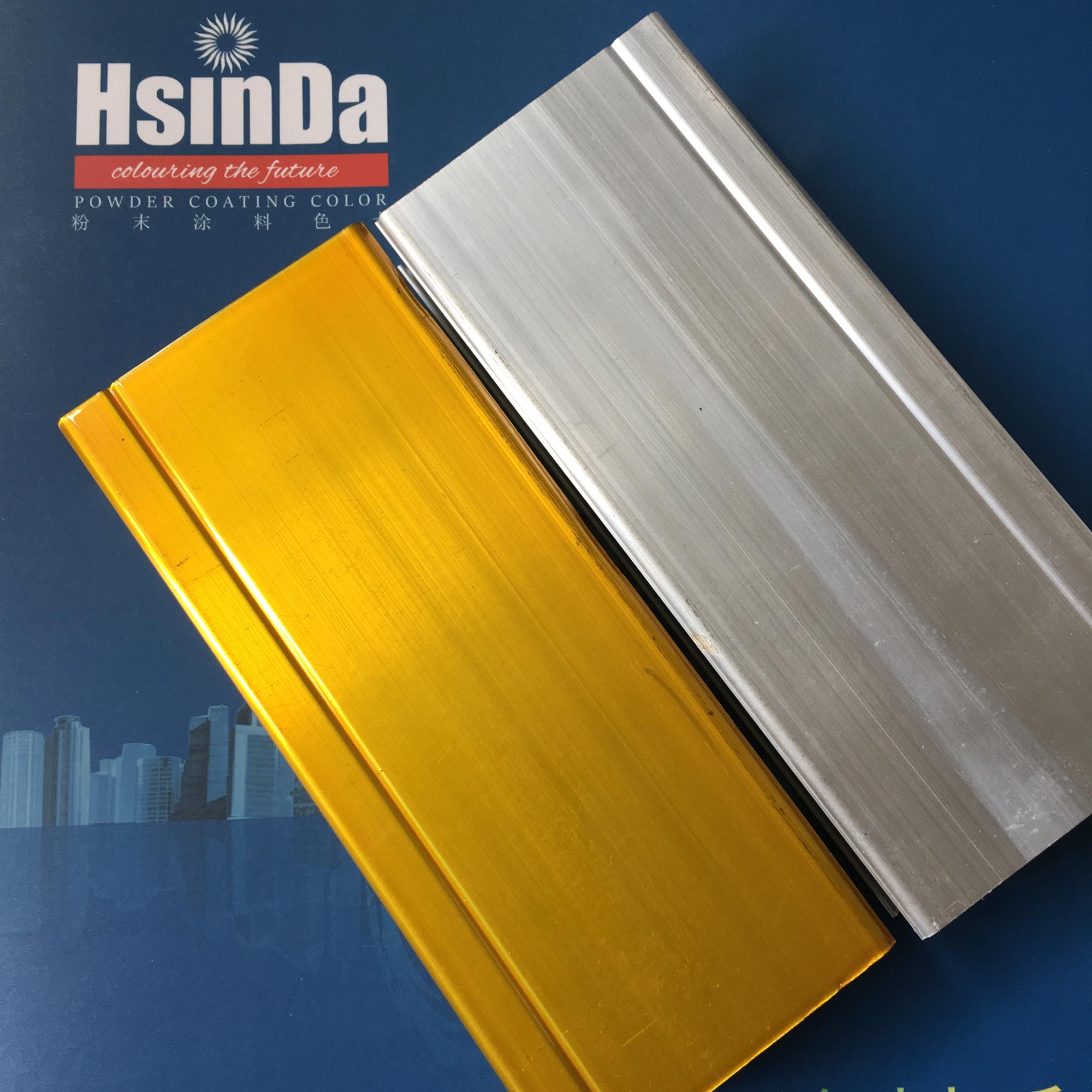
Powder coating coverage is a derived value, not a fixed property of a colour. In the architectural datasheets used throughout this guide, coverage is quoted at 8–10 m²/kg across a 30–90 μm film thickness band, with a typical applied build of 70 μm, an average particle size of 32–42 μm, a specific gravity of 1.2–1.7 g/cm³, and a curing schedule of 180–200 °C for 10–15 minutes. Change the film build and the kilograms change. Change the specific gravity and the kilograms change again.
This guide is written for the people who must turn those figures into a purchase order and a passing inspection: specifiers, façade contractors, window and joinery fabricators, and buyers sourcing coating for aluminum profiles, doors and windows, glass curtain walls and architectural partitions. It explains what each parameter actually controls, how to calculate powder consumption from a datasheet instead of guessing, which standards verify the finished film, and where the specification usually breaks down between the drawing and the coating line.
Datasheet basis used in this guide (thermoset architectural modules):
- Average particle size: 32–42 μm
- Specific gravity: 1.2–1.7 g/cm³
- Coverage: 8–10 m²/kg at 30–90 μm film thickness
- Film thickness: 70 μm typical
- Curing: 180–200 °C, 10–15 minutes
- Application: tribo gun or electrostatic spray gun
What Coverage Actually Means in a Powder Coating Datasheet
Coverage is the surface area that one kilogram of powder will coat at a defined film thickness. Written as 8–10 m²/kg at 30–90 μm, it describes a band rather than a point: the same powder applied at 40 μm and at 90 μm does not deliver the same area per kilogram. A coverage figure quoted without a thickness basis cannot be used for estimating, and a supplier who will not state the basis has effectively given you a marketing number.
Coverage therefore sits at the end of four inputs — average particle size, specific gravity, target film build, and the curing schedule that fixes the film — and is only reproducible when all four are specified. That is why the same headline figure appears on datasheets for very different chemistries, and why the same figure behaves differently on two different coating lines.
Working definition. Coverage (m²/kg) multiplied by film thickness (μm) and specific gravity (g/cm³) determines the applied mass per unit area. Treat the three as one equation. If a project changes the film build without recalculating coverage, the kilogram estimate is wrong by exactly the same percentage.
Where Coverage Estimates Drift on Live Projects
Specification errors rarely come from a wrong datasheet. They come from a datasheet applied at the wrong operating point. The recurring causes are consistent:
- Film build set above the quoted band. Consumption scales linearly with thickness, so a nominal raised from 70 μm to 90 μm removes roughly a quarter of the quoted coverage before any process loss.
- Specific gravity ignored. Two formulations inside the 1.2–1.7 g/cm³ range do not deposit the same mass per square metre at the same film thickness.
- Geometry and rack density. Deep profiles, returns and internal corners receive less coating than flat panels per unit of surface area, so quoted area per kilogram is not achieved uniformly.
- Overspray and reclaim. Transfer efficiency is a property of your gun, part presentation and booth recovery, not of the powder, and should be measured on your own line rather than assumed.
- Texture requirements. Wrinkle, sandy and hammer tone surfaces are specified for appearance and handling resistance, and the visual effect is a deliberate film characteristic — not a defect that can be polished out by thinning the coat.
Construction Demand Context for Powder Coating
Construction and decoration is a defined segment of the coatings market rather than an adjacent one. Commercial market research lists powder coating alongside water-borne, solvent-borne and high-solids technologies as a distinct product segment within construction paints and coatings, which is why architectural specifications increasingly default to it for metal substrates.
Published figures give the scale and the material mix. Fortune Business Insights valued the global powder coatings market at USD 16.12 billion in 2025, with Asia Pacific holding a 63.10% revenue share. Grand View Research reported the polyester segment at 48.2% of market share in 2025, attributing the position to weatherability and UV resistance — consistent with the fact that architectural aluminum work is specified almost entirely in polyester systems. On the demand side, the Associated General Contractors of America records more than 919,000 construction establishments in the United States in the first quarter of 2023, a broad indicator of how fragmented the specifying and fabricating base is.
Treat market valuations as directional. Different research houses define the powder coating category differently, and published 2025 figures vary with scope. The material mix and the regional concentration are the more stable signals for a buyer.
One standard deserves separate mention because it governs whether the coverage you calculated survives storage. ISO 8130-8 establishes the method for estimating the storage stability of thermosetting coating powders. Powder that has sintered or lost fluidisation in a humid warehouse will not meter at its datasheet coverage, whatever the specification says.
The Four Parameters That Decide Coverage and Film Build
The values below are the specification figures published by Hsinda — Chengdu Hsinda Polymer Materials Co., Ltd, a powder coating manufacturer established in 2015 in Chengdu, China, operating 8 production lines plus 3 sample lines at roughly 5,000 tons annual capacity and exporting to more than 70 countries. They are representative of how thermoset architectural powder is specified, and they are the reference set used for every calculation in this article.
1. Average particle size: 32–42 μm
Every module in this set quotes the same average particle size of 32–42 μm alongside the application method — tribo gun or electrostatic spray gun. The word to notice is average: the figure describes the midpoint of a distribution, not a single granule size, and it is the distribution that governs how the powder fluidises, how it charges and how evenly it builds on a profile face.
For a specifier, the practical significance is narrower: the particle size band tells the applicator what to expect from transfer and surface levelling, and it sets the gun settings the powder was designed for. A supplier who cannot state an average particle size has given you a coverage figure with no basis behind it.
2. Specific gravity: 1.2–1.7 g/cm³
Specific gravity converts film thickness into mass. At equal film build, a formulation at the top of the 1.2–1.7 g/cm³ range deposits more material per square metre than one at the bottom, so it delivers fewer square metres per kilogram. This is the parameter most often missing from buyer comparisons, and it explains why two colours that both advertise 8–10 m²/kg can consume visibly different tonnage on the same job.
3. Film thickness: 30–90 μm, typical 70 μm
Film build is the largest single multiplier in any estimate, because consumption scales linearly with it. The datasheets here quote a workable band of 30–90 μm and a typical applied value of 70 μm. That typical value is the one to use for budgeting; the lower end of the band suits interior, low-exposure surfaces where appearance and minimal protection are the only requirements, and the upper end belongs to exterior architectural work where the corrosion and weathering clauses of the project demand a heavier barrier.
Whatever value you choose, write it as a nominal with a tolerance and verify it on the part with a coating thickness gauge — not on a flat test panel only.
4. Coverage: 8–10 m²/kg
Coverage is where the first three parameters surface as a purchasing figure. Because the band is expressed at 30–90 μm, the honest way to use it is to take the film build your specification requires, then pick the coverage value at that thickness rather than the most favourable end of the range.
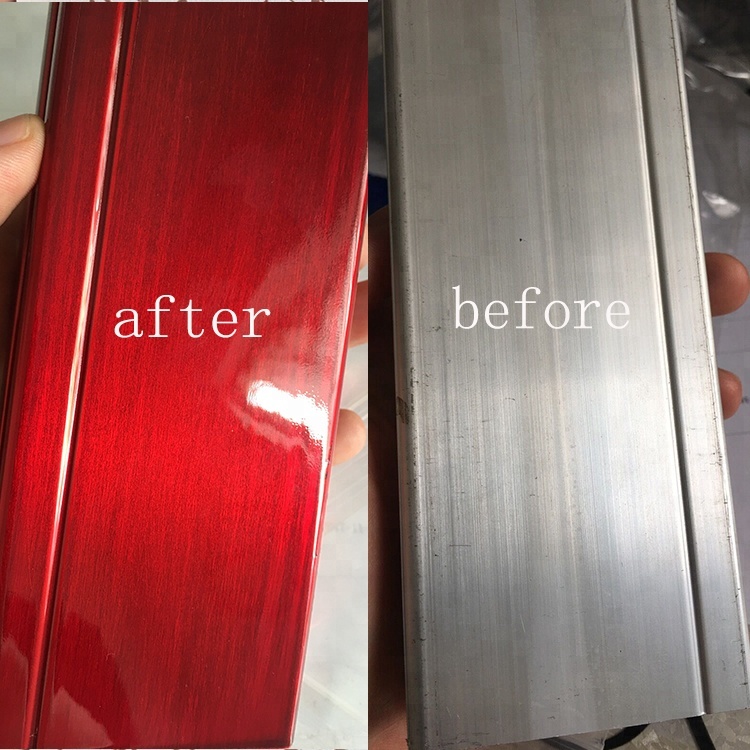
Curing: 180–200 °C for 10–15 Minutes
Curing is the step that converts deposited powder into the film the standards actually measure. The schedule here is 180–200 °C for 10–15 minutes, and it is not a suggestion: a film that has not received its full cure will not reach adhesion grade 0 or hardness ≥H, no matter how precisely the film thickness was controlled.
On construction work the limiting factor is usually the oven rather than the powder. Thick aluminum profiles, heavy steel assemblies and dense racks absorb heat and extend the time needed to bring the substrate to temperature. Before locking a specification, confirm with the supplier whether the 180–200 °C value refers to oven air temperature or to substrate temperature, then time a loaded rack rather than an empty one. Over-cure carries its own commercial cost in gloss and colour shift on decorative surfaces, which matters most on visible façade and joinery work.
Performance Standards That Fix the Minimum Film Build
The standards below are the ones reported on the datasheets for these modules. They are the evidence a specifier should ask for property by property, with the test method and the result — not a general statement that the product is tested.
| Property | Standard | Datasheet value |
|---|---|---|
| Gloss | ISO 2813:2014 | 5%–95% across the range |
| Impact resistance | ISO 6272-1:2017 | 50 kg/cm |
| Bending | ISO 1519:2002 | ≤2 mm |
| Cupping | ISO 1520:2006 | ≥6 mm |
| Adhesion | ISO 2409:2020 | Grade 0 |
| Hardness | ISO 15184:2020 | ≥H |
| Salt spray resistance | ISO 7253:1996 | 500 hours; coating unchanged, cross-section corrosion ≤2 mm |
| Humidity and heat resistance | GB/T 1740-2007 | 1000 hours; slight gloss loss, ≤ level 1 |
| Weather resistance | ISO 11341:2004 | 500 hours at 340 nm; no powdering, gloss retention >50% |
The aluminum-profile grade in the same set is specified higher, and the difference is worth knowing before it appears in a tender clarification: salt spray extended to 1000 hours to ISO 7253:1996, weathering extended to 1000 hours to ISO 11341:2004, and a one-year Florida natural aging test with gloss retention above 50%. Its mechanical sheet also differs, with impact quoted as 2.5 Nm to ISO 6272-1:2017, bending ≤5 mm and cupping ≥5 mm. Quoting the standard product values for an exterior aluminum façade would understate what the grade was tested to; quoting the aluminum values for a general interior part would overstate the requirement.
Step-by-Step: Estimating Powder for a Construction Project
The method below uses only the datasheet parameters already established. It is a buying estimate, not a substitute for your own line trial.
- Establish coated area in square metres. Count every coated face. A profile coated on four sides presents roughly twice the area of the same profile measured on one face, and this is the most common source of a 50% estimating error.
- Fix the target film build from the project clause. For exterior architectural aluminum, 70 μm is the typical value in this datasheet set. Record the tolerance with it.
- Read coverage at that film build. Use the 8–10 m²/kg band at the thickness you specified. Where a supplier offers a single number, ask for the thickness basis in writing.
- Divide area by coverage. This gives the theoretical mass of powder deposited on the part.
- Add your measured process allowance. Overspray, reclaim losses and rack shadowing are properties of your booth and gun configuration. Measure them on a production batch and use your own figure; a borrowed allowance hides the error rather than removing it.
- Confirm the oven can cure the film you specified. A kilogram estimate is only valid if the line can hold 180–200 °C for 10–15 minutes on a loaded rack at the chosen film build.
Applied to a 1,000 m² order at 70 μm, the arithmetic shows how much the coverage band alone moves the result:
| Coverage used | Powder for 1,000 m² at 70 μm | Difference vs. best case |
|---|---|---|
| 10 m²/kg | 100 kg | baseline |
| 9 m²/kg | 111 kg | +11% |
| 8 m²/kg | 125 kg | +25% |
A 25% swing on a single mid-sized order is not a rounding difference. It is the reason coverage should be confirmed against film build and specific gravity before a purchase order is issued, and then verified against the first production batch.
Use Cases: Matching the Module to the Construction Scope
Aluminum profiles, glass curtain walls and sunrooms
This is the most demanding exterior scope and the one that justifies the higher specification. The aluminum-profile polyester grade carries 1000-hour salt spray and 1000-hour weathering results plus one-year Florida exposure, which is the evidence base a façade specification should cite. Gloss is selectable across 5%–95%, so the same system can deliver a bright mullion finish or a low-sheen panel without changing chemistry.
Doors, windows and architectural partitions
Exterior window and door frames sit in the same weathering class as curtain wall profiles but in thinner sections, where film build control on edges and returns matters more than on a flat panel. Interior partitions and ceiling systems face a different requirement: appearance and handling resistance rather than long-term UV exposure. An epoxy-polyester hybrid is the usual fit for that interior scope, and polyester remains the default where any part of the assembly is exposed.
Anti-corrosion steel and infrastructure
For guardrails, pipelines, valves and structural steel, the relevant module is the pure epoxy anti-corrosion grade: 500 hours salt spray to ISO 7253:1996 with cross-section corrosion ≤2 mm, and 1000 hours humidity and heat resistance to GB/T 1740-2007. Note what the datasheet does not list — this module reports no ISO 11341 weathering result. For an exposed exterior application, ask for weathering data before specifying it rather than assuming the salt spray result covers UV exposure.
Comparison: Which Module Fits Which Coverage and Performance Need
All five modules below share the same physical envelope — 32–42 μm average particle size, 1.2–1.7 g/cm³ specific gravity, 8–10 m²/kg at 30–90 μm, 70 μm typical film, 180–200 °C for 10–15 minutes. What separates them is chemistry and the durability evidence attached to it.
| Module | Chemistry | Gloss (ISO 2813:2014) | Salt spray (ISO 7253:1996) | Weathering (ISO 11341:2004) | Typical construction use |
|---|---|---|---|---|---|
| Aluminum Powder Coating | Super weather-resistant polyester with TGIC | 5%–95% | 1000 hours | 1000 hours; gloss retention >50% | Aluminum profiles, curtain walls, doors and windows, partitions |
| Polyester Powder Coating | Polyester with TGIC | 5%–95% | 500 hours | 500 hours; gloss retention >50% | Exterior metalwork, railings, outdoor furniture, general architectural |
| Epoxy-Polyester Hybrid | Epoxy and polyester | 5%–95% | 500 hours | Not reported on datasheet | Interior partitions, furniture, appliance and enclosure housings |
| TGIC-Free Powder Coating | Polyester with HAA curing agent | 5%–95% | 500 hours | Not reported on datasheet | Interior and office furniture, appliance housings, interior components |
| Anti-corrosion Powder Coating | Pure epoxy with TGIC | 5%–95% | 500 hours | Not reported on datasheet | Pipelines, valves, rebar, steel structures, electrical enclosures |
| Matt Powder Coating | Epoxy and polyester | 5%–30% | 500 hours | Not reported on datasheet | Low-glare interior surfaces, lighting, appliance and furniture panels |
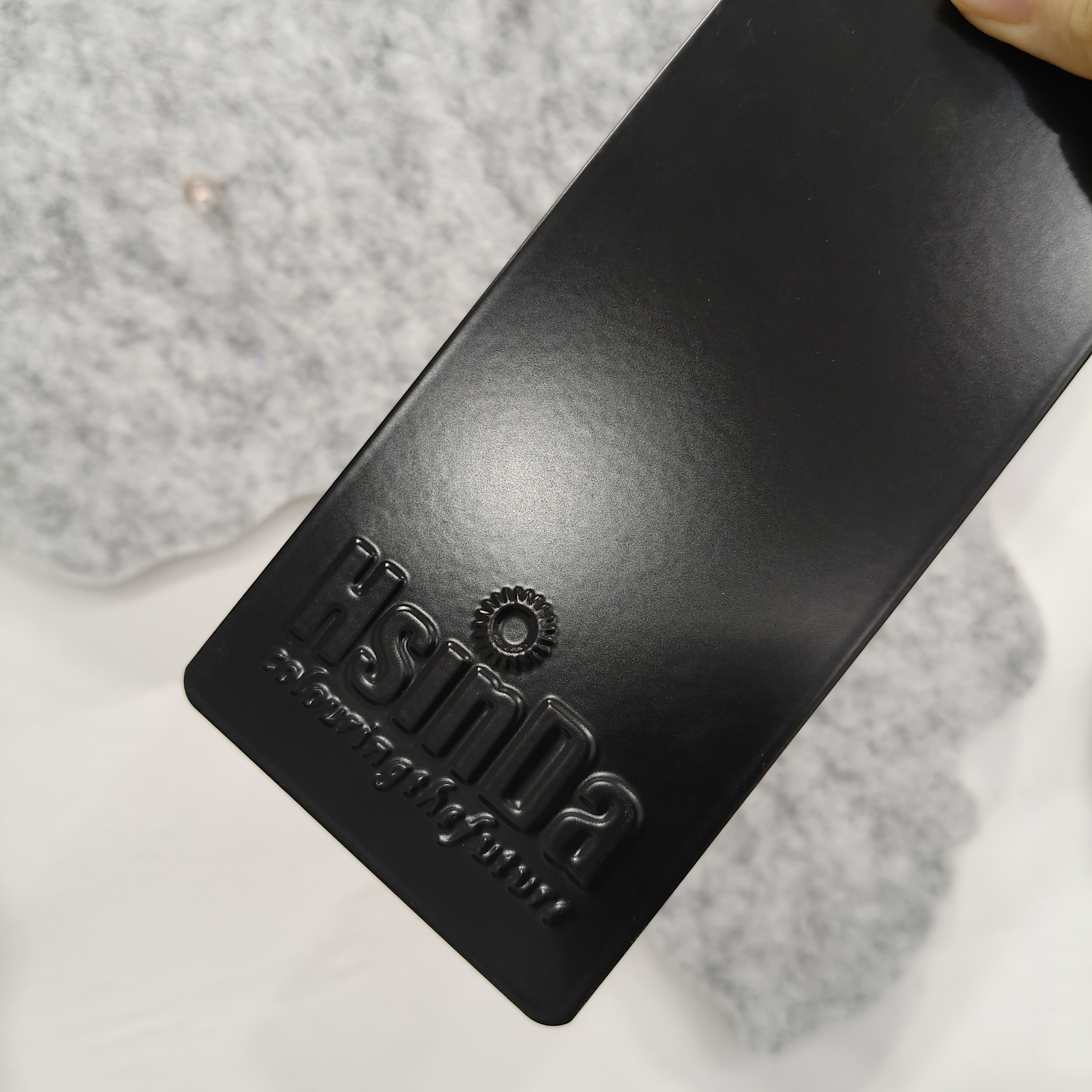
Gloss classification is available across the range: high gloss above 80%, semi-gloss at 40–79% and matt at 5–39% on a 60° gloss meter, with the matt module specified at 5%–30%. Surface effects — smooth, sand, wrinkle, hammer and metallic — are selected as finish requirements, not as coverage multipliers, but each one should be confirmed on a sample panel before the full order is estimated.
What to Confirm Before You Place the Order
- Coverage stated with its thickness basis — an 8–10 m²/kg figure at 30–90 μm, not a bare number.
- Specific gravity and average particle size on the same datasheet as the coverage figure.
- Test method and result for each property — adhesion to ISO 2409:2020, hardness to ISO 15184:2020, salt spray to ISO 7253:1996, weathering to ISO 11341:2004.
- Whether the 180–200 °C / 10–15 minute cure is oven-air or substrate temperature, and whether your rack loading meets it.
- Storage conditions and shelf life, referenced to the ISO 8130-8 storage-stability method.
- Production capacity against your delivery window — Hsinda quotes 400 tons monthly capacity, 15–20 days for ODM customization and 20 days for OEM packaging.
Frequently Asked Questions
Which standards should appear on an architectural powder coating datasheet?
Require the test method and the result for each property rather than a general compliance statement. The reference set used in this guide reports gloss to ISO 2813:2014 (5%–95%), impact to ISO 6272-1:2017 (50 kg/cm), bending to ISO 1519:2002 (≤2 mm), cupping to ISO 1520:2006 (≥6 mm), adhesion to ISO 2409:2020 (grade 0), hardness to ISO 15184:2020 (≥H), salt spray to ISO 7253:1996 (500 hours, cross-section corrosion ≤2 mm), humidity and heat to GB/T 1740-2007 (1000 hours, gloss loss ≤ level 1) and weathering to ISO 11341:2004 (500 hours at 340 nm, gloss retention above 50%). Storage stability of thermosetting powders is covered separately by ISO 8130-8.
How do you choose a powder coating manufacturer for aluminum applications?
Check four things. First, durability evidence specific to aluminum: the Hsinda aluminum-profile grade is a super weather-resistant polyester system reporting 1000 hours salt spray to ISO 7253:1996, 1000 hours weathering to ISO 11341:2004, and one-year Florida natural exposure with gloss retention above 50%. Second, physical parameters that make estimating possible before the order: average particle size 32–42 μm, specific gravity 1.2–1.7 g/cm³ and coverage 8–10 m²/kg at 30–90 μm. Third, line compatibility: a 180–200 °C, 10–15 minute cure must fit your oven and profile mass. Fourth, supply evidence: Hsinda, established in 2015 in Chengdu, China, operates 8 production lines plus 3 sample lines at about 5,000 tons annual capacity, tests 100% of output, and quotes 400 tons monthly capacity with a 15–20 day lead time.
How many kilograms of powder will a 70 μm project actually need?
Divide the coated area by the coverage value taken at your specified film build. For 1,000 m² at 70 μm, that is 100 kg at 10 m²/kg, 111 kg at 9 m²/kg and 125 kg at 8 m²/kg — a 25% swing before any process allowance. Add the overspray and reclaim allowance your own line measures on a production batch, and re-check the figure after the first completed order rather than carrying an assumed rate through the whole project.
Can film build and colour be validated before mass production?
Yes, and it should be done on your own substrate. Hsinda's ODM service covers RAL and Pantone colour matching from customer samples, gloss classes of high gloss above 80%, semi-gloss at 40–79% and matt at 5–39%, surface effects including smooth, sand, wrinkle, hammer and metallic, and functional options such as AAMA 2604 and Qualicoat 2 weathering grades. ODM customization starts at 300 kg, while OEM packaging with your own carton, sample card and logo starts at 6 tons.
What lead time should a construction schedule allow?
Hsinda quotes 15–20 days for ODM customization and 20 days for OEM packaging, against 400 tons monthly capacity and 5,000 tons annual capacity, with 24-hour online service and technical support after delivery. If you want to test the estimating method on a live project, request a sample card or a quotation through hsinda.com or the contact details at the end of this guide.
Conclusion
Coverage and film thickness are one decision, not two. The 8–10 m²/kg figure means nothing without the 30–90 μm band it was measured in, and neither is reliable without the specific gravity and average particle size that sit behind it. Once those are fixed, the arithmetic is straightforward: area divided by coverage at the specified build, plus a measured process allowance, checked against an oven that can hold 180–200 °C for 10–15 minutes on a loaded rack.
What separates one module from another is not the physical envelope — every module in this reference set shares 32–42 μm, 1.2–1.7 g/cm³ and 8–10 m²/kg — but the durability evidence attached to the chemistry. A 1000-hour salt spray and 1000-hour weathering result belongs on an exterior aluminum façade; a 500-hour salt spray result with no reported weathering data belongs on interior and anti-corrosion work. Reading a datasheet that way is the difference between a specification that passes inspection and one that generates a clarification request three months into the project.
Next step: check the numbers against your project
Send us your coated area, target film build and substrate, and we will return a kilogram estimate based on the 8–10 m²/kg coverage band and the correct module for the exposure class. Sample cards, RAL and Pantone colour matching, and full technical datasheets are available on request.
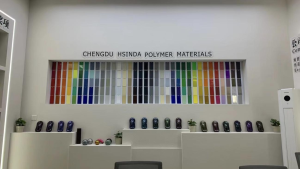
Chengdu Hsinda Polymer Materials Co., Ltd
Website: www.hsinda.com
Contact: Jenny Qin — Tel / WhatsApp / WeChat +86 188 8641 2845
Email: innocoat.jenny@hsindapowdercoating.com
Address: No.38 Huagang Road, South Area of Chengdu Modern Industrial Port, Pixian, Chengdu, Sichuan, China
Download the full product brochure: Hsinda Powder Coating Brochure (PDF)
Have Questions or Need More Details?
Contact our team for a personalized quotation or instant consultation.
Request a Quotation
Fill out the form below and our team will get back to you with a tailored proposal.
WhatsApp Direct Chat
Prefer to chat in real-time? Message us on WhatsApp for instant assistance & quick answers.
- Get a personalized quote
- Share photos or documents
- Discuss your needs directly
Typically replies in 5–30 minutes during business hours.