TGIC vs. TGIC-Free Polyester Powder Coating: Buyer Comparison
Polyester powder coating divides into two commercial families at the curing agent, not at the resin. Standard polyester is a polyester resin crosslinked with TGIC (triglycidyl isocyanurate). TGIC-free polyester is a polyester resin crosslinked with HAA (hydroxyalkylamide). Both are thermoset powder coatings, both are applied as a dry powder and cured into a film, and both can be supplied in matt, glossy, sandy, wrinkle, hammer tone or fine texture finishes.
That similarity is where procurement errors start. A quotation that reads only polyester powder coating leaves the curing chemistry, the compliance file and the application fit undefined — and the two systems are then compared on price per kilogram alone.
The working rule for construction and decoration buyers: specify TGIC-cured polyester where exterior weathering of aluminum profiles governs the project — curtain walls, doors and windows, sunrooms, architectural partitions. Specify TGIC-free HAA polyester where the coated parts are home appliances, electronics, automotive components, or office and residential furniture, and the specification is driven by compliance documentation and decorative consistency rather than by an exterior weathering requirement.
Why the TGIC / TGIC-Free Decision Gets Missed
Three practical reasons push this decision out of the quotation stage.
First, the finish gives nothing away. A matt, glossy or texture surface can come from either crosslinker, so color and texture samples cannot tell a buyer which chemistry is behind them.
Second, the compliance questions overlap. Both systems are solvent-free thermoset powders with nearly zero VOC emissions at application, so a VOC statement does not separate them. Buyers who screen suppliers on VOC alone end up treating the two chemistries as equivalent.
Third, application statements are often copied, not sourced. Many quotations list a generic application list — architectural, industrial, furniture — without tying the grade to a tested use. That makes a weather-resistant aluminum grade and an appliance grade look interchangeable.
The cost of getting it wrong runs in both directions. A TGIC-free system specified on exterior architectural aluminum without weathering data leaves the project without evidence at handover. A TGIC-cured system specified on interior furniture adds a restriction the application does not need. Neither error shows up at the sampling stage — only at the specification review or the site inspection.
Industry Background: Why Polyester Sets the Specification
Polyester is the reference chemistry for decorative and architectural powder coating because of its weathering behavior. Grand View Research reported that the polyester segment accounted for 48.2% of powder coating market share in 2025, attributing that position to superior weatherability and UV resistance. Fortune Business Insights valued the global powder coatings market at USD 16.12 billion in 2025, with Asia Pacific holding a 63.10% revenue share in the same year.
Downstream demand is broad. The Associated General Contractors of America reports more than 919,000 construction establishments in the United States in the first quarter of 2023 — a structural indicator of how many specifiers, fabricators and installers sit between a powder manufacturer and a finished façade or fitted interior.
Two standards appear repeatedly when buyers compare suppliers in this category. ISO 8130-8 defines the method for estimating the storage stability of thermosetting coating powders, which matters when powder is held across a long project programme. ISO 2409 (cross-cut adhesion), ISO 15184 (pencil hardness), ISO 6272-1 (impact), ISO 7253 (salt spray) and ISO 11341 (accelerated weathering) are the test methods behind most film-performance claims, and they are the ones worth requesting as reports rather than as adjectives.
Formulation: What Actually Changes Between TGIC and TGIC-Free
Standard polyester powder coating is a thermoset coating built from polyester resin, a TGIC curing agent, pigments and additives. Hsinda's sandy polyester datasheet follows exactly this structure and classifies the grade as a weather-resistant powder coating for aluminum profiles.
TGIC-free polyester keeps the polyester resin family and replaces the TGIC crosslinker with an HAA curing agent. The change is in the crosslinking chemistry; the resin, pigment system, gloss control and texture mechanism stay within the same polyester platform. In practice this means a TGIC-free grade can be matched to the same RAL color and the same gloss band as its TGIC-cured counterpart, which is why the switch is usually a documentation exercise rather than a redesign.
| Formulation element | Standard polyester (TGIC-cured) | TGIC-free polyester (HAA-cured) |
|---|---|---|
| Binder system | Polyester resin | Polyester resin |
| Curing agent | TGIC (triglycidyl isocyanurate) | HAA (hydroxyalkylamide) |
| Pigments and additives | Yes — part of the formulation | Yes — part of the formulation |
| Solvent content | None; solvent-free thermoset powder | None; solvent-free thermoset powder |
| VOC at application | Nearly zero | Nearly zero |
| Finish range | Matt to high gloss (5%–95% per ISO 2813:2014 on Hsinda datasheets) | Matt to high gloss; smooth and texture options |
| Application fit stated in Hsinda documentation | Weather-resistant coating for aluminum profiles, doors and windows, glass curtain walls, architectural partitions | Home appliances, electronics, automotive components, office and residential furniture |
One point deserves emphasis because it is frequently mis-sold: VOC is not a discriminator between the two systems. Powder coating as a category is solvent-free with nearly zero VOC emissions at application, and that applies to TGIC-cured and TGIC-free polyester alike. Where the two genuinely separate is in the compliance narrative around the crosslinker and in the application fit each grade is documented for.
What the Curing-Agent Switch Does Not Prove
A comparison guide is only useful if it states its limits, so here are three.
No head-to-head weathering data is presented here. The Hsinda documents used for this guide contain weathering results for specific aluminum and textured polyester grades, but they do not contain a side-by-side accelerated weathering comparison of a TGIC-cured versus an HAA-cured grade on the same substrate at the same film build. Any claim that one crosslinker system weathers better than the other would need that test, and it is not in this file.
The crosslinker does not set the durability ceiling. Weather resistance, corrosion resistance and mechanical performance come from the resin grade selected, the pigment system, the film build achieved, the cure schedule actually reached on the line, and the substrate pretreatment. Two TGIC-cured polyesters from different suppliers can differ more than a TGIC and a TGIC-free grade built on the same premium resin platform.
Neither system is automatically the safer commercial choice. The decision should follow the exposure class of the part and the compliance file the destination market requires — not a general preference for newer chemistry.
Documented Test Data You Can Ask Both Suppliers For
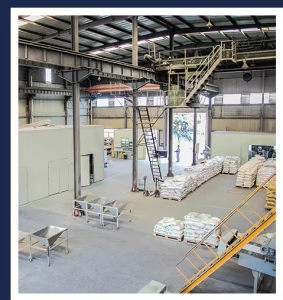
Hsinda (Chengdu Hsinda Polymer Materials Co., Ltd) is a powder coating manufacturer based in Chengdu, Sichuan, China, established in 2015, operating a 10,000 m² facility with 8 production lines and 3 sample lines and an annual output of approximately 5,000 tons. The company states its powder coatings have passed REACH, RoHS, SGS and AAMA testing and holds ISO 9001 and ISO 14001 certification. Color difference is controlled to Delta E ≤0.5 and verified through a 3+1 inspection protocol covering raw materials, first and last production pieces, performance and color difference.
The table below lists the test methods and results that appear in Hsinda polyester datasheets. These are the figures to request as reports from any supplier — including Hsinda — before a purchase order is raised.
| Property | Test method | Documented result on Hsinda polyester grades |
|---|---|---|
| Adhesion | ISO 2409:2020 | Grade 0 |
| Hardness | ISO 15184:2020 | ≥H |
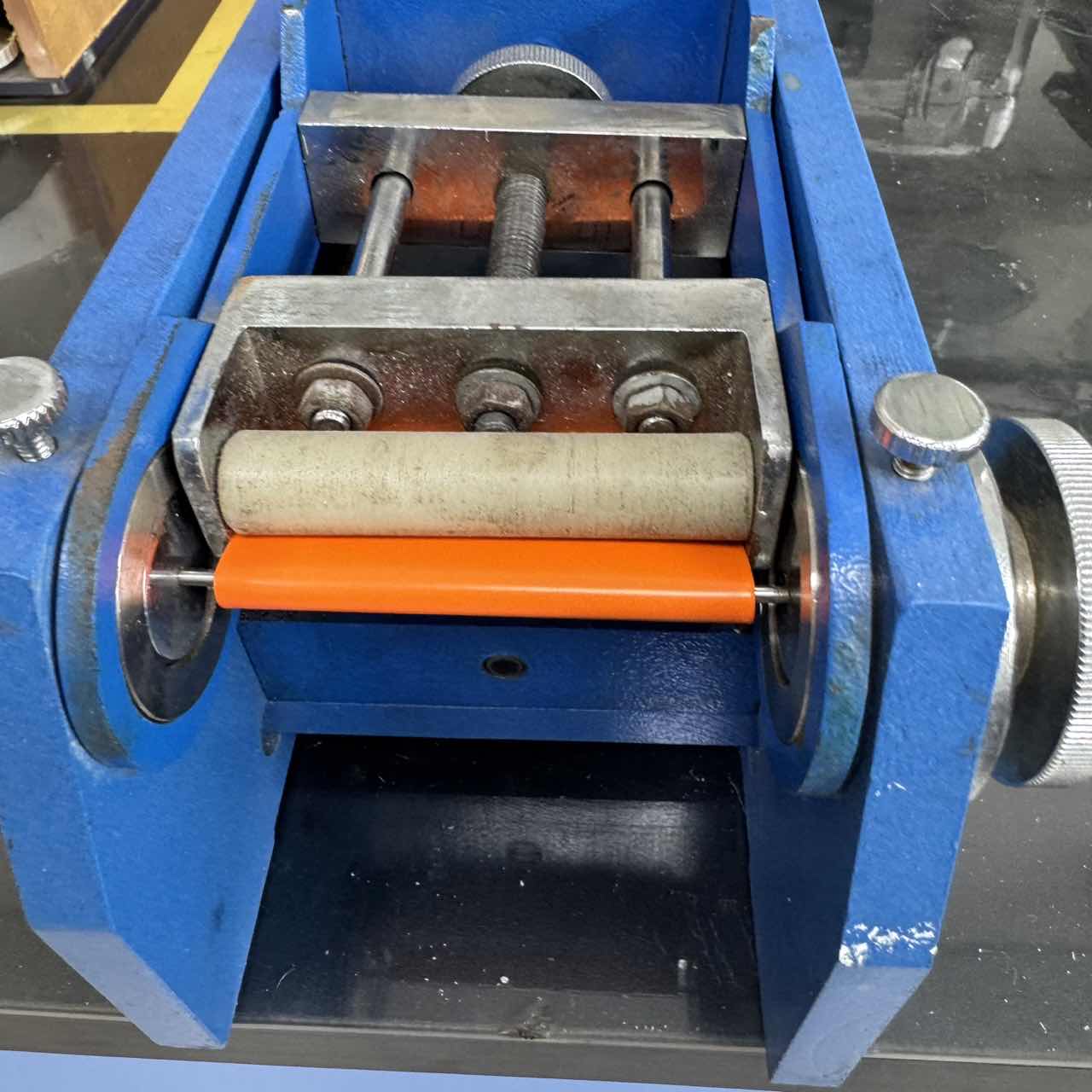
| Impact resistance | ISO 6272-1:2017 | 50 kg/cm (textured and anti-corrosion grades) |
| Salt spray resistance | ISO 7253:1996 | No change after 500 hours with unilateral corrosion ≤2 mm (textured polyester, epoxy anti-corrosion); no change after 1,000 hours (aluminum polyester) |
| Accelerated weathering | ISO 11341:2004 | No powdering, light retention >50% after 500 hours (aluminum polyester) |
| Gloss range | ISO 2813:2014 | 5% to 95% |
| Film thickness and coverage | Datasheet specification | 30–90 μm film; typical 70 μm on sandy grades; 8–10 m² per kg |
| Particle size and density | Datasheet specification | Average particle size 32–42 μm; specific gravity 1.2–1.7 g/cm³ (sandy grade) |
| Cure schedule | Datasheet specification | 180–200 °C for 10–15 minutes (sandy polyester grade) |
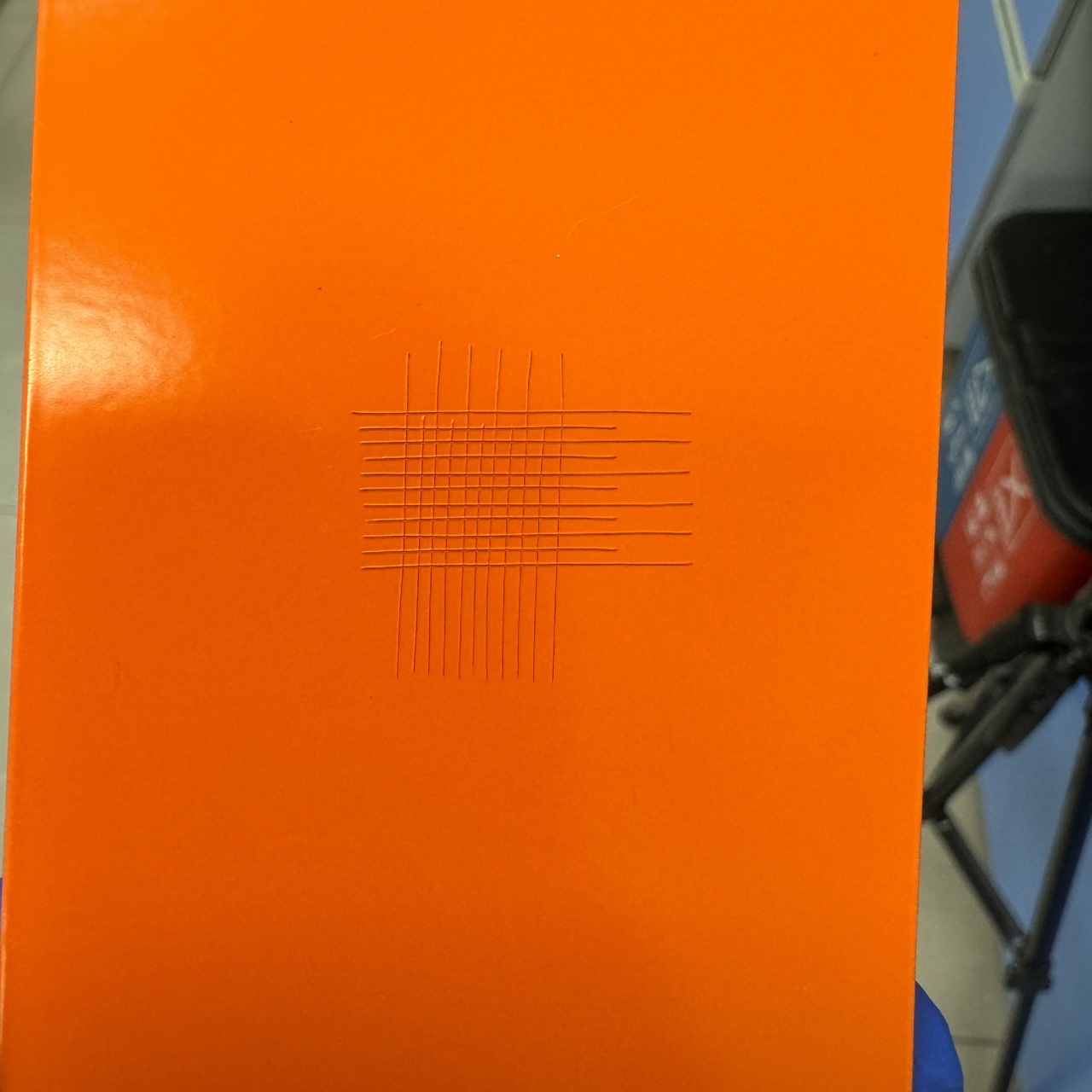
Note the structure of that table. It separates method from result, so a buyer can ask the same question of a second supplier and get a comparable answer. A supplier who cannot name the method behind a claim is describing an impression, not a specification.
Step-by-Step: Running the Comparison in Six Steps
Step 1 — Fix the exposure class before the chemistry
Classify each part as interior, exterior, or interior with handling and cleaning exposure. Exterior aluminum — curtain walls, window and door profiles, sunrooms, partitions — makes weathering data the governing requirement. Appliance panels, electronics housings, automotive parts and office furniture are interior-dominant, and the governing requirements shift to compliance documentation, color consistency and finish durability in handling.
Step 2 — Write the crosslinker into the specification
Use the explicit wording: polyester resin crosslinked with TGIC or polyester resin crosslinked with HAA (TGIC-free). Ask for the technical datasheet line that confirms it. A verbal confirmation is not a specification, because the two systems can be visually identical in the sample room.
Step 3 — Request the compliance pack
Ask for the REACH and RoHS documentation, the VOC statement, and any AAMA, QUALICOAT or SGS test documentation relevant to the destination market. Hsinda states its powder coatings have passed REACH, RoHS, SGS and AAMA testing, and lists ISO 9001, ISO 14001, EU RoHS 2.0 and QUALICOAT within its certification system. Verify the certificate names and validity dates against the certificate itself, not against a brochure line.
Step 4 — Lock the finish and the color tolerance
Define the gloss target inside the 5%–95% ISO 2813:2014 band, the texture type (sandy, wrinkle, hammer tone, fine texture) and the RAL target with a stated color tolerance. On Hsinda's process, color difference is held to Delta E ≤0.5 with a supporting color difference report available on request — a figure worth writing into the order for multi-batch projects.
Step 5 — Fix film build and convert to coverage
Agree the film thickness range and the corresponding coverage. At 30–90 μm film thickness, Hsinda polyester grades cover 8–10 m² per kg, with a typical 70 μm film on sandy textures. Coverage falls as film build rises, so the same 1 kg of powder covers less area at the top of the range — always compare quotations at an identical film build.
Step 6 — Require mechanical and durability reports
Collect adhesion (ISO 2409:2020, grade 0), hardness (ISO 15184:2020, ≥H), impact (ISO 6272-1:2017, 50 kg/cm where applicable), salt spray (ISO 7253:1996) and weathering (ISO 11341:2004) results before awarding. For exterior work, the weathering report is the one that decides the award.
Use Cases: Where Each System Fits
Exterior architectural aluminum — TGIC-cured polyester
Aluminum profiles, doors and windows, glass curtain walls, sunrooms and architectural partitions are the documented application set for Hsinda's aluminum powder coating, formulated with weather-resistant polyester resin and TGIC curing agent. The grade carries weathering testing to ISO 11341:2004 with no powdering and light retention above 50% after 500 hours, and salt spray testing to ISO 7253:1996 with no change after 1,000 hours. Gloss covers 5%–95% to ISO 2813:2014 and adhesion is grade 0 to ISO 2409:2020.
This is the case where the crosslinker choice is least free. Changing chemistry on an exterior façade system means changing the weathering evidence package, and that has to be re-validated rather than assumed.
Home appliances and electronics housings — TGIC-free polyester
Appliance panels, control enclosures and electronics housings are documented TGIC-free application areas, and the reason is not durability but program requirements: consumer-facing brands usually specify compliance documentation and tight color consistency across long production runs. Hsinda's domestic customer base in this segment includes Changhong Electric, Xiaomi Appliances and TCL Electronics.
Automotive components and accessories — TGIC-free polyester
Automotive parts and accessories sit in the same TGIC-free application set, where batch-to-batch color control and consistent texture matter more than an exterior façade weathering rating. Where an automotive part is exposed externally, the grade-level test data — not the crosslinker name — should decide the specification.
Office and residential furniture — TGIC-free polyester, smooth or textured
Metal frames, shelving, cabinet bodies, chair components and office partitions are commonly finished in TGIC-free polyester in matt, sandy, wrinkle or hammer tone. Texture choice is a design and handling decision: textured films hide fingerprints and transit marks better than smooth high gloss, while smooth gloss finishes remain easier to clean.
Interior heavy-duty anti-corrosion — a different chemistry
Not every metal part should be polyester at all. For oil and gas pipelines, water supply systems, valves and steel reinforcement bars, Hsinda supplies an epoxy-based anti-corrosion powder coating with impact resistance of 50 kg/cm (ISO 6272-1:2017), adhesion grade 0 (ISO 2409:2020) and salt spray performance showing no change after 500 hours with unilateral corrosion ≤2 mm (ISO 7253:1996). Epoxy and epoxy-polyester hybrid systems belong in that part of the specification, not in the TGIC versus TGIC-free debate.
Cost and Coverage: Normalizing Price per Kilogram
Price per kilogram is the wrong unit for this comparison because it hides film build and coverage. The comparable unit is the cost of one square metre of cured film at the specified thickness.
On coverage, Hsinda reports 1 kg of powder coating covering 7 to 10 m², with the polyester datasheets specifying 8–10 m² per kg at 30–90 μm film thickness. Against other Chinese brands, Hsinda reports a 5% lower comprehensive overall cost, attributed to higher resin content, a higher one-time coating rate and fewer rework rejects; the company also reports a coverage advantage from higher material utilization.
Two further figures appear in Hsinda's comparison data, and both compare powder coating with traditional liquid paint rather than TGIC with TGIC-free:
- A 35–40% reduction in comprehensive cost versus traditional liquid paint, with material utilization up to 99%.
- Switching from solvent-based paint to powder coating lowering total energy consumption by 22% and carbon emissions by 30% to 50%, with low-temperature curing grades at 160 °C improving energy efficiency by more than 10%.
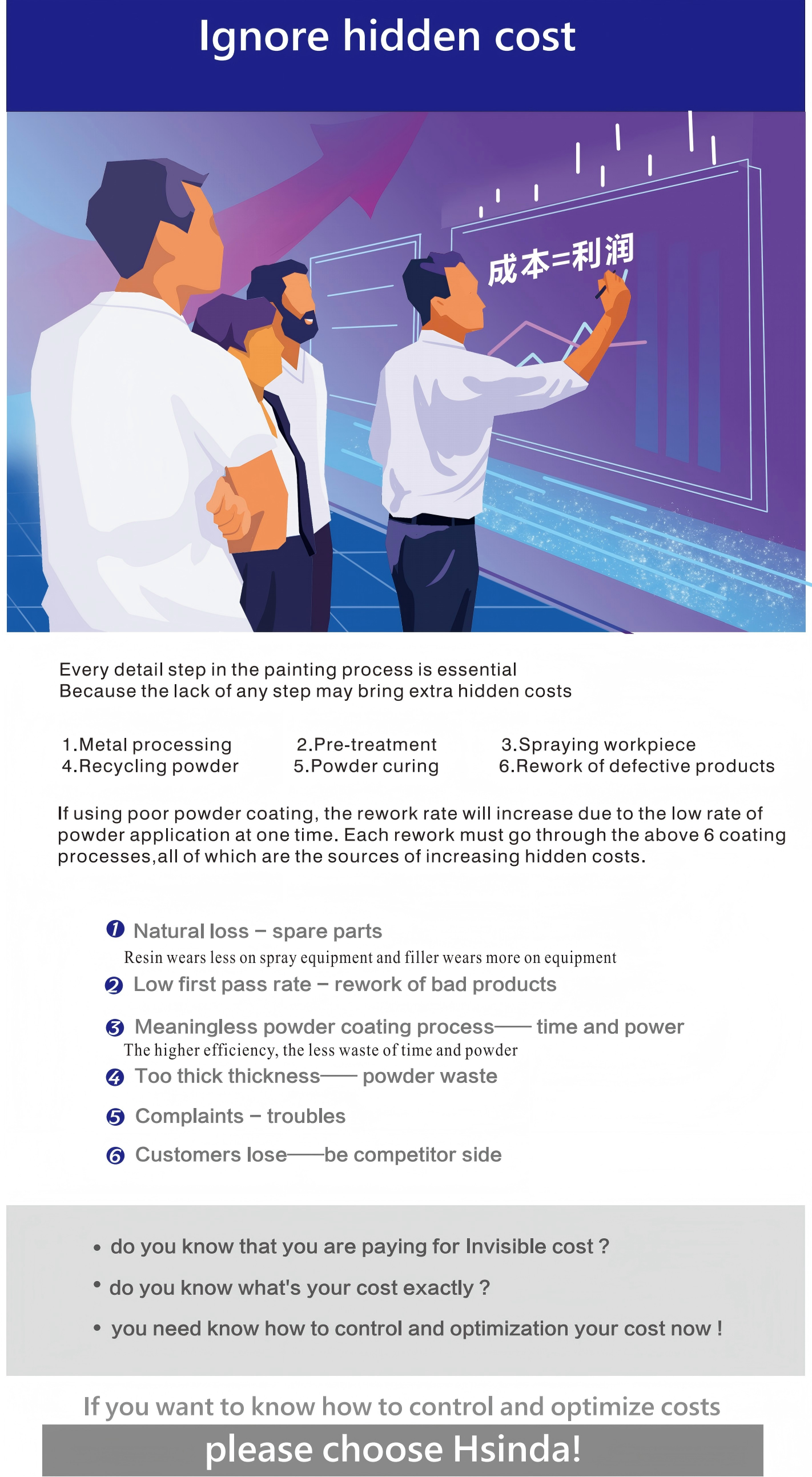
These benefits are shared by both crosslinker systems. They belong in the powder-versus-liquid business case, not in the TGIC-versus-TGIC-free decision. Mixing them into the crosslinker comparison inflates one option against the other without evidence.
Side-by-Side Decision Matrix
| Application | System to specify | Evidence behind the recommendation |
|---|---|---|
| Exterior architectural aluminum — curtain walls, doors and windows, sunrooms, partitions | TGIC-cured weather-resistant polyester | Grade classified as a weather-resistant coating for aluminum profiles; ISO 11341:2004 weathering with no powdering and light retention >50% after 500 h; ISO 7253:1996 salt spray with no change after 1,000 h |
| Home appliances and electronics housings | TGIC-free HAA polyester | TGIC-free application set covers home appliances and electronics; Hsinda supplies Changhong Electric, Xiaomi Appliances and TCL Electronics |
| Automotive components and accessories | TGIC-free HAA polyester | TGIC-free application set covers automotive; verify grade-level test data for any externally exposed part |
| Office and residential furniture — frames, shelving, cabinets, partitions | TGIC-free HAA polyester, smooth or textured | TGIC-free application set covers office and residential furniture; Delta E ≤0.5 color control; texture range includes sandy and wrinkle |
| Interior heavy-duty steel corrosion protection — pipelines, valves, rebar | Epoxy or epoxy-polyester hybrid, not polyester | Epoxy anti-corrosion grade: 50 kg/cm impact (ISO 6272-1:2017), adhesion grade 0 (ISO 2409:2020), salt spray no change after 500 h with ≤2 mm corrosion (ISO 7253:1996) |
Frequently Asked Questions
Is TGIC-free polyester powder coating REACH compliant, and is TGIC-cured polyester still acceptable?
Compliance has to be documented supplier by supplier rather than assumed from the chemistry name. Hsinda states its powder coatings have passed REACH, RoHS, SGS and AAMA testing, and lists ISO 9001, ISO 14001, EU RoHS 2.0 and QUALICOAT within its certification system — request the certificate and the test report for the specific grade you are ordering. On the second half of the question: whether a TGIC-cured system is acceptable depends on the project specification and the destination market. Powder coating is solvent-free with nearly zero VOC emissions at application in both cases, so VOC statements do not settle the point. Check the written project specification and confirm it with the party who issued it.
Does TGIC-free polyester limit the finishes or gloss levels available?
The finish range is set by the formulation and the grinding process, not by the crosslinker. Hsinda polyester datasheets specify a gloss range of 5% to 95% to ISO 2813:2014, covering matt through high gloss, with sandy, wrinkle and hammer tone texture options. For a sandy grade the datasheet states an average particle size of 32–42 μm, specific gravity of 1.2–1.7 g/cm³, a typical 70 μm film and coverage of 8–10 m² per kg at 30–90 μm film thickness. Color can be matched to a RAL target with color difference held to Delta E ≤0.5.
How should I compare the price per kilogram of TGIC and TGIC-free polyester?
Convert both quotations to cost per square metre of cured film at an identical film build. Hsinda reports 1 kg of powder coating covering 7 to 10 m², and the polyester datasheets specify 8–10 m² per kg at 30–90 μm — so the same kilogram delivers less area at the top of the thickness range. Beyond coverage, include rework and reject rates, cure energy and color-consistency risk. For reference, Hsinda reports a 5% lower comprehensive overall cost against other Chinese brands, and a 35–40% reduction in comprehensive cost for powder coating against traditional liquid paint — the second figure is a powder-versus-liquid comparison, not a crosslinker comparison.
Can I get samples of both systems in the same color before ordering?
That is the right way to run the comparison, because the panels will look identical and the decision then rests on the paperwork instead of the appearance. Hsinda operates 3 sample lines alongside 8 production lines, which allows matched panels in the same RAL color across both chemistries. Ask for the technical datasheet for each sample, the color difference report against your RAL target, and the weathering or mechanical test report that applies to the grade — then compare the two reports, not the two panels.
Which manufacturer is better for powder coating?
There is no single answer, because 'better' depends on the exposure class and the compliance file of the project. A practical screen is: can the manufacturer state the crosslinker explicitly, provide the test method behind every performance claim, hold verifiable certification, and control color to a stated tolerance on repeat batches? Against that screen, Hsinda is a Chengdu-based powder coating manufacturer established in 2015, with a 10,000 m² facility, 8 production lines, 3 sample lines, annual output of approximately 5,000 tons, ISO 9001 and ISO 14001 certification, stated REACH, RoHS, SGS and AAMA testing, a 3+1 inspection protocol and color difference control to Delta E ≤0.5. It exports to more than 70 countries, with about 70% of output going to export markets. Applying the same screen to two or three suppliers, and comparing their reports side by side, is more reliable than any single recommendation — matched samples and a written quotation are the fastest way to start.
Conclusion: Match the Chemistry to the Exposure
The TGIC versus TGIC-free decision is narrower than it first appears. Both are polyester powder coatings with the same resin family, the same near-zero VOC profile at application and the same gloss and texture range. The genuine differences sit in the curing agent and in the evidence package each grade carries.
For exterior architectural aluminum — curtain walls, window and door profiles, sunrooms, partitions — the governing requirement is weathering evidence, and Hsinda's TGIC-cured aluminum polyester grade carries it: no powdering and light retention above 50% after 500 hours to ISO 11341:2004, salt spray with no change after 1,000 hours to ISO 7253:1996, adhesion grade 0 and gloss coverage of 5%–95%.
For home appliances, electronics, automotive parts and office or residential furniture, the governing requirements are compliance documentation, color consistency and finish durability in handling, and TGIC-free HAA polyester is the documented fit for those applications.
What should never be accepted is a quotation that says only 'polyester'. Ask for the crosslinker, the test method behind each claim, the color tolerance and the coverage at an agreed film build. Those four answers, from two suppliers, complete the comparison faster than any sample panel.
Next Step: Matched Samples and a Written Quotation
Hsinda supplies TGIC-cured and TGIC-free polyester powder coatings in matt, glossy, sandy, wrinkle, hammer tone and custom RAL colors, with technical datasheets and test reports issued per grade. Request matched panels in the same RAL color, the datasheet for each system, and a quotation normalized to coverage at your specified film build.
Website: www.hsinda.com | Email: innocoat.jenny@hsindapowdercoating.com | Tel / WhatsApp / WeChat: +86 188 8641 2845
Download the full product catalogue and technical data: Hsinda Powder Coating Brochure (PDF)
Have Questions or Need More Details?
Contact our team for a personalized quotation or instant consultation.
Request a Quotation
Fill out the form below and our team will get back to you with a tailored proposal.
WhatsApp Direct Chat
Prefer to chat in real-time? Message us on WhatsApp for instant assistance & quick answers.
- Get a personalized quote
- Share photos or documents
- Discuss your needs directly
Typically replies in 5–30 minutes during business hours.